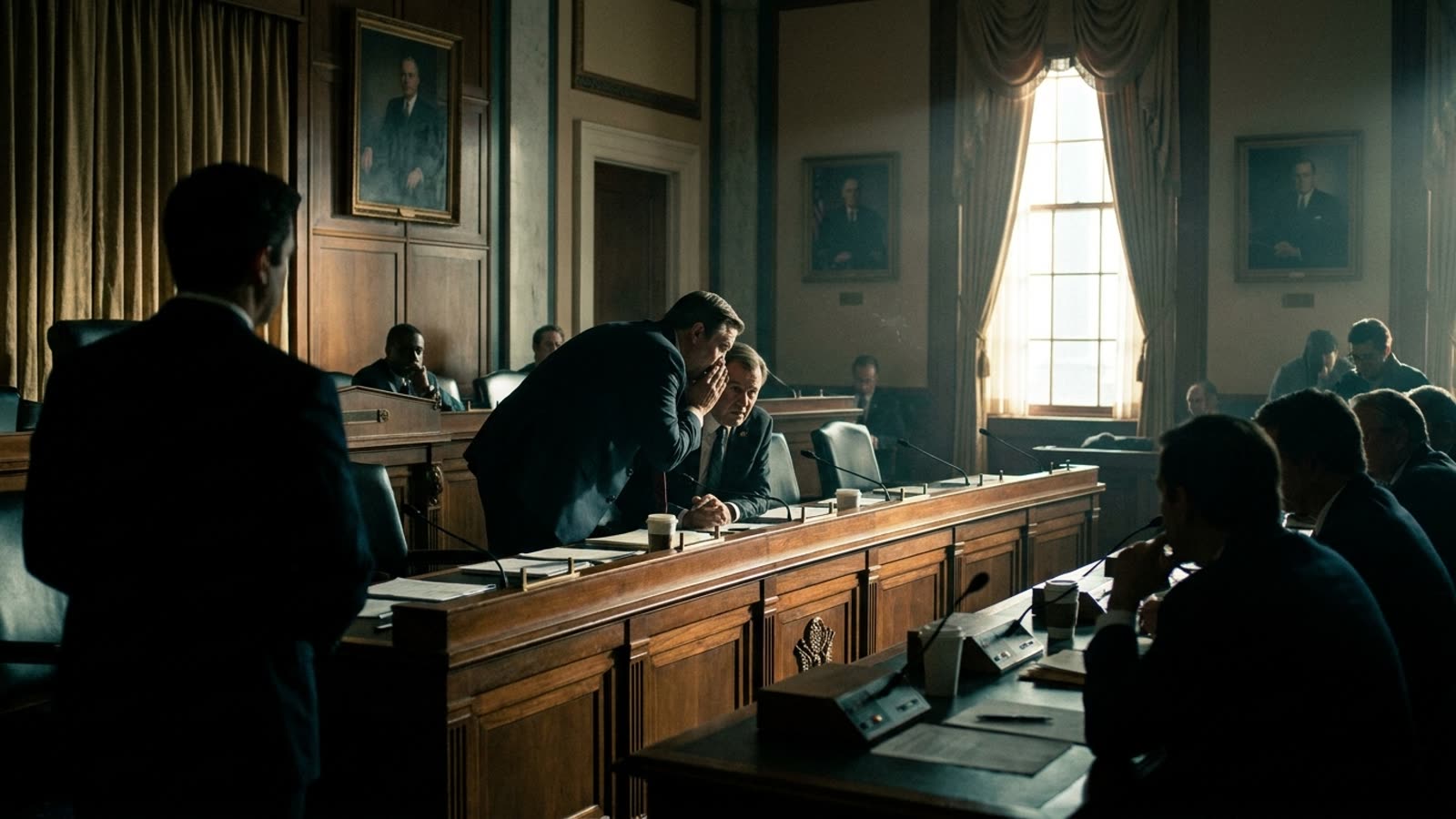
The most consequential vote in a parliamentary democracy is not the one that puts a government in power but the one that can remove it overnight. The motion of no confidence — or its cousins, the vote of censure and the constructive vote of no confidence — sits at the heart of how parliamentary systems actually function, yet it remains poorly understood even by engaged citizens who follow politics closely.
Unlike presidential systems where a head of government serves a fixed term regardless of legislative support, parliamentary executives exist at the pleasure of their legislatures. This sounds simple. It is not. The no-confidence mechanism creates an entirely different species of political accountability, one that shapes everything from coalition negotiations to the timing of policy announcements to the career calculations of backbench legislators.
The basic machinery
A motion of no confidence, in its purest form, is a formal declaration by a legislature that the government no longer commands majority support. If it passes, convention or constitution typically requires the government to resign or call new elections. The threat alone disciplines prime ministers in ways their presidential counterparts never experience.
But the details vary enormously across systems, and those details matter. In the United Kingdom, no-confidence motions are governed largely by convention rather than statute, giving them a flexibility that can feel either elegant or dangerously ambiguous depending on circumstances. In Germany, the Basic Law requires a "constructive" vote of no confidence — parliament cannot simply remove a chancellor but must simultaneously elect a successor. This was designed to prevent the governmental instability that plagued the Weimar Republic, and it has worked: only two constructive no-confidence motions have ever been attempted in the Federal Republic, and only one succeeded.
Japan's system adds another wrinkle. A no-confidence motion against the cabinet triggers a choice: the prime minister must either resign or dissolve the lower house within ten days. This creates a high-stakes game of chicken between government and opposition, since dissolution means everyone faces voters.
The shadow vote
The most important no-confidence votes are often the ones that never happen. A prime minister who counts heads and sees defeat coming will typically resign before the humiliation of a formal loss. Margaret Thatcher's departure in 1990 followed this pattern — she withdrew from a leadership contest rather than face certain defeat, never actually losing a vote. The mechanism's power lies precisely in its credible threat.
This shadow dynamic explains why parliamentary governments spend enormous energy on party discipline. The whip system, the careful cultivation of backbenchers, the constant attention to coalition partners — all of this exists because the government's survival depends on maintaining majority support not just at election time but continuously. A prime minister who loses touch with their parliamentary party can fall in weeks.
Why it matters beyond parliament
The no-confidence mechanism shapes political culture in ways that extend far beyond legislative procedure. It makes parliamentary executives more responsive to shifting public opinion, since their own MPs will abandon them if polls turn toxic. It encourages coalition-building and compromise, since minority governments must constantly negotiate to survive. And it creates a fundamentally different relationship between executive and legislature than exists in presidential systems.
Critics argue this produces instability — Italy's revolving-door governments being the standard cautionary tale. Defenders counter that it produces accountability, forcing leaders to maintain active support rather than coast on a fixed term. Both observations contain truth.
Our take
The no-confidence vote is democracy's emergency brake, and like any emergency brake, its value lies partly in how rarely it gets pulled. The constructive variant Germany adopted deserves more attention from constitutional designers elsewhere — it preserves accountability while preventing the nihilistic opposition that can topple governments without offering alternatives. Most citizens will never witness a no-confidence vote in their lifetimes. But the possibility that one could happen tomorrow morning shapes every parliamentary government on earth.