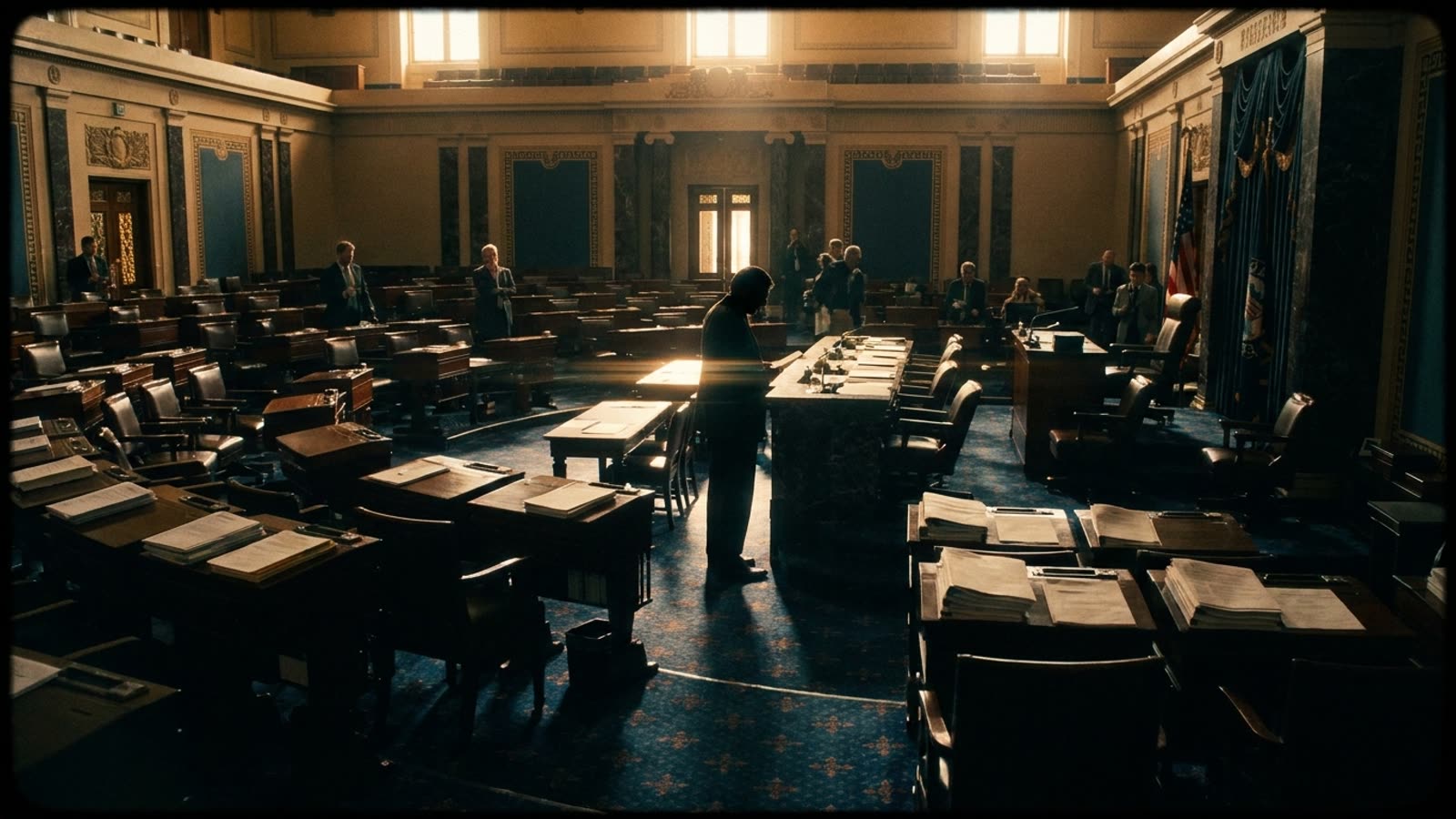
The most powerful word in the United States Senate is not spoken aloud. It is whispered to the majority leader's office, scrawled on a slip of paper, or conveyed through a discreet phone call. The word is "hold," and it grants any single senator the ability to indefinitely delay floor consideration of a nomination or bill without offering a reason, facing a vote, or even revealing their identity.
This is not a bug in American governance. It is a feature — one that has evolved over two centuries from collegial courtesy into a weapon of extraordinary leverage.
The mechanics of invisible obstruction
A hold is not a formal Senate rule. You will not find it in the Standing Rules of the Senate or the Constitution. It exists purely as a norm, a gentleman's agreement that the majority leader will not bring a matter to the floor if any senator objects. The practice emerged in the nineteenth century as a way for members to request time to study legislation or prepare amendments. It was, in theory, temporary and transparent.
It became neither. By the late twentieth century, holds had transformed into indefinite blocks, often placed anonymously through the party leadership. A senator could strangle a judicial nomination or stall a treaty without ever attaching their name to the obstruction. The majority leader, dependent on unanimous consent agreements to manage floor time, found it easier to accommodate holds than to burn political capital forcing cloture votes.
The mathematics are punishing. Overcoming a hold requires invoking cloture, which demands sixty votes and consumes up to thirty hours of floor time per nomination. With hundreds of executive branch positions requiring Senate confirmation, a determined minority can create a confirmation backlog simply by placing holds on everything.
Why it persists
Reformers have periodically demanded transparency. In 2007, the Senate adopted a rule requiring that holds be disclosed within six session days. Senators adapted by rotating holds among allies, creating a shell game that preserved anonymity in practice. In 2011, further reforms attempted to close this loophole, yet the fundamental dynamic remained: the hold's power derives not from secrecy but from the Senate's reliance on unanimous consent.
The institution protects the practice because every senator, regardless of party, recognizes its utility. A junior member from a small state can extract concessions from the executive branch by threatening a hold on an unrelated nominee. A committee chair can pressure colleagues by holding their legislative priorities hostage. The hold democratizes obstruction, giving backbenchers leverage that the House of Representatives, with its majoritarian rules, cannot offer.
Critics argue this amounts to minority tyranny dressed in procedural clothing. Defenders counter that the Senate was designed to slow the passions of the majority, and the hold merely extends that cooling function to individual members.
Our take
The Senate hold is a masterpiece of institutional self-dealing. It allows senators to exercise veto power without accountability, to obstruct without fingerprints, to extract concessions without public negotiation. That it survives is not evidence of its wisdom but of its convenience to those who wield it. Every reform effort has foundered on the same reef: the senators who would have to abolish the hold are the same senators who benefit from keeping it. Until the political cost of obstruction exceeds the political benefit, the quietest veto in American democracy will remain the loudest.