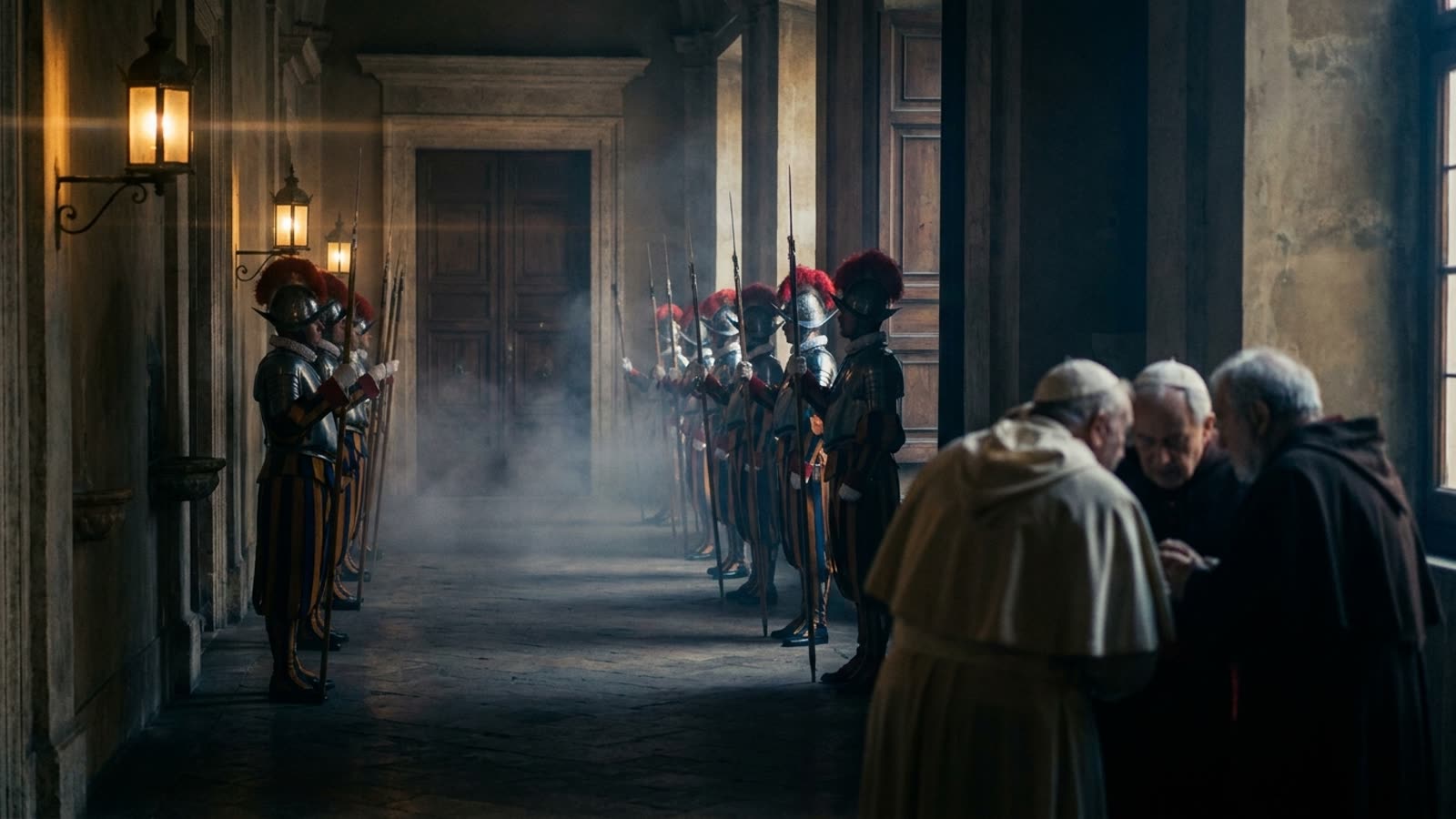
When cardinals gather to elect a pope, they participate in the world's oldest continuous electoral system — a process so deliberately archaic that it makes the Electoral College look like a Silicon Valley disruption. The conclave has endured since 1274 not despite its anachronisms but because of them, offering a masterclass in how institutions survive by making change extraordinarily difficult.
The word itself comes from the Latin cum clave, meaning "with a key." Cardinals are literally locked inside the Sistine Chapel until they produce a pope, a practice instituted after the election of 1268-1271, when cardinals took nearly three years to choose Gregory X. Exasperated locals eventually removed the roof of the meeting hall and put the cardinals on bread and water. Gregory, once elected, immediately codified rules to prevent such embarrassments.
The Architecture of Consensus
The conclave's genius lies in its supermajority requirement: a candidate needs two-thirds of votes to win. This threshold, higher than almost any democratic institution demands, forces coalition-building rather than factional victory. A pope cannot emerge from a narrow majority; he must command something approaching consensus among men who often disagree profoundly on theology, politics, and the church's direction.
The mechanics enforce this mathematically. Cardinals vote up to four times daily — twice in the morning, twice in the afternoon — writing their choice on paper ballots that are counted, pierced with a needle, strung together, and burned. Black smoke signals failure; white smoke announces success. The ritual burning serves a practical purpose beyond spectacle: it destroys evidence of how individuals voted, protecting cardinals from retribution and enabling them to shift allegiances without public embarrassment.
Why Isolation Matters
Modern conclaves sequester cardinals in the Vatican's Domus Sanctae Marthae guesthouse, with all communications severed. No phones, no internet, no newspapers. This information blackout, which would strike most political operatives as insane, serves a specific function: it prevents outside pressure campaigns and forces cardinals to negotiate only with each other.
The isolation also compresses time in useful ways. Without the ability to consult advisors, commission polls, or wait for news cycles to shift, cardinals must make decisions with the information already in their heads. Conclaves in the modern era typically last two to five days — remarkably efficient for selecting the leader of 1.3 billion Catholics.
The Informal Rules
Written procedures tell only part of the story. Unwritten norms shape outcomes just as powerfully. Cardinals traditionally avoid campaigning openly, though pre-conclave discussions — the General Congregations held between a pope's death and the conclave's start — function as a kind of invisible primary. Candidates who appear too ambitious often doom themselves; the church prizes the appearance of reluctance even when the reality is otherwise.
The system also contains built-in circuit breakers. If no candidate achieves two-thirds after roughly thirty ballots, cardinals may vote to proceed by simple majority — but this option has never been used in modern times. The mere possibility of it, however, creates pressure to compromise before reaching that point.
Our take
The conclave endures because it solves a problem most electoral systems handle poorly: producing legitimate leaders in deeply divided institutions. By demanding supermajorities, enforcing isolation, and making the process uncomfortable enough that participants want it to end, the church created a mechanism that privileges consensus over ideology. Secular democracies, increasingly paralyzed by narrow majorities claiming mandates they don't possess, might find the comparison unflattering.