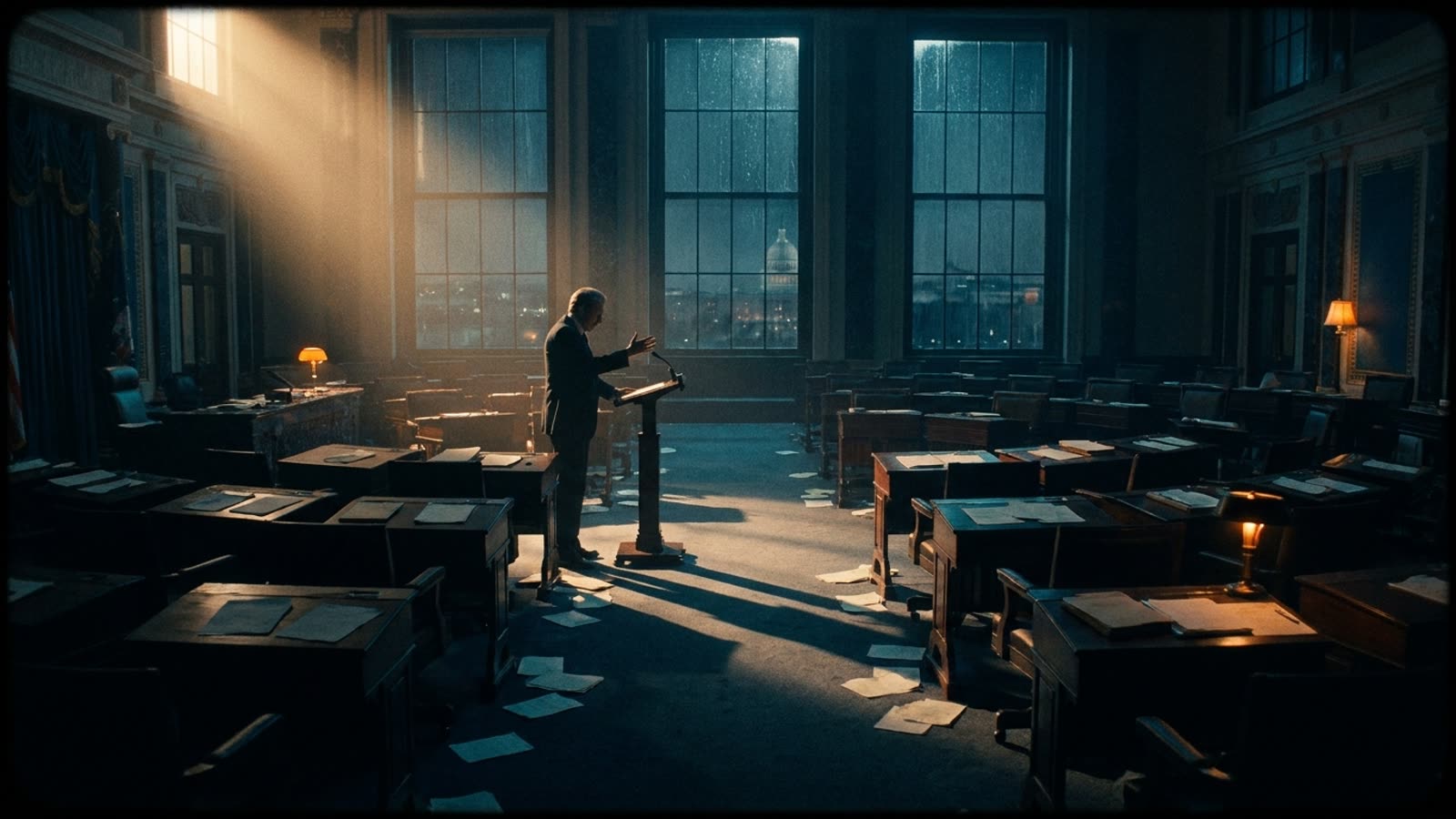
Every few years, the United States Senate appears to teeter on the brink of abolishing the filibuster, that peculiar rule requiring sixty votes to end debate on most legislation. Reformers declare it a relic of obstruction; defenders warn that eliminating it would unleash majoritarian tyranny. Then nothing happens, and the cycle repeats. This ritual frustrates observers who see the filibuster as a simple binary—keep it or kill it—but the persistence of the stalemate reveals something deeper about how legislatures actually evolve. Procedural rules are not constitutional monuments; they are negotiated truces, and they change only when a specific, painful blockage makes the cost of preserving them higher than the fear of what comes next.
The logic of procedural truces
Legislative rules exist because majorities choose to bind themselves. A bare majority in the Senate could, in theory, vote to eliminate the filibuster tomorrow through a parliamentary maneuver sometimes called the "nuclear option." That it has not done so—except in narrow carve-outs for judicial nominations—reflects a calculation, not a constitutional constraint. Senators in the majority know they will someday be in the minority; they fear the precedent more than they desire the immediate victory. This logic holds until a specific, high-stakes blockage—a Supreme Court vacancy, a debt ceiling crisis, a once-in-a-generation policy window—shifts the calculus. The filibuster for Supreme Court nominees fell in 2017 not because Republicans suddenly discovered majoritarianism but because the specific seat of Antonin Scalia was worth more to them than the abstract protection of future filibusters.
Why incrementalism wins
Procedural change almost never arrives as wholesale abolition. Instead, legislatures carve exceptions, each one establishing a precedent that makes the next carve-out easier. The Senate eliminated the filibuster for lower-court nominees in 2013, then for Supreme Court nominees four years later. Each step was framed as a narrow, necessary response to extraordinary obstruction, not a philosophical embrace of simple majorities. This incrementalism is not hypocrisy; it is how institutions manage risk. By changing rules piecemeal, legislators preserve the fiction that the broader truce remains intact, reducing the psychological and political cost of each individual move. The filibuster for legislation survives not because it is beloved but because no single legislative blockage has yet generated enough pain to justify the next carve-out.
Lessons beyond the Senate
The filibuster's slow erosion is not an American peculiarity. The British House of Lords lost its absolute veto over legislation in 1911 after a constitutional crisis over the budget; the Parliament Acts reduced the Lords to a delaying chamber, but the change came only after a specific, unbearable standoff. The European Union's shift from unanimity to qualified majority voting in many policy areas followed a similar pattern: each treaty expanded majority voting in response to paralysis on particular issues, not as a grand constitutional redesign. Procedural rules die the same way everywhere—through accumulated exceptions that eventually swallow the rule.
Our take
Those who predict the filibuster's imminent demise and those who insist it will endure forever are both missing the point. The filibuster is neither a sacred institution nor a doomed anachronism; it is a truce that will hold until the next blockage painful enough to justify breaking it. The question is never whether the Senate values tradition or efficiency in the abstract. The question is always: what specific prize is on the table, and is it worth the precedent? When that prize arrives—and it always does, eventually—the rules will bend. They always do.