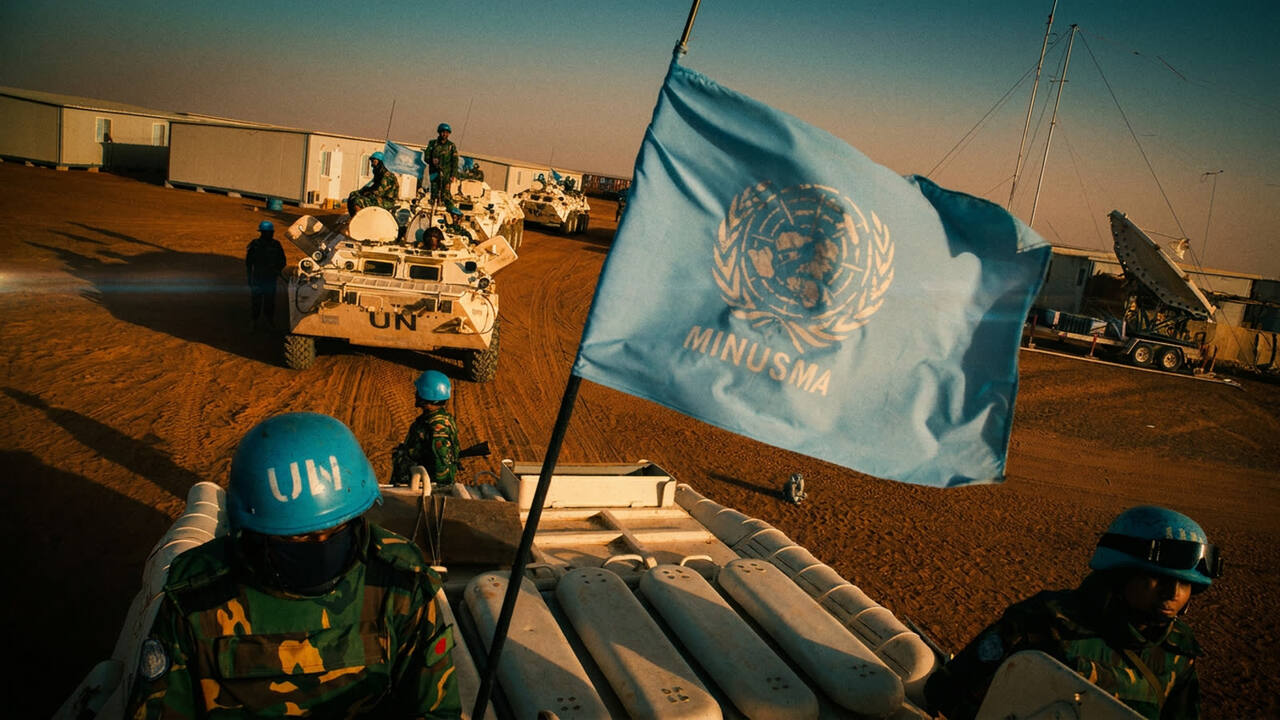
The most common criticism of United Nations peacekeeping is that it does not work. Missions linger for decades, mandates go unfulfilled, and atrocities occur within sight of armored personnel carriers. The criticism is accurate and entirely beside the point. UN peacekeeping was never designed to impose peace; it was designed to make the absence of war marginally more stable until politicians could negotiate something durable. Understanding this distinction explains why the blue helmets keep deploying despite their inglorious record.
The architecture of peacekeeping rests on three pillars established in the late 1940s and never fundamentally revised: consent of the parties, impartiality, and the non-use of force except in self-defense or defense of the mandate. These are not bureaucratic niceties; they are the only reason troop-contributing countries—predominantly from the Global South—agree to send their soldiers into other people's wars. Remove consent, and you have invasion. Remove impartiality, and you have an alliance. Remove the restriction on force, and you have a war the Security Council never authorized and cannot fund.
The Consent Paradox
Consent sounds simple: the host government and, ideally, the main armed factions agree to the mission's presence. In practice, consent is a fiction maintained through diplomatic performance. Governments invite peacekeepers when they are too weak to object or when they calculate that international observers will constrain their enemies more than themselves. Rebel groups consent when they need breathing room to rearm. The moment the calculus shifts, consent evaporates—peacekeepers become hostages, targets, or irrelevant bystanders. The mission in the Democratic Republic of the Congo, MONUSCO, has operated for over two decades under perpetually renegotiated consent, its twenty-thousand-plus personnel tolerated rather than welcomed.
The Funding Treadmill
Peacekeeping is financed through a separate assessed budget, not the UN's regular dues, which means every mission requires its own political fight in the General Assembly's Fifth Committee. The largest financial contributors—the United States, China, Japan, Germany, France—rarely contribute significant troop numbers. The largest troop contributors—Bangladesh, Nepal, Rwanda, India, Pakistan—depend on UN reimbursements that often arrive late and below cost. This creates a peculiar accountability gap: those who pay do not bleed, and those who bleed do not control the purse strings. Missions persist partly because shutting them down requires the same consensus as starting them, and partly because the modest per-soldier reimbursement has become a significant revenue stream for some national militaries.
When Peacekeepers Fail
The catastrophes—Srebrenica, Rwanda, the Central African Republic—share a common anatomy. Mandates drafted in New York assume conditions that do not exist on the ground. Rules of engagement written for consent-based operations collide with genocidal intent. Troop contributors, fearing casualties that would be politically costly at home, interpret self-defense narrowly. The Security Council, paralyzed by veto threats, declines to authorize enforcement action. The result is uniformed witnesses to mass murder, their presence a cruel mockery of protection.
Yet the alternative is not obviously better. Without peacekeepers, ceasefires collapse faster, humanitarian corridors close sooner, and the international community loses even the pretense of caring. The blue helmets are a holding pattern, not a solution—and sometimes a holding pattern is all that prevents freefall.
Our take
Peacekeeping is a technology for buying time, and time is underrated. The mission in Cyprus has separated Greek and Turkish Cypriots since 1964; critics call it a frozen conflict, but frozen is better than burning. The honest case for blue helmets is not that they bring peace but that they raise the cost of resuming war just enough, just long enough, for exhaustion or diplomacy to do the rest. That is a modest achievement, easily mocked, and considerably harder to replace than its detractors admit.