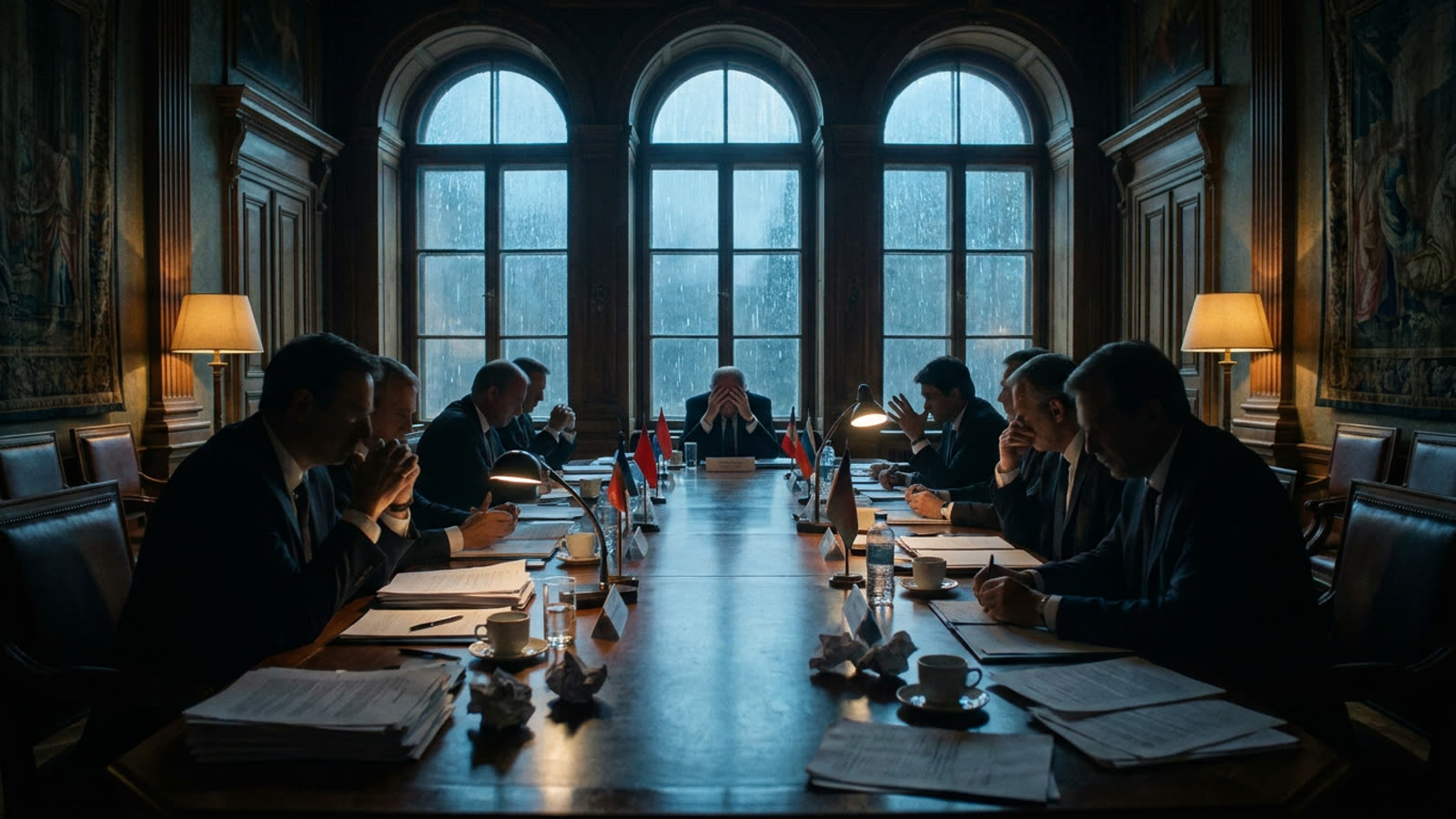
The public sees the handshake. Two leaders, flags arrayed behind them, sign a document that will reshape borders, trade flows, or the future of the planet. What the public never sees is the eighteen months of negotiation that preceded it — the 3 a.m. arguments over whether a clause should read "shall" or "should," the calculated insults delivered through seating arrangements, and the baroque rituals that govern how nations actually talk to each other.
Treaty negotiation is among the least understood and most consequential activities in international politics. It operates according to rules that would seem absurd in any other context, yet these rules have evolved over centuries precisely because they work. Understanding them reveals why some agreements hold for generations while others collapse before the ink dries.
The grammar of power
In diplomatic drafting, every word carries legal weight that can trigger or prevent wars. The difference between "shall" and "should" is the difference between a binding obligation and a polite suggestion. "Appropriate measures" means something entirely different from "necessary measures" — the former grants discretion, the latter implies urgency. Negotiators have been known to spend entire sessions debating a single comma.
This obsession with language is not pedantry. The 1967 UN Security Council Resolution 242, which addressed the Arab-Israeli conflict, deliberately employed ambiguous phrasing about "withdrawal from territories" rather than "withdrawal from the territories." That missing definite article has fueled decades of interpretive dispute. Skilled negotiators understand that constructive ambiguity can be a feature rather than a bug — it allows parties to sign agreements they interpret differently, buying time for political realities to shift.
The choreography of concession
Professional negotiators rarely make concessions in sequence. Instead, they employ what practitioners call "package deals" — bundling multiple issues so that a loss on one front can be offset by a gain on another. The 1978 Camp David Accords succeeded partly because the American mediators kept the Sinai territorial questions and the Palestinian autonomy questions in separate but linked tracks, allowing each side to claim victory on different fronts.
The walkout remains a potent tactical weapon, though its deployment requires precision. A premature exit signals weakness; a well-timed one demonstrates resolve. The Soviet delegation's walkout from the 1983 arms control talks in Geneva was designed to pressure Western European governments ahead of missile deployments. It failed spectacularly, but the tactic itself remains standard practice.
The invisible infrastructure
Behind every negotiation sits an army of specialists the principals never meet. Legal advisers parse precedent. Technical experts verify that proposed language is actually implementable. Intelligence analysts assess whether the other side's red lines are genuine or theatrical. The support staff at major multilateral negotiations can number in the hundreds.
Venue selection itself becomes negotiation. Neutral ground carries symbolic weight — hence the popularity of Geneva, Vienna, and various Scandinavian capitals. But neutrality is relative. Hosting a negotiation confers subtle advantages: control over logistics, proximity to one's own bureaucracy, and the psychological comfort of familiar surroundings. Nations compete fiercely to host major talks.
Our take
The machinery of treaty-making evolved to solve a genuine problem: how do sovereign entities with no common superior reach binding agreements? The elaborate protocols, the obsessive wordsmithing, the theatrical posturing — all of it serves to create a framework where commitments can be made and, crucially, verified. In an era when multilateral institutions face mounting skepticism, it is worth remembering that this strange diplomatic ballet has prevented more conflicts than it has caused. The alternative to negotiated settlements is not efficiency; it is coercion or chaos.