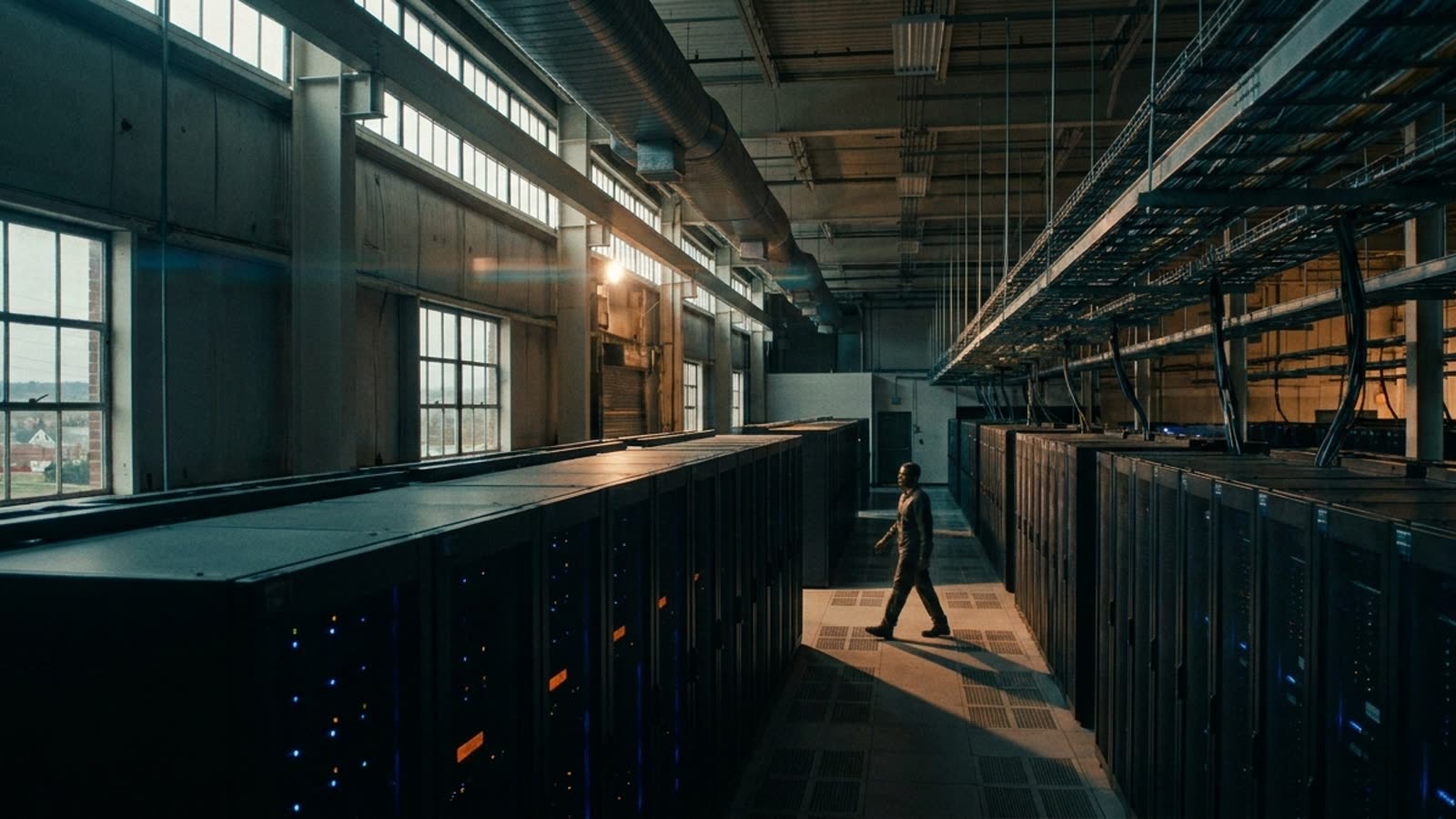
The artificial intelligence industry has a problem it cannot engineer its way out of: physics. Training and running large language models requires staggering amounts of electricity, and the American power grid was not built to accommodate a sudden explosion in demand from warehouse-sized server farms. So a handful of startups have landed on a novel solution—convince ordinary homeowners to host miniature data centers in their basements, garages, and backyards.
The pitch is seductive in its simplicity. Companies like Exo Infrastructure and NodeHome offer to install refrigerator-sized server racks on residential properties, paying homeowners a few hundred dollars per month for the privilege of tapping into their electrical supply. For the homeowner, it's passive income with minimal effort. For the AI industry, it's a distributed network of compute that sidesteps the years-long permitting battles and utility negotiations that have stalled conventional data center construction.
The math behind the desperation
The numbers explain why anyone would consider such an unorthodox approach. Data center construction in the United States has effectively maxed out available power capacity in key markets. Northern Virginia, which hosts the densest concentration of data centers on Earth, has a multi-year waitlist for new grid connections. Similar bottlenecks exist in Phoenix, Dallas, and the Pacific Northwest. Meanwhile, AI companies are racing to train ever-larger models, each generation requiring roughly three to four times the compute of its predecessor.
Residential electricity, by contrast, is abundant and underutilized. American homes collectively have access to far more power than they consume, particularly overnight when rates are lowest. A distributed network of ten thousand home-based micro-data centers could, in theory, provide meaningful supplemental compute without requiring a single new substation.
The catches nobody mentions
The concept sounds elegant until you examine the details. Home electrical systems were not designed for sustained high-amperage loads. A typical residential panel can handle a server rack, but the wear on wiring, the heat generation, and the noise from cooling fans create quality-of-life issues that monthly checks may not adequately compensate. Insurance implications remain murky—most homeowner policies do not contemplate commercial computing equipment, and a fire caused by an overloaded circuit could leave participants in legal limbo.
There are also questions about what, exactly, these machines would be computing. The startups involved are vague about their clients, citing confidentiality agreements. But the economics only work if the compute is being sold to AI companies willing to pay premium rates for capacity, which raises the possibility that homeowners could find themselves unwitting participants in training models they might find objectionable.
Our take
This is what happens when an industry's appetite for resources outpaces infrastructure's ability to supply them. The home data center pitch is not a scam, exactly, but it is a symptom of a market so overheated that companies are willing to try almost anything to secure compute. For most homeowners, the modest payments will not justify the hassle, the risk, or the vague unease of hosting corporate servers in their living space. But the fact that serious money is chasing this idea tells you everything about where the AI arms race stands: the bottleneck is no longer algorithms or talent, it's watts.