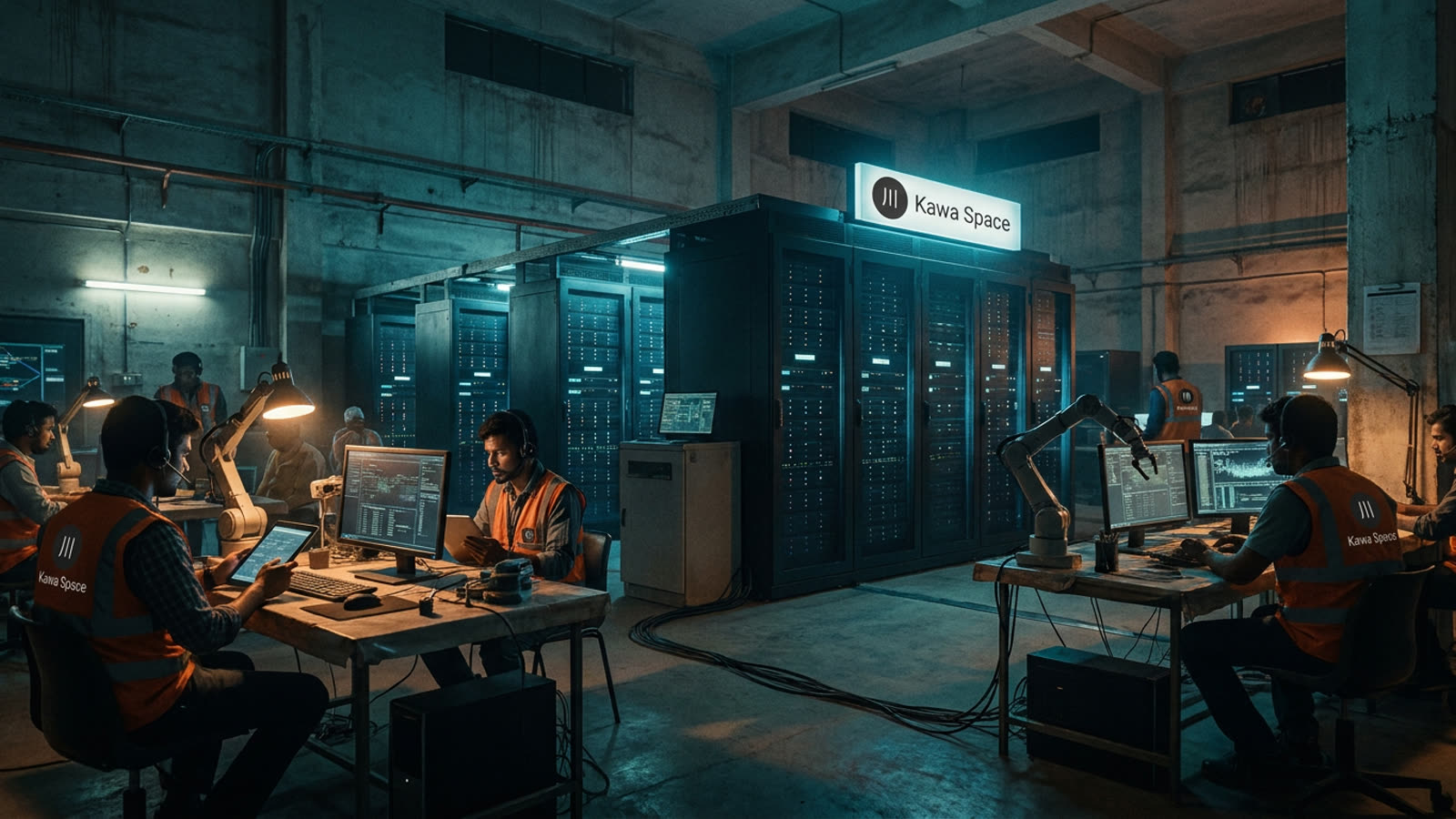
The humanoid robot revolution has a labor problem, and a Bangalore startup called Kawa Space thinks it has found the solution in India's 15-million-strong gig workforce.
The thesis is elegant in its simplicity: teaching robots to perform physical tasks requires enormous volumes of demonstration data—humans showing machines how to fold laundry, stack boxes, navigate cluttered rooms. Collecting this data in wealthy countries is prohibitively expensive. Collecting it in India, where a skilled worker might earn a fraction of their American counterpart, is not. Kawa Space is building the infrastructure to turn gig workers into robot tutors at scale.
The data bottleneck
Every serious player in embodied AI—from Tesla's Optimus division to Figure and Agility Robotics—faces the same constraint. Large language models could be trained on the internet's text; image models could scrape billions of photographs. But there is no internet of robot movements. Every grasp, pivot, and adjustment must be painstakingly recorded, often with specialized motion-capture equipment or teleoperation rigs.
Kawa Space's bet is that much of this work can be done remotely. Workers wearing sensor gloves and using standardized camera setups can demonstrate tasks from their homes or from Kawa's network of data-collection hubs across Indian cities. The resulting datasets are then sold to robotics companies hungry for training material.
The labor arbitrage redux
India has played this role before. In the 1990s and 2000s, Western companies discovered that English-speaking Indians could handle customer service, back-office processing, and software maintenance at a fraction of the cost. That arbitrage built Infosys, Wipro, and a $250-billion IT services industry.
Kawa Space is wagering that robot training is the next iteration. The work is more physical than typing on a keyboard, but the economics are similar: a task that might cost $40 per hour in California can be performed for $4 in Karnataka. If the quality holds, the math is irresistible for robotics startups burning through venture capital.
The risks
Skeptics will note that remote data collection has limitations. Some tasks require physical interaction with objects that cannot be standardized across continents. Latency in teleoperation can introduce artifacts that degrade training data. And there is the uncomfortable question of whether this model simply exports the drudgery of AI development to lower-wage workers while the profits flow elsewhere—a critique that has dogged the data-labeling industry from Nairobi to Manila.
Kawa Space argues that it is offering genuine economic opportunity, with workers earning above local market rates and gaining skills in a growing field. Whether that framing survives contact with the realities of gig-economy labor remains to be seen.
Our take
The robotics industry's dirty secret is that its most impressive demos often rely on extensive human puppeteering behind the scenes. Someone has to teach these machines, and that someone will increasingly be found in the global south. Kawa Space is not inventing this dynamic; it is simply building the pipes. The company may succeed or fail on execution, but the underlying trade—cheap human labor training expensive robots—is almost certainly the future. Whether that future is utopian or exploitative depends entirely on who captures the value.