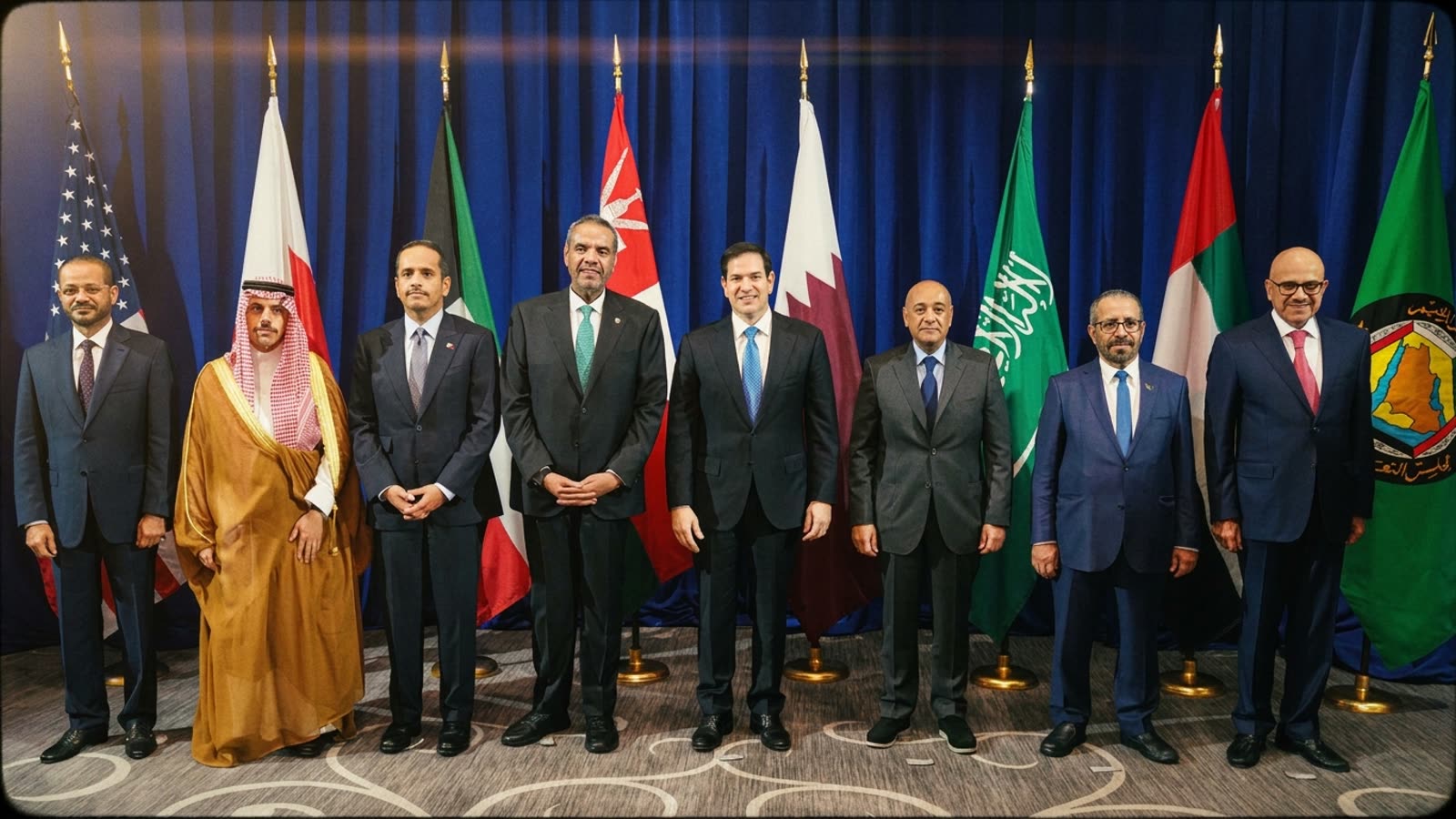
The most striking feature of the Gulf monarchies' joint appeal to the White House this week is not what they said but that they said it at all. The United Arab Emirates, Saudi Arabia, and Qatar—three nations whose security architecture has been underwritten by American military power for decades—are now publicly urging President Trump to step back from the brink of renewed conflict with Iran. This is not dissent from the cheap seats. It is a warning from the VIP box.
The timing is deliberate. As Trump convenes national security officials to weigh military options against Tehran, and as a hardline Iranian general wanted by Interpol emerges as a pivotal figure in the standoff, the Gulf states have calculated that quiet diplomacy is no longer sufficient. Their message is simple: another war in the Persian Gulf would be catastrophic for everyone, including the countries that would nominally be on America's side.
The petrodollar arithmetic
The Gulf monarchies are not speaking from moral high ground; they are speaking from economic self-interest, which makes their intervention more credible, not less. The ongoing tensions have already begun draining sovereign wealth from the region. Oil infrastructure remains vulnerable, shipping lanes through the Strait of Hormuz are perpetually one miscalculation away from closure, and the diversification projects that define Saudi Vision 2030 and the UAE's post-hydrocarbon ambitions require stability, not American airstrikes.
Riyadh and Abu Dhabi have also spent the past several years quietly rebuilding diplomatic channels with Tehran—channels that a new American military campaign would incinerate. The Saudis brokered a détente with Iran in 2023; the Emiratis have maintained commercial ties even as rhetoric hardened. These are not sentimental gestures. They are hedges against a future in which American attention drifts elsewhere.
The limits of leverage
Washington's traditional playbook assumed that Gulf security dependence translated into diplomatic alignment. That assumption is now being tested. The monarchies are not threatening to expel American bases or cancel arms deals—they are far too pragmatic for that. But they are making clear that automatic endorsement of American military adventurism is no longer on offer.
This shift reflects a broader realignment. China has become the region's largest trading partner. Russia, despite its own entanglements, maintains working relationships with both Tehran and the Gulf capitals. The Abraham Accords, once framed as an anti-Iran coalition, have evolved into something more commercially minded and less militarily committed than their architects intended. The Gulf states want American protection without American wars—a distinction that may prove impossible to maintain.
Our take
The Gulf states are right to be alarmed, and their willingness to say so publicly is a healthy corrective to the notion that American allies exist merely to applaud. But their appeal also exposes a contradiction they have not resolved: you cannot simultaneously demand American security guarantees and veto American security decisions. Trump, for all his transactional instincts, may yet call their bluff. The question is whether anyone in the region—or in Washington—has gamed out what happens next.