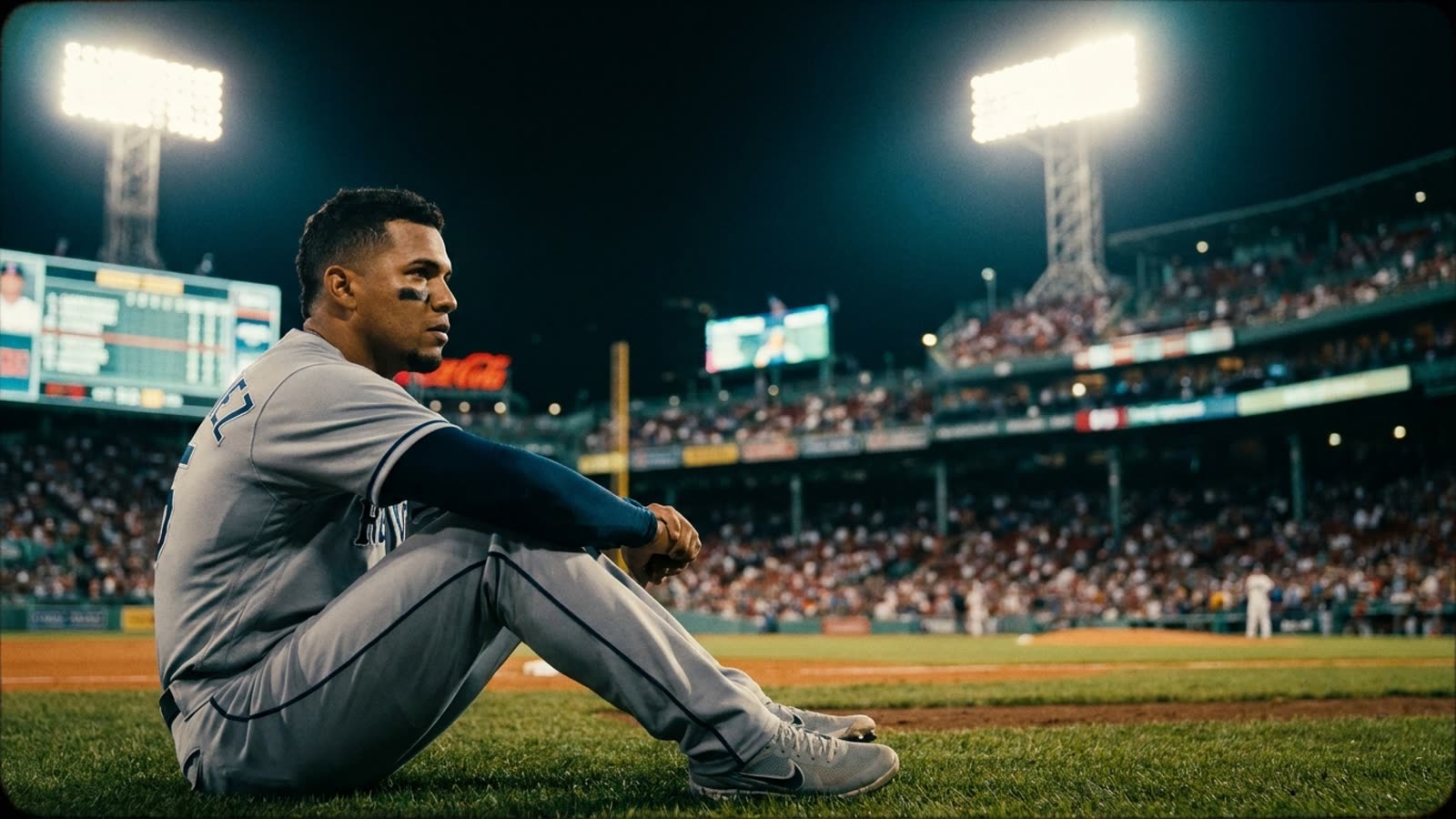
In an era when baseball discourse fixates on generational talents and nine-figure contracts, Gorkys Hernandez represents something far more common and far less discussed: the replacement-level player who somehow stuck around for nearly a decade.
The Venezuelan outfielder appeared in parts of nine major league seasons, suiting up for the Braves, Pirates, Marlins, and Giants between 2012 and 2019. His career slash line — a pedestrian .239/.295/.364 — would make any sabermetrician wince. He accumulated 1.4 wins above replacement across 1,069 plate appearances, the statistical equivalent of barely existing. And yet existence, in the context of professional baseball, is itself an achievement.
The economics of roster filler
Major League Baseball employs roughly 1,200 players on 40-man rosters at any given moment, but the sport's mythology accommodates perhaps two dozen names per generation. The rest — the Gorkys Hernandezes of the world — serve an essential structural function. They provide depth when stars land on the injured list, defensive flexibility in late-inning situations, and organizational insurance against the sport's punishing attrition rate.
Hernandez earned approximately $3.2 million across his career, according to Baseball Reference. Comfortable money by civilian standards, but a rounding error in a sport where Shohei Ohtani's contract alone exceeds $700 million. The journeyman's compensation reflects his replaceability — there are always more Gorkys Hernandezes in Triple-A, waiting for their forty-eight hours of roster opportunity.
What comes after the uniform
The transition out of professional sports remains one of athletics' least examined crises. Studies suggest that roughly 78 percent of NFL players face financial distress within two years of retirement; baseball's longer careers and guaranteed contracts provide slightly more cushion, but the psychological adjustment proves equally brutal.
Players who never achieved stardom face a particular challenge: their identities were built around a pursuit they never quite mastered, in a profession that discarded them the moment someone cheaper or younger emerged. The skills that made Hernandez a viable fourth outfielder — exceptional hand-eye coordination, the ability to read fly balls, a willingness to grind through minor league bus rides — translate poorly to civilian employment.
Our take
There is something almost subversive about remembering Gorkys Hernandez at all. Baseball wants us to care about the transcendent, the historic, the unprecedented. But the sport's actual texture is made of players like Hernandez — men who were good enough to reach the summit and honest enough to know they'd never plant a flag there. His career was not a failure. It was a nine-year meditation on the difference between excellence and adequacy, and on the quiet dignity of showing up anyway.