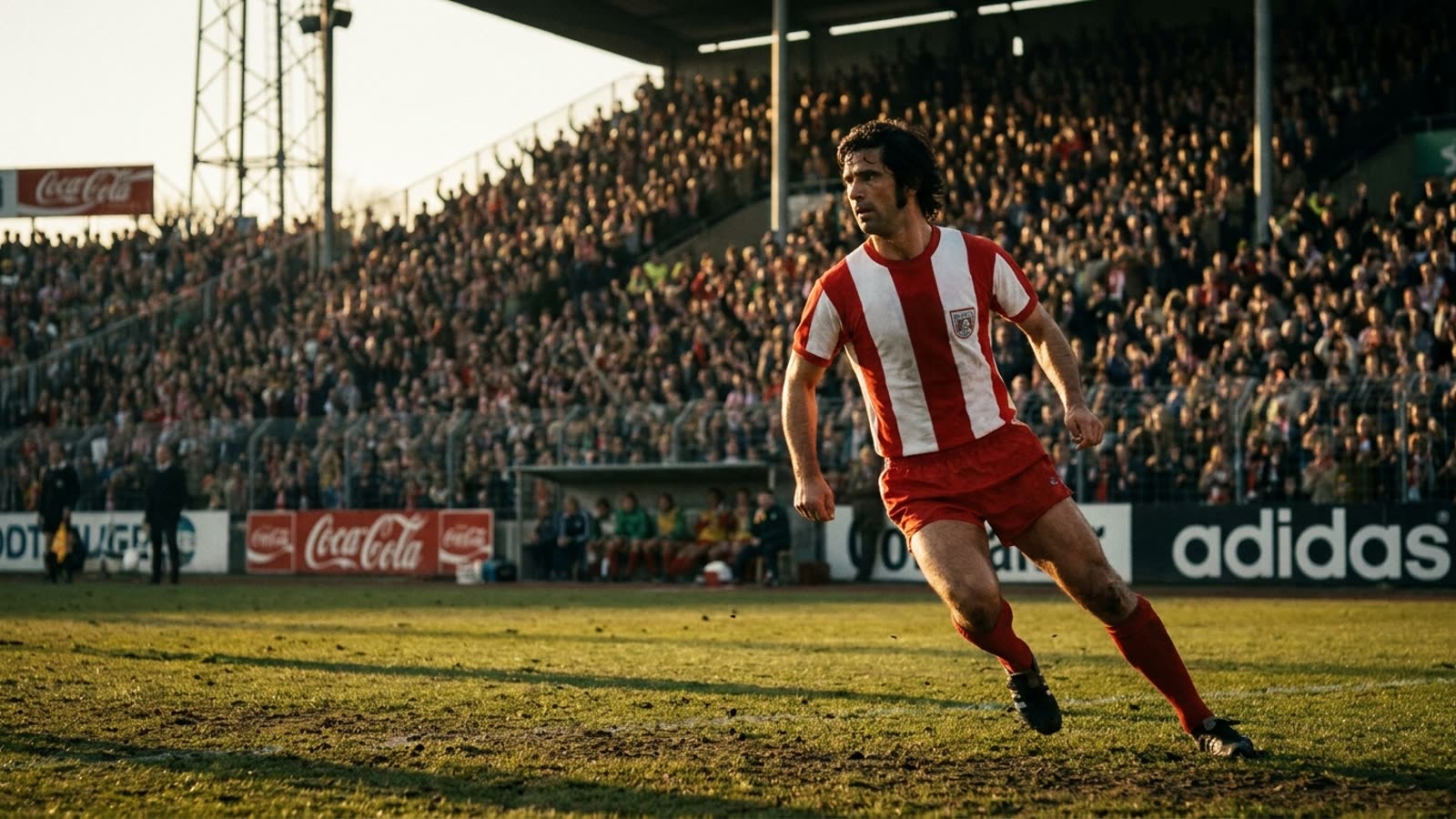
The numbers remain almost offensive in their implausibility. In 427 Bundesliga appearances for Bayern Munich, Gerd Müller scored 365 goals. At the 1970 World Cup in Mexico, he netted ten times in six matches. For West Germany across all competitions, he managed 68 goals in 62 caps. These are not statistics; they are accusations against everyone who came after.
Müller, who died in 2021 after years of declining health, was not built like a footballer is supposed to be built. At five foot nine with thick thighs and a low center of gravity, he looked more like a wrestler who had wandered onto the pitch by accident. He could not beat defenders with pace. He rarely attempted the spectacular. What he could do, with a consistency that bordered on the mechanical, was put the ball into the net from anywhere inside eighteen yards.
The geometry of the six-yard box
Müller's genius was spatial and instantaneous. He understood where the ball would arrive before the cross was struck, before the save was parried, before the defender's clearance went wrong. His movement was a continuous calculation of angles and probabilities, executed without apparent thought. Coaches who studied him found little to teach; his gift was not tactical but almost precognitive.
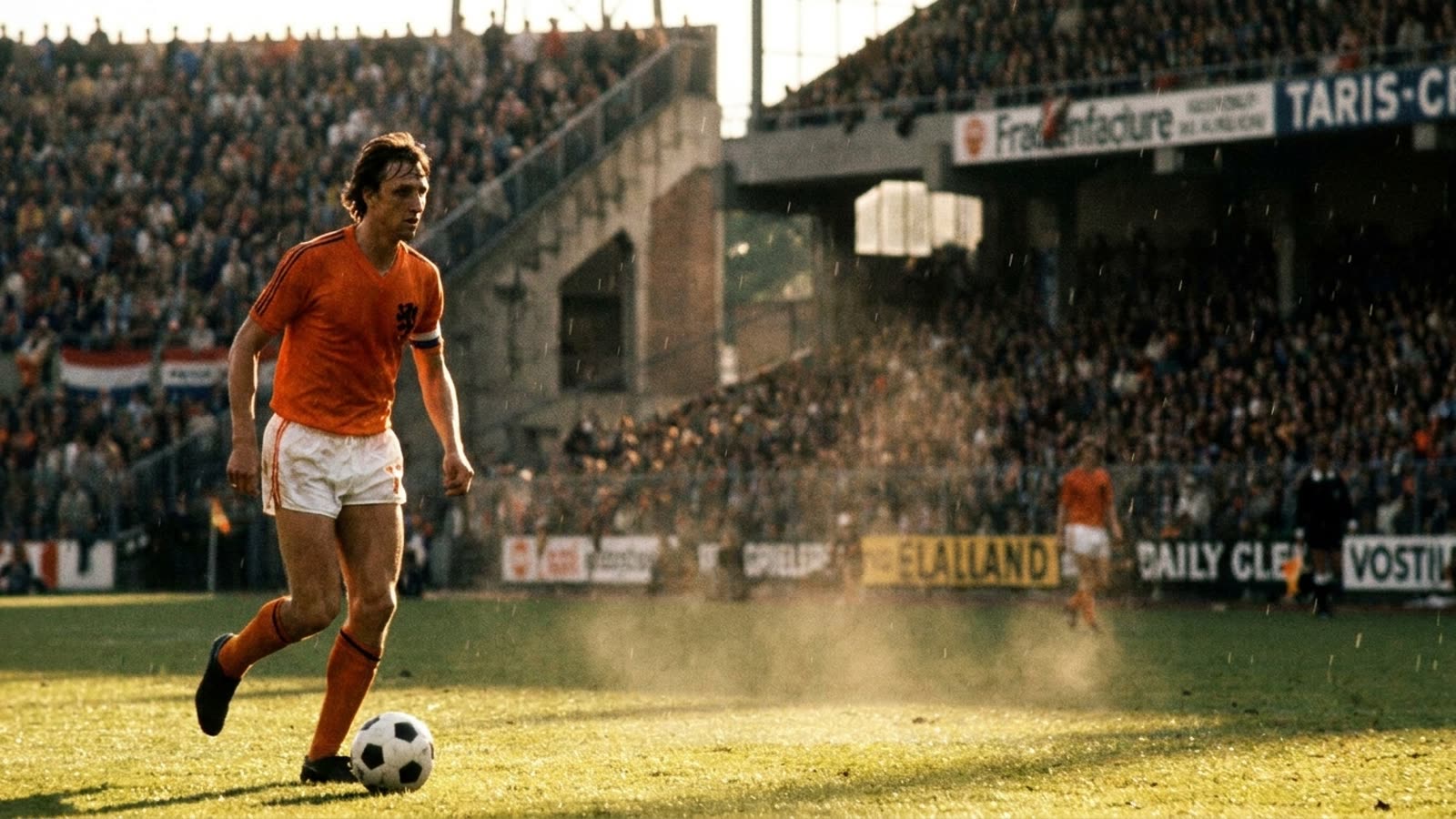
The 1974 World Cup final goal against the Netherlands remains his monument. Johan Cruyff's Dutch side had dominated the early exchanges, but when Rainer Bonhof's cross arrived from the right, Müller was already turning, already falling away from his marker, already shaping his body to redirect the ball past Jan Jongbloed. The entire sequence took perhaps two seconds. It won West Germany the tournament.
The striker's art before data
Modern football quantifies everything. Expected goals models can tell you precisely how difficult each chance was, how a striker's conversion rate compares to mathematical expectation. Applied retrospectively to Müller's career, these models confirm what observers already knew: he consistently outperformed what probability suggested was possible. He was, in the language of analytics, a massive positive outlier sustained across fifteen years.
Yet Müller played without any of this information. He could not consult heat maps of his own positioning or video breakdowns of goalkeeper tendencies. His excellence was intuitive, developed through repetition on the training grounds of Bayern Munich under coaches who simply let him do what he did. The modern striker, armed with iPads and sports scientists, has not reliably surpassed him.
Our take
The football industry now fetishizes versatility—strikers who drop deep, who press from the front, who contribute to build-up play. Müller did none of these things with any distinction. He existed for one purpose, and he fulfilled that purpose better than anyone before or since. There is something almost subversive about his legacy: a reminder that specialization, pursued to its absolute limit, can be more valuable than flexibility. Every number nine who poaches a scrappy goal from three yards owes a debt to the stocky Bavarian who made it an art form.