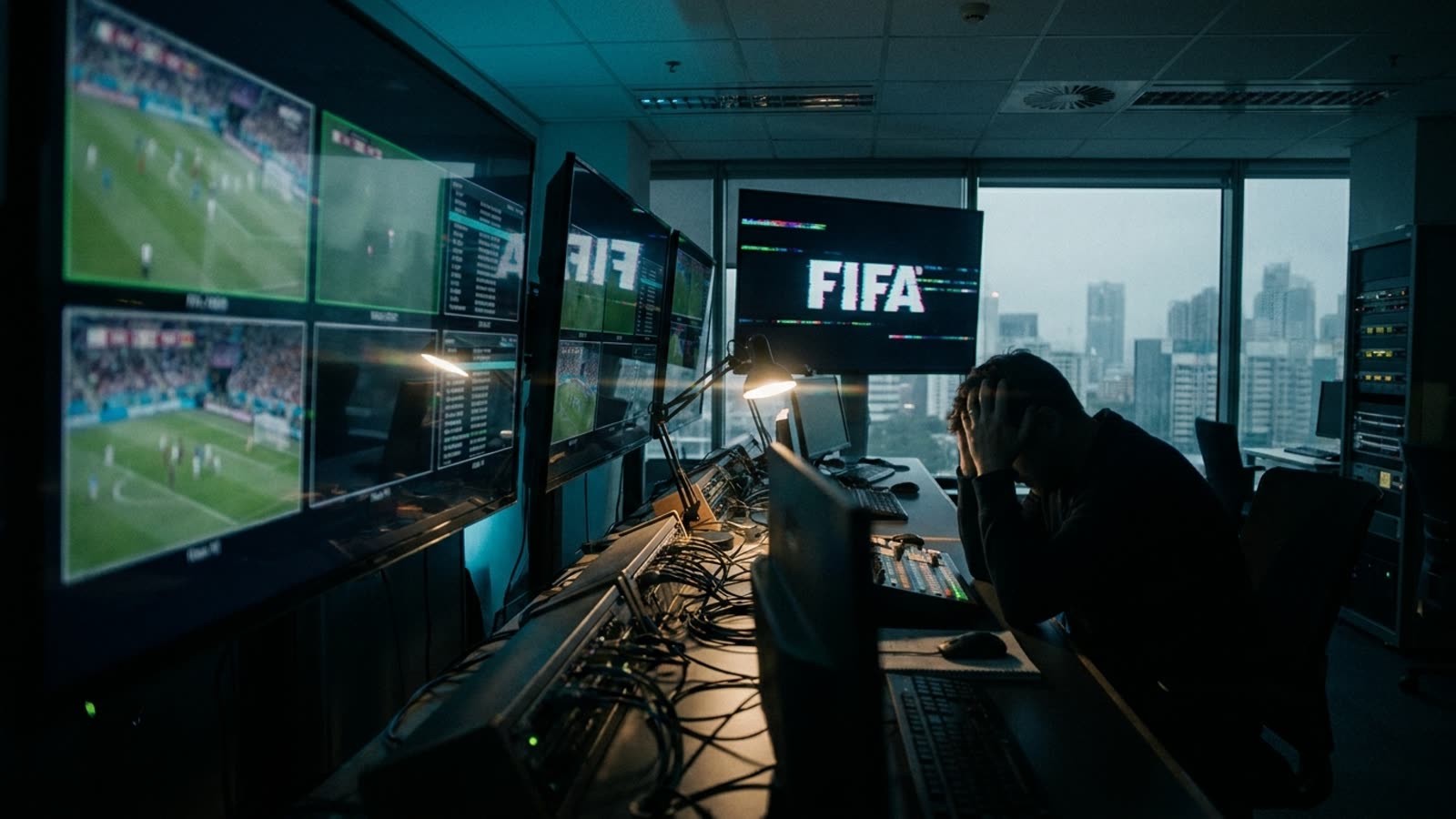
The 2026 World Cup has delivered stunning football, record-breaking viewership, and now a reminder that the entire spectacle rests on digital foundations that nearly crumbled. A security researcher discovered that FIFA's internal broadcast management system contained a vulnerability allowing virtually anyone with basic technical knowledge to modify the live television feed reaching billions of viewers worldwide.
The flaw, disclosed responsibly and patched before any malicious exploitation occurred, would have permitted unauthorized users to inject content, alter graphics, or potentially disrupt the signal entirely. For a tournament commanding advertising rates north of $1 million per thirty-second spot and serving as the centerpiece of a $7 billion commercial operation, the implications are staggering.
The architecture of vulnerability
Modern sports broadcasting involves a byzantine chain of systems connecting cameras, production trucks, graphics engines, and distribution networks. FIFA's internal platform, which coordinates these elements across multiple host cities and feeds to hundreds of broadcast partners, apparently lacked adequate authentication controls at a critical juncture. The researcher found that certain API endpoints accepted commands without proper credential verification—a fundamental security oversight that would earn a failing grade in an undergraduate computer science course.
What makes this particularly alarming is the timing. The World Cup is not some hastily assembled production; FIFA has years to prepare, unlimited resources, and every incentive to ensure flawless execution. Yet the same organization that obsesses over goal-line technology accurate to the millimeter apparently neglected basic access controls on systems governing what 5 billion cumulative viewers actually see.
The broadcast economy at stake
Television rights for this World Cup sold for approximately $3 billion across all territories, with individual thirty-second advertising slots during marquee matches commanding prices that rival the Super Bowl. A compromised broadcast—whether through inserted content, disrupted feeds, or even subtle manipulation of on-screen graphics—would have triggered immediate commercial chaos and potentially voided contractual obligations worth hundreds of millions.
Beyond the immediate financial exposure, the reputational damage would have been incalculable. FIFA already battles credibility issues stemming from corruption scandals and controversial host selections. Adding "couldn't secure its own television feed" to that ledger would have been a humiliation from which the organization might never fully recover.
Our take
This near-miss should prompt uncomfortable questions about the security posture of major sporting organizations generally. If FIFA—with its resources, lead time, and existential dependence on broadcast revenue—can leave such elementary vulnerabilities unaddressed, what lurks in the systems of leagues and federations with fewer resources? The researcher who found this flaw did everyone a favor by disclosing responsibly. The next person who finds a similar hole might not be so civic-minded. Sports broadcasting has become too valuable, too central to the cultural economy, to run on infrastructure that would embarrass a mid-sized e-commerce site.