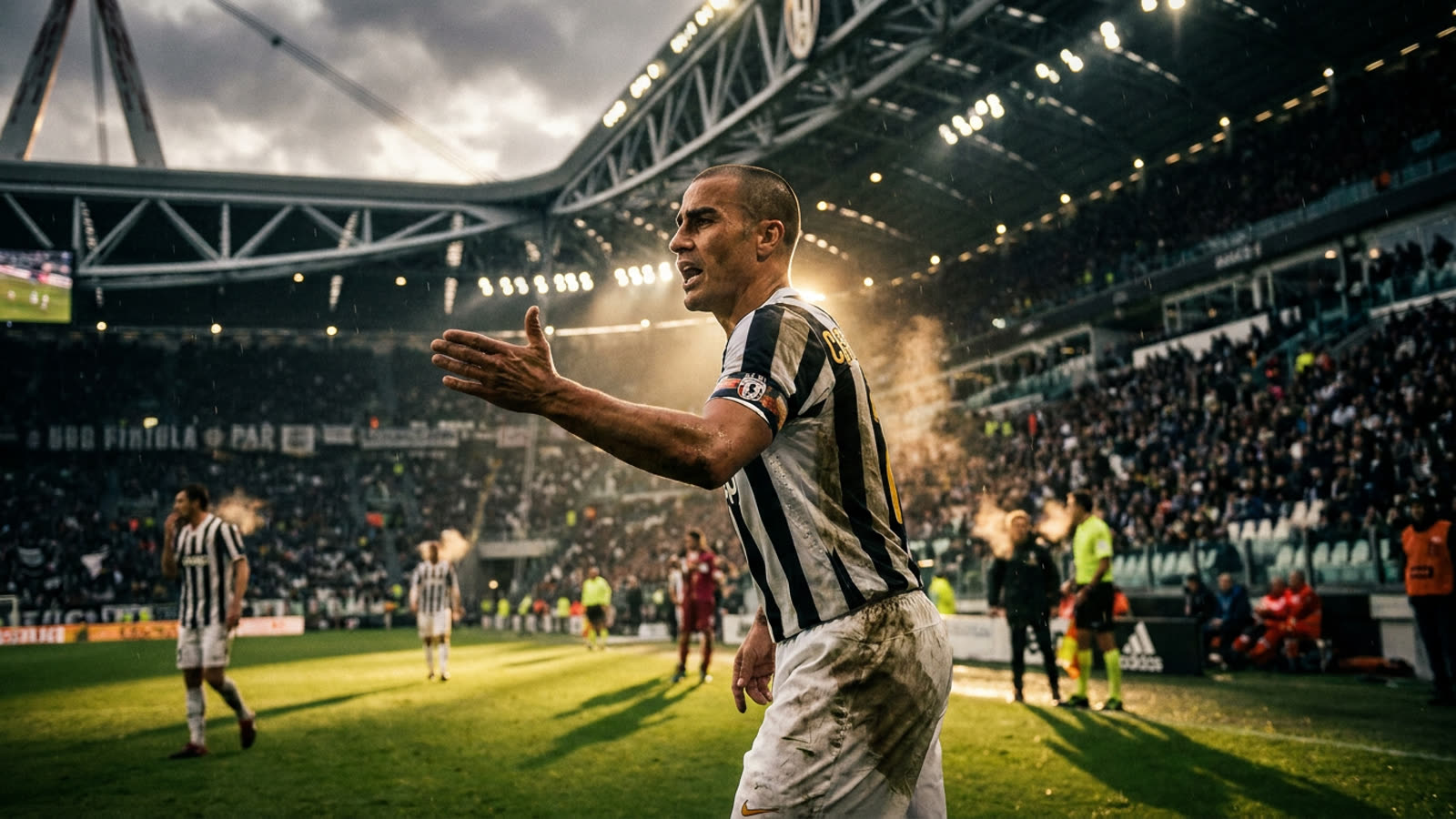
In the entire history of the Ballon d'Or, exactly one pure defender has claimed the prize. Not a sweeper who moonlighted as a playmaker, not a full-back with double-digit assists, but a center-back whose job description was simply to stop other people from scoring. Fabio Cannavaro's 2006 victory remains football's most elegant rebuke to the sport's obsession with goals — and its most thoroughly ignored one.
The Italian's triumph was not a sentimental gesture. That summer in Germany, Cannavaro was genuinely the best player at the World Cup, a tournament where Italy conceded only two goals in seven matches, one an own goal and the other a penalty. At thirty-two, supposedly past his physical peak, he played every minute of the competition and made defending look like an art form rather than a chore. He read the game with the precision of a chess grandmaster, arriving at the ball not through desperate lunges but through anticipation so refined it appeared almost lazy.
The anatomy of defensive perfection
What made Cannavaro extraordinary was the combination of physical limitation and technical mastery. At five feet nine inches, he was undersized for his position by any era's standards. He compensated with a vertical leap that belonged in basketball, timing that bordered on precognition, and a competitive fury that never quite spilled into recklessness. He accumulated remarkably few yellow cards for a player of his intensity.
His partnership with Alessandro Nesta at that World Cup represented defending at its philosophical purest. Neither man was interested in the ball once the danger had passed; they simply wanted to eliminate threats with maximum efficiency and minimum drama. In an age increasingly enamored with ball-playing center-backs who spray fifty-yard diagonals, Cannavaro's approach feels almost quaint — and almost extinct.
The prize that stayed lonely
The Ballon d'Or's history tells a story the sport would rather not examine too closely. Before Cannavaro, the last defender to win was Matthias Sammer in 1996, and he was a libero who functioned as an extra midfielder. Before Sammer, Franz Beckenbauer, another libero. The last traditional center-back before Cannavaro? Arguably never, depending on how strictly one defines the role.
Since 2006, the drought has continued unbroken. Sergio Ramos scored crucial goals in Champions League finals and still never came close. Virgil van Dijk finished second in 2019 after a season of near-flawless defending and a Champions League trophy, yet lost to Lionel Messi by a comfortable margin. The message from voters has been consistent: defenders can be appreciated, even admired, but the sport's highest individual honor belongs to those who create and score.
Our take
Cannavaro's Ballon d'Or was not an aberration that the sport corrected; it was a brief moment of clarity that the sport chose to forget. The award has always been a popularity contest dressed in meritocratic clothing, and popularity in football flows toward the ball, toward goals, toward moments that can be endlessly replayed and monetized. Defenders do their best work in negative space, in the things that do not happen. Cannavaro proved that excellence in prevention could, for one shining year, outweigh excellence in creation. That no defender has won since suggests the lesson was too uncomfortable to remember.