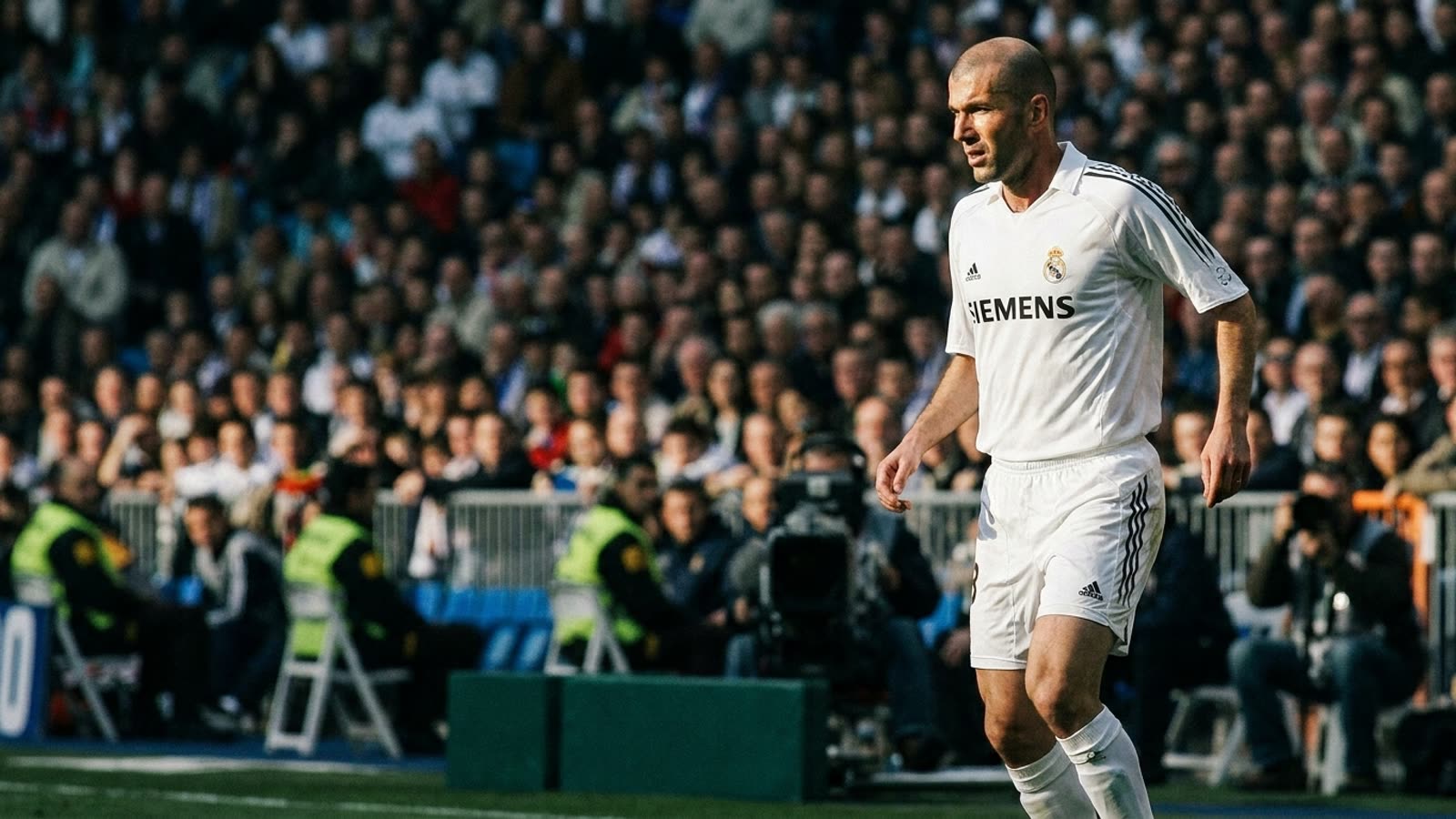
Great careers are supposed to end with triumph or tragedy, not with a choice that obliterates the distinction between them. Zinedine Zidane's headbutt on Marco Materazzi in the 2006 World Cup final gave us something rarer: an ending that refuses to resolve into meaning, a moment so strange it has become its own genre of sports memory.
The facts are simple enough. In the 110th minute of a 1-1 final, with France and Italy grinding toward penalties, Zidane drove his forehead into Materazzi's chest and walked off the pitch, past the trophy he would never touch. France lost the shootout. The greatest midfielder of his generation exited football in a red card's wake.
The impossible arithmetic of legacy
What makes the incident singular is not its violence—football has seen worse—but its timing and authorship. This was Zidane's announced farewell, his last dance, the culmination of a tournament in which he had been transcendent. His extra-time penalty against Portugal in the semifinal, his Panenka chip against Italy's Gianluigi Buffon to open the final's scoring: these were the brushstrokes of a master signing his work. Then he chose to sign it with something else entirely.
The headbutt inverted the usual grammar of sporting greatness. Athletes are supposed to subordinate ego to team, impulse to strategy, the personal to the collective. Zidane, in that moment, did the opposite with such totality that it became its own form of purity. He chose himself—his honor, his rage, whatever Materazzi said about his family—over a World Cup. The transgression was so complete it achieved a kind of integrity.
Why it still confounds
The incident resists the redemption arcs that sports media prefers. Zidane has never apologized, never fully explained, never performed the contrition ritual that would allow the story to close. In interviews, he has said he does not regret it, only that he wishes it had not happened in front of children. This is not quite remorse. It is something more interesting: an acknowledgment of consequence without a renunciation of cause.
Materazzi eventually revealed the insult—a crude remark about Zidane's sister—but even this clarification clarifies nothing. Was the response proportionate? Understandable? Unforgivable? The answer depends entirely on what you believe football is for, what honor means, whether a man can be both victim and perpetrator in a single gesture. The moment is a Rorschach test that tells you more about the viewer than the viewed.
Our take
The headbutt endures because it is genuinely unresolved, and we live in an era that hates the unresolved. Every controversy must have a villain, every fall must have a lesson, every story must have a take. Zidane gave us something that refuses all of it. He was the best player on the pitch, then he was gone, and the space between those two facts is still empty. That emptiness is the point. Some endings are not conclusions but questions, and the best questions are the ones we never stop asking.