For all the trophies Erling Haaland has accumulated at club level—the Premier League titles, the Champions League, the absurd goal-scoring records that made statisticians recalibrate their models—there remained one persistent asterisk. Norway, a footballing afterthought for decades, had never qualified for a World Cup during his senior career. The greatest striker of his generation had never played a single minute in the tournament that defines legacies.
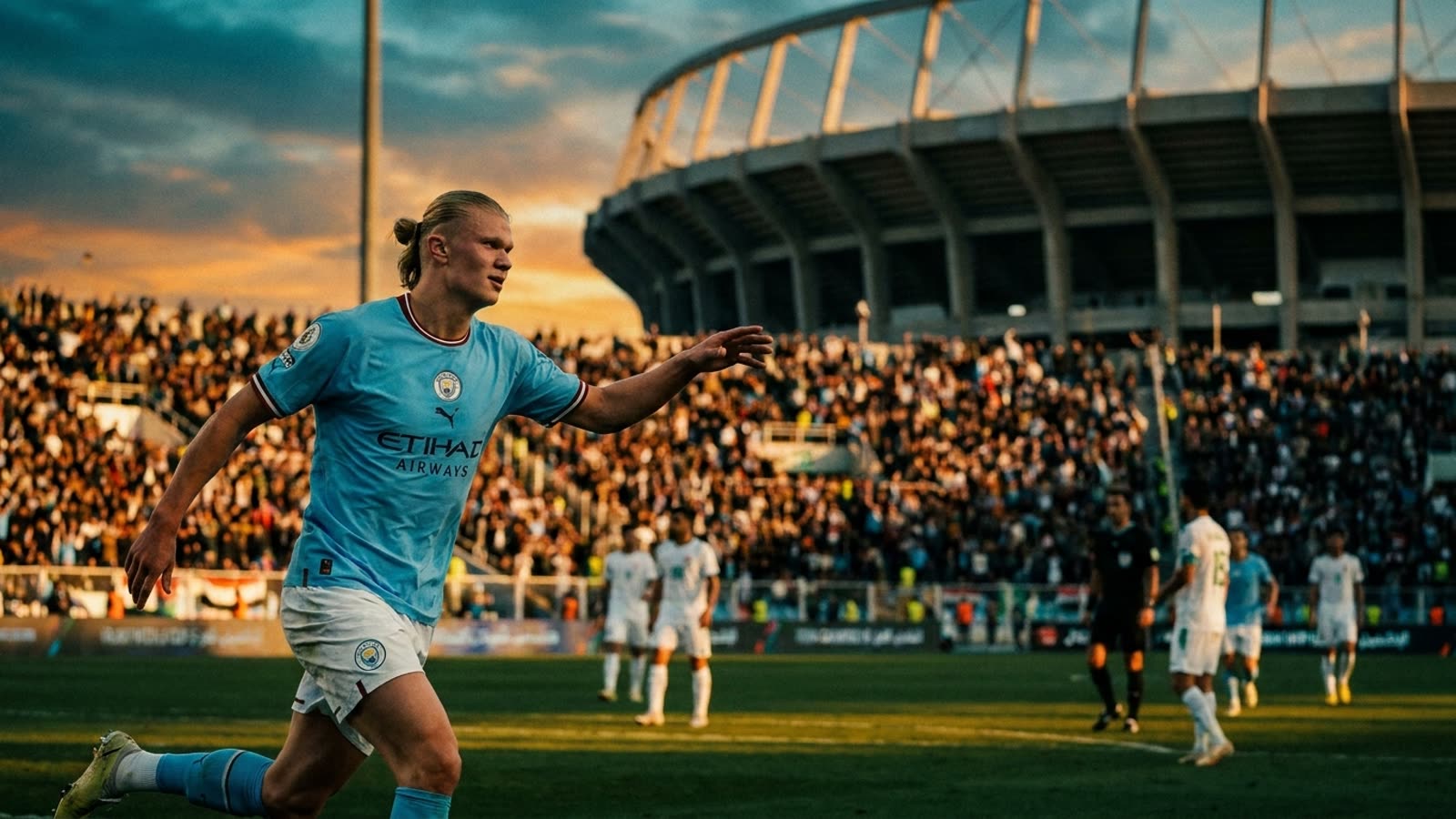
That changed in New Jersey on Monday, and Haaland wasted no time establishing that his particular brand of ruthless efficiency travels just fine to the world stage. Two goals against Iraq, both vintage Haaland: one a predatory finish from close range after a scramble in the box, the other a demonstration of the explosive pace and clinical composure that has terrorized Premier League defenses for four seasons. Norway won comfortably, and the tournament finally has its most marketable active player fully engaged.
The weight of expectation
Haaland entered this World Cup carrying a burden that few modern strikers have faced. At twenty-five, he has already scored more than 250 career goals and won virtually every domestic honor available. But international tournaments operate on different logic—they compress careers into three-week windows where timing, fitness, and draw luck matter as much as talent. Haaland's previous near-misses with Norway in qualification campaigns had begun to feel like a cruel cosmic joke, the sport's most prolific finisher denied the stage that would cement his place alongside the all-time greats.
The brace against Iraq will not, by itself, alter that calculus. Iraq, making only their second World Cup appearance since 1986, were overmatched from the opening whistle. But Haaland's movement, his positioning, his absolute certainty when the ball arrived in dangerous areas—these were reminders that his game does not depend on Pep Guardiola's system or Kevin De Bruyne's service. He creates space that lesser strikers cannot imagine and finishes chances that others would not recognize as chances at all.
Norway's tournament ceiling
The more interesting question is whether this Norwegian side can advance far enough for Haaland's presence to truly matter. Their group includes Spain and a dangerous Morocco side that reached the 2022 semifinals. Manager Ståle Solbakken has built a functional team around his star, with Martin Ødegaard providing creativity from midfield and a defense that has grown sturdier over the qualifying campaign. But Norway lack the depth and tactical sophistication of genuine contenders.
What they have is Haaland, and in knockout football, sometimes that is enough. A single moment of brilliance can decide a match, and no active player produces those moments more reliably. The tournament's structure—expanded to forty-eight teams, with more matches and more opportunities for chaos—theoretically favors teams built around transcendent individuals.
Our take
Haaland's World Cup debut was exactly what it needed to be: emphatic, efficient, and utterly devoid of drama. The goals will feature in highlight packages for years regardless of how Norway's tournament ends. But the real significance lies in what comes next. Haaland has spent his career answering every question posed to him—too young, too one-dimensional, too dependent on service, too injury-prone. The World Cup was the last remaining skepticism, and he has now officially arrived. Whether Norway can provide him a stage worthy of his talents remains uncertain, but the striker has done his part. He always does.