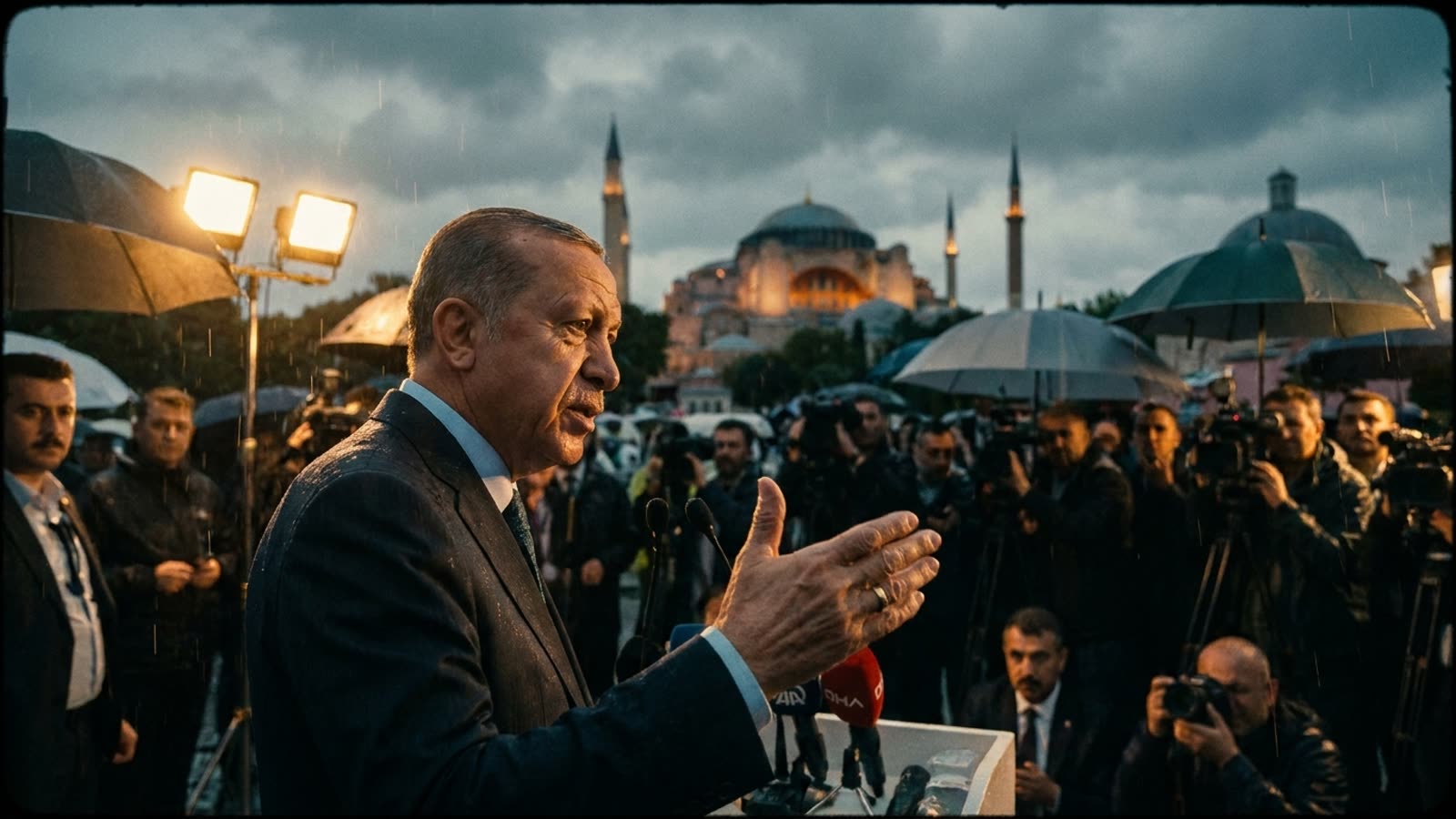
Recep Tayyip Erdogan has spent the better part of four years auditioning for the role of the war's honest broker, and on Saturday he delivered his latest pitch: a renewed Black Sea grain corridor, brokered in Istanbul, with Turkey as guarantor. The setting was familiar—the same city where the original grain deal was signed in 2022 before Russia withdrew a year later—and so was the underlying dynamic. Erdogan wants to matter; Volodymyr Zelenskyy wants any leverage he can find; and Vladimir Putin wants to see what concessions he can extract without committing to anything.
The joint statement that emerged from the summit was notable mostly for what it did not contain: no timeline, no Russian signature, no enforcement mechanism. Erdogan urged both sides to "stop attacks on civilian vessels and port infrastructure," a plea that has the rhetorical weight of asking a bar fight to observe Marquess of Queensberry rules.
Why Erdogan keeps trying
Turkey's interest in mediation is not altruistic. The original grain deal positioned Ankara as a geopolitical player at a moment when NATO allies were questioning its reliability, and it gave Turkish companies a cut of the shipping and insurance business. A revival would serve similar purposes, plus one more: with Trump's second term focused on domestic battles and European attention drifting toward its own elections, Erdogan sees a vacuum he can fill. The Turkish economy remains fragile, inflation is still elevated, and a diplomatic win would not hurt ahead of municipal contests next spring.
The Zelenskyy calculus
For Ukraine, the summit was low-cost, high-optionality. Zelenskyy secured another round of international headlines framing Kyiv as the reasonable party willing to negotiate, while committing to nothing substantive. He knows that any grain corridor without ironclad security guarantees is merely a Russian resupply window dressed up as humanitarian relief. The previous deal collapsed precisely because Moscow used the pause to reposition forces and then cited phantom "security concerns" to withdraw. Kyiv's generals have not forgotten.
Moscow's conspicuous absence
Russia's response to the Istanbul overture has been a masterclass in diplomatic non-commitment. The Kremlin issued a statement noting it would "study" the proposal, which in Moscow's lexicon means "file it next to the Minsk accords." Putin has no incentive to stabilize grain flows when high food prices pressure European voters and when the threat of famine can be weaponized against African and Middle Eastern governments that might otherwise support Ukraine. The Black Sea is not a humanitarian corridor for Russia; it is a lever.
Our take
Erdogan's persistence deserves a certain grudging respect—he is one of the few leaders willing to sit in a room with both sides and pretend progress is possible. But pretending is not the same as achieving. Until one party is desperate enough to accept terms the other can live with, these summits will remain what they have always been: photo opportunities with communiqués. The grain will flow when the guns stop, not before.