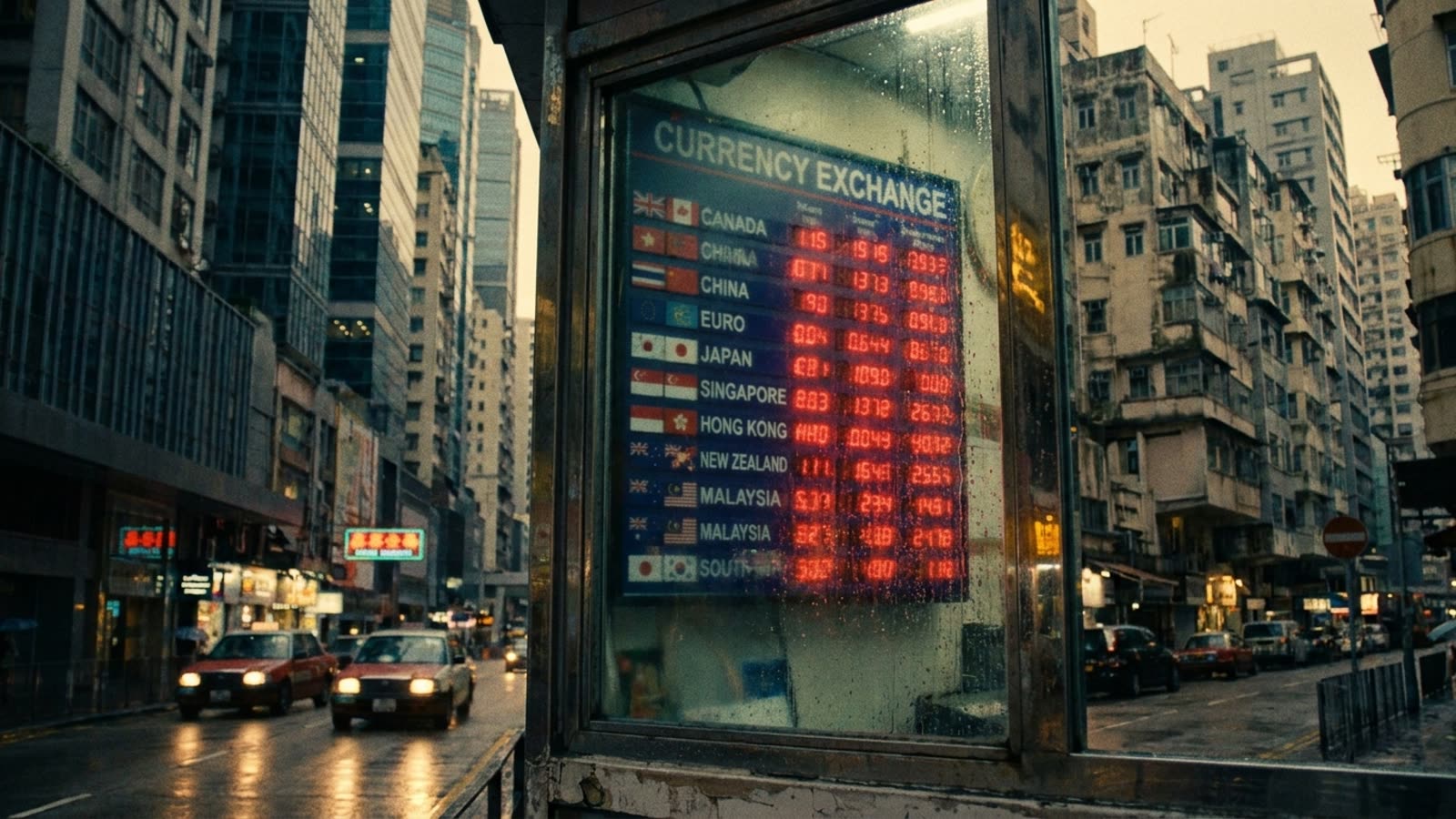
There is a monetary arrangement so austere, so philosophically extreme, that most economics textbooks treat it as a historical curiosity. The currency board—a system in which a country's central bank holds foreign reserves equal to every unit of domestic currency in circulation and promises to exchange them at a fixed rate, no questions asked—sounds like something from the gold standard era. Yet Hong Kong has operated one since 1983, Bulgaria since 1997, and Bosnia and Herzegovina since the Dayton Accords. The arrangement persists because it solves a problem that haunts developing and post-crisis economies: credibility.
The logic is brutal in its simplicity. A traditional central bank can print money to finance government deficits, bail out banks, or stimulate growth. A currency board cannot. Every Hong Kong dollar in existence is backed by an equivalent amount of US dollars sitting in the Hong Kong Monetary Authority's vaults. If the government wants to spend more than it collects in taxes, it must borrow on the open market like any private company. The central bank cannot ride to the rescue.
The appeal of self-imposed chains
For countries emerging from hyperinflation or war, this constraint is the entire point. Argentina adopted a currency board in 1991 after inflation had exceeded 3,000 percent annually. Bulgaria implemented one after its banking system collapsed in 1996-97 and the lev lost 97 percent of its value in a matter of months. The message to citizens and foreign investors was identical: we are tying our own hands so thoroughly that you can trust our money again.
The results, in the short term, are often spectacular. Argentina's inflation fell to single digits within two years. Estonia, which adopted a currency board upon independence from the Soviet Union in 1992, built one of the most stable monetary environments in the former Eastern Bloc. The mechanism works precisely because politicians cannot meddle with it. A finance minister who wants to goose the economy before an election finds the printing press locked.
The price of credibility
But currency boards extract a toll that becomes apparent only during crises. When Argentina's economy contracted sharply in the late 1990s—battered by falling commodity prices and a strong dollar—the government could not devalue to restore competitiveness. It could not print money to recapitalize failing banks. The straitjacket that had conquered inflation now prevented any monetary response to recession. Argentina abandoned its currency board in 2002, defaulted on its debt, and watched the peso lose three-quarters of its value in months.
Hong Kong, by contrast, has maintained its peg through the Asian financial crisis, SARS, the global financial crisis, and repeated speculative attacks. The difference lies partly in fiscal reserves—Hong Kong's government sits on enormous surpluses—and partly in the flexibility of its labor and property markets, which can adjust when the exchange rate cannot. A currency board demands that all economic adjustment happen through wages and prices rather than the exchange rate. Societies with rigid labor markets find this excruciating.
Our take
The currency board is not a relic; it is a permanent temptation for any country whose citizens have learned, through bitter experience, that their government cannot be trusted with a printing press. It trades monetary flexibility for monetary credibility—a bargain that looks brilliant during booms and catastrophic during busts. The lesson is not that currency boards fail, but that they succeed only when a society is willing to accept the full consequences of its own discipline. Most are not. The few that are have discovered something economists often forget: sometimes the most powerful thing a central bank can do is prove it cannot do very much at all.