Champagne is not a type of wine so much as a legal fiction enforced with unusual vigor. Only sparkling wine produced in a small region of northeastern France, using specific grapes and methods, may bear the name. Everything else—no matter how identical in taste—is merely sparkling wine, a category that sounds like a consolation prize. This geographic monopoly, policed by French law and international treaty, has created one of the most durable luxury markets in existence, one where the product's mystique matters more than its contents.
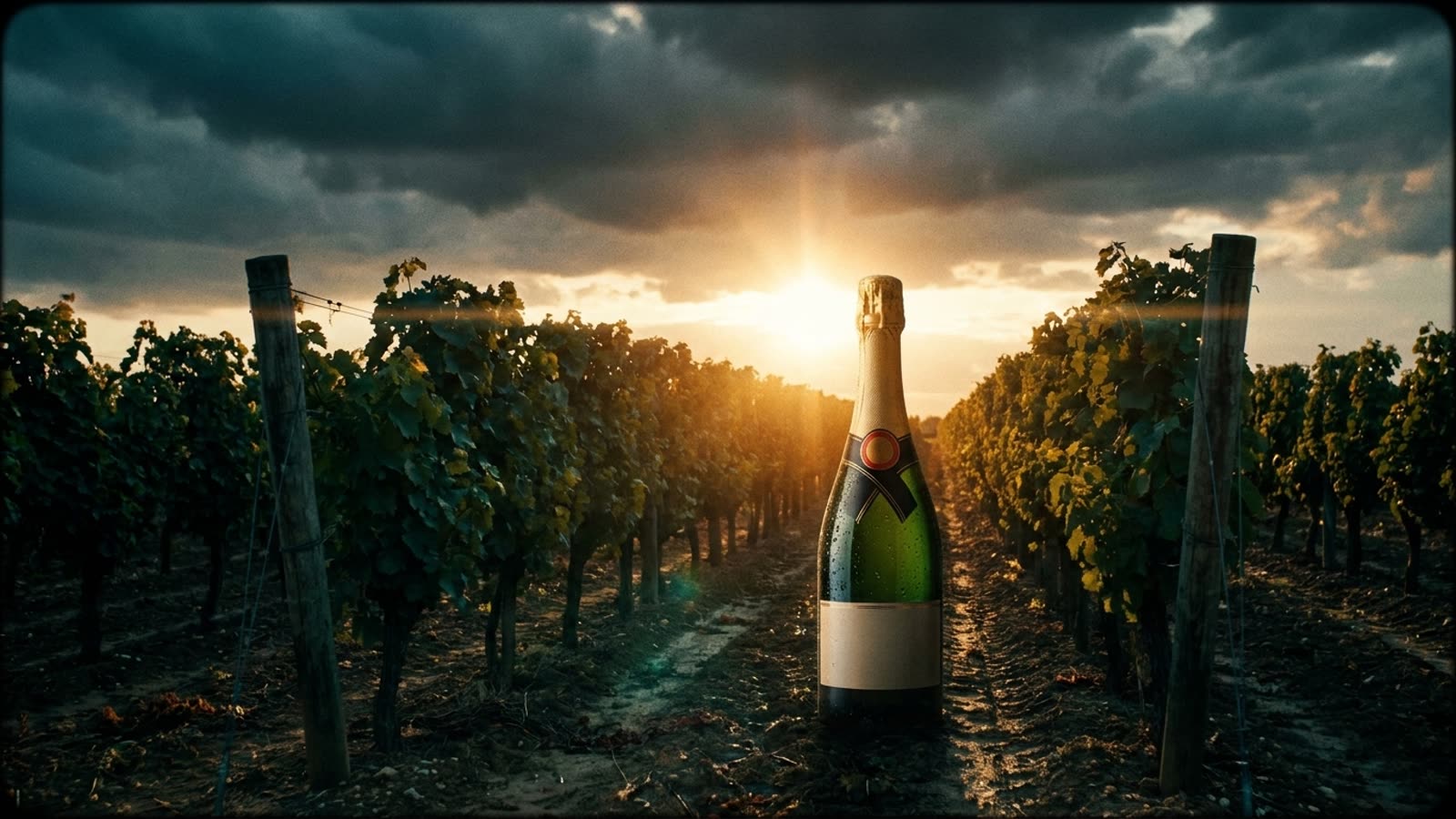
The region spans roughly 34,000 hectares of vineyards, a territory smaller than the city of Philadelphia. Yet from this modest acreage flows a product that generates billions in annual revenue and anchors countless celebrations, state dinners, and Instagram posts worldwide. The scarcity is real but also carefully managed—production quotas, strict yield limits, and mandatory aging requirements ensure that supply never quite catches up with demand.
The house always wins
The Champagne industry operates on a curious split. Thousands of small growers tend the vines, but a handful of grand marques—Moët & Chandon, Veuve Clicquot, Dom Pérignon, Krug—dominate global sales and mindshare. These houses, many owned by the luxury conglomerate LVMH, purchase grapes from growers and transform them into bottles that sell for multiples of what a comparable Crémant or Cava would fetch. The value added is not in the cellar work, which is excellent but not unique. It is in the name, the packaging, the century of marketing that made Champagne synonymous with success itself.
This structure creates a peculiar tension. Growers who sell to the houses receive stable income but capture little of the final margin. Those who bottle their own wine—grower Champagnes, increasingly fashionable among sommeliers—often produce more distinctive bottles but lack the distribution muscle to reach casual buyers. The houses, meanwhile, must balance volume with exclusivity, selling enough to justify their scale while maintaining the illusion that every bottle is a rare indulgence.
The taste of regulation
What distinguishes Champagne legally is the méthode champenoise: secondary fermentation in the bottle, extended aging on the lees, and the labor-intensive riddling and disgorgement process. These requirements add cost and time, but they also provide a convenient barrier to entry. A winemaker in California or Australia can replicate the technique perfectly—and many do—but cannot call the result Champagne. The name is the moat.
French authorities defend this moat aggressively. The Comité Interprofessionnel du Vin de Champagne, the industry's governing body, has sued everyone from a Spanish winemaker to a British supermarket over misuse of the term. The legal doctrine of appellation d'origine contrôlée, which Champagne pioneered, has since spread to Cognac, Roquefort, and dozens of other French products. It is protectionism dressed as terroir, and it works.
Our take
Champagne's genius is that it sells geography as destiny. The wine inside the bottle is often very good, occasionally transcendent, but the premium reflects something beyond quality—a collective agreement that this particular patch of chalky soil produces not just wine but meaning. It is a luxury brand without a single owner, a cartel that markets itself as tradition. For consumers, the lesson is simple: you are paying for the story as much as the drink. Whether that story is worth the markup depends entirely on how much you enjoy believing it.