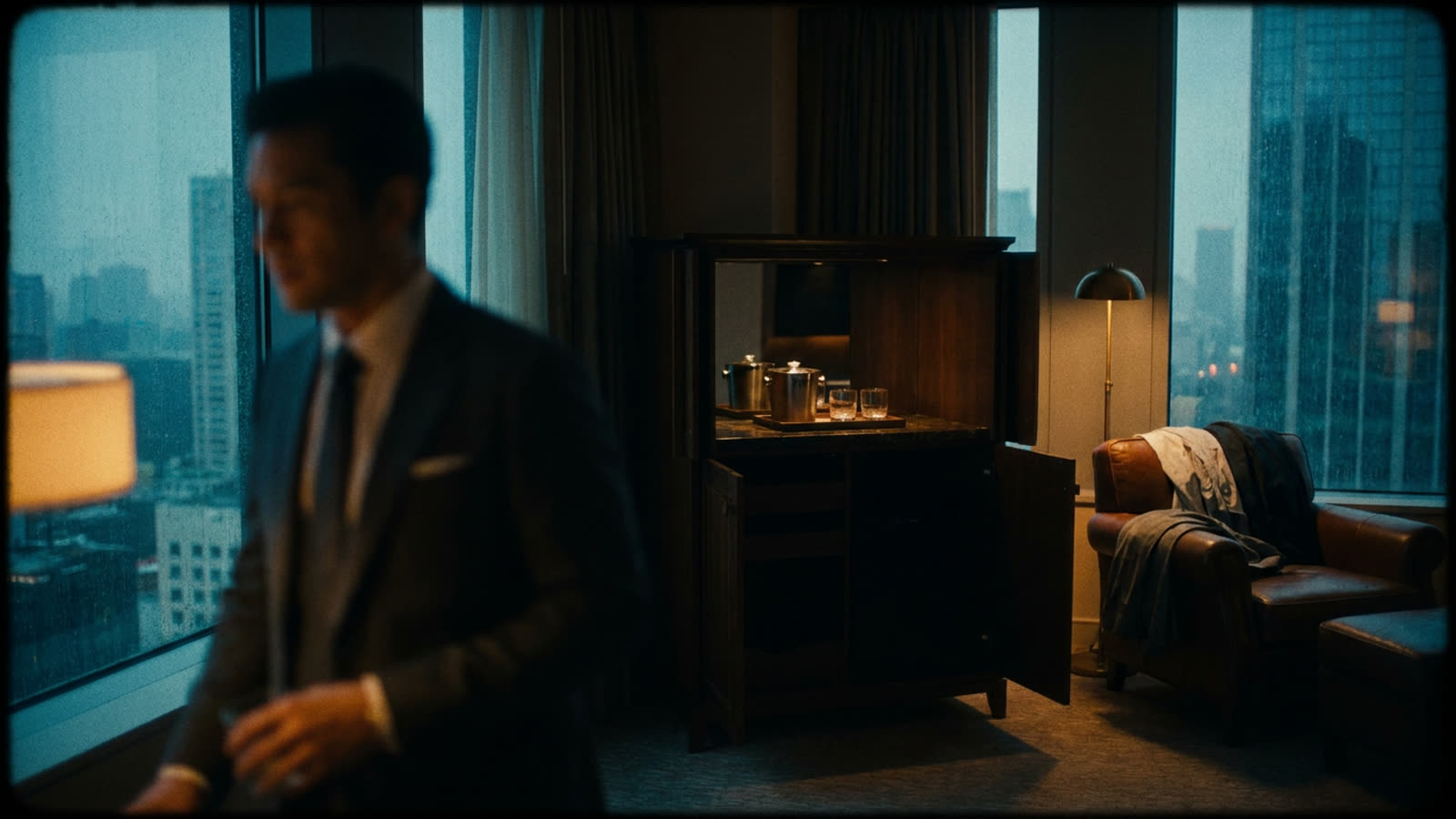
The most expensive room in a billionaire's house is often the one guests never enter. While art collections announce themselves from foyer walls and wine cellars invite tours, the private library operates on a different frequency entirely — one calibrated for an audience of exactly one.
This is collecting as meditation, not performance. The rare book market lacks the auction-house theater of contemporary art, the social currency of a vineyard acquisition, or the Instagram potential of a yacht. A first edition of Darwin's On the Origin of Species cannot be worn to a gala. A signed Hemingway manuscript will not appreciate in the background of a carefully staged photograph. And yet, for a particular strain of wealthy collector, this invisibility is precisely the point.
The economics of literary scarcity
The rare book trade operates on principles that would baffle anyone accustomed to luxury goods marketing. There are no waiting lists, no brand ambassadors, no limited drops announced on social media. The market is dominated by a handful of auction houses and private dealers who have cultivated relationships over decades, sometimes generations. Provenance matters more than condition; a book owned by a notable figure can command multiples of an identical copy with anonymous origins.
The entry point for serious collecting begins in the low six figures, but the ceiling is essentially theoretical. Institutional buyers — university libraries, museums, sovereign wealth funds building cultural portfolios — compete with private collectors for the rarest material, creating a market where supply is fixed and demand grows with each new fortune minted in technology or finance. Unlike contemporary art, where living artists can produce more work, the supply of Shakespeare First Folios will never increase from its current count of approximately two hundred known copies.
The collector's pathology
Speak to serious bibliophiles and a pattern emerges: the collection often begins with a single book that meant something in childhood or early adulthood, then metastasizes into an organizing principle for an entire life. One collects everything published by a particular press. Another pursues every significant work in the history of astronomy. A third focuses exclusively on books that changed the course of political thought.
The obsession tends toward the encyclopedic, the completist, the slightly monastic. These are not decorators filling shelves with leather-bound volumes purchased by the linear foot. They are scholars manqué, people who might have become academics in another life but instead made fortunes that allow them to build research collections that rival universities. Many eventually donate their libraries to institutions, having spent decades and millions assembling something that will outlast them.
Our take
There is something almost subversive about a status symbol designed to remain invisible. In an economy that has turned every purchase into a potential broadcast, the private library represents a refusal — of audience, of validation, of the entire attention marketplace. Whether this constitutes genuine discretion or merely a more rarefied form of showing off is a question each collector must answer for themselves, preferably while alone in a room lined with things no one else will ever see.