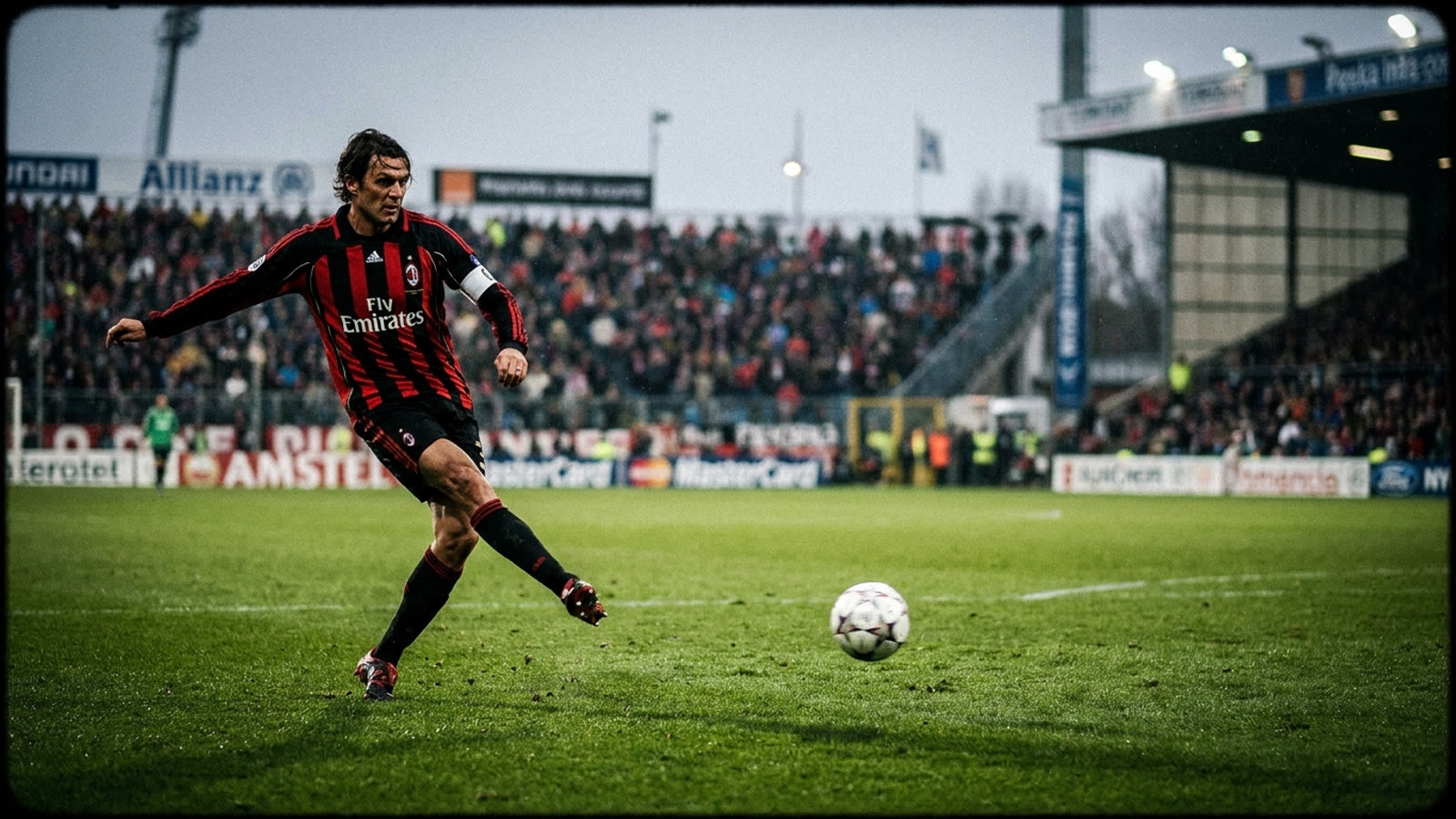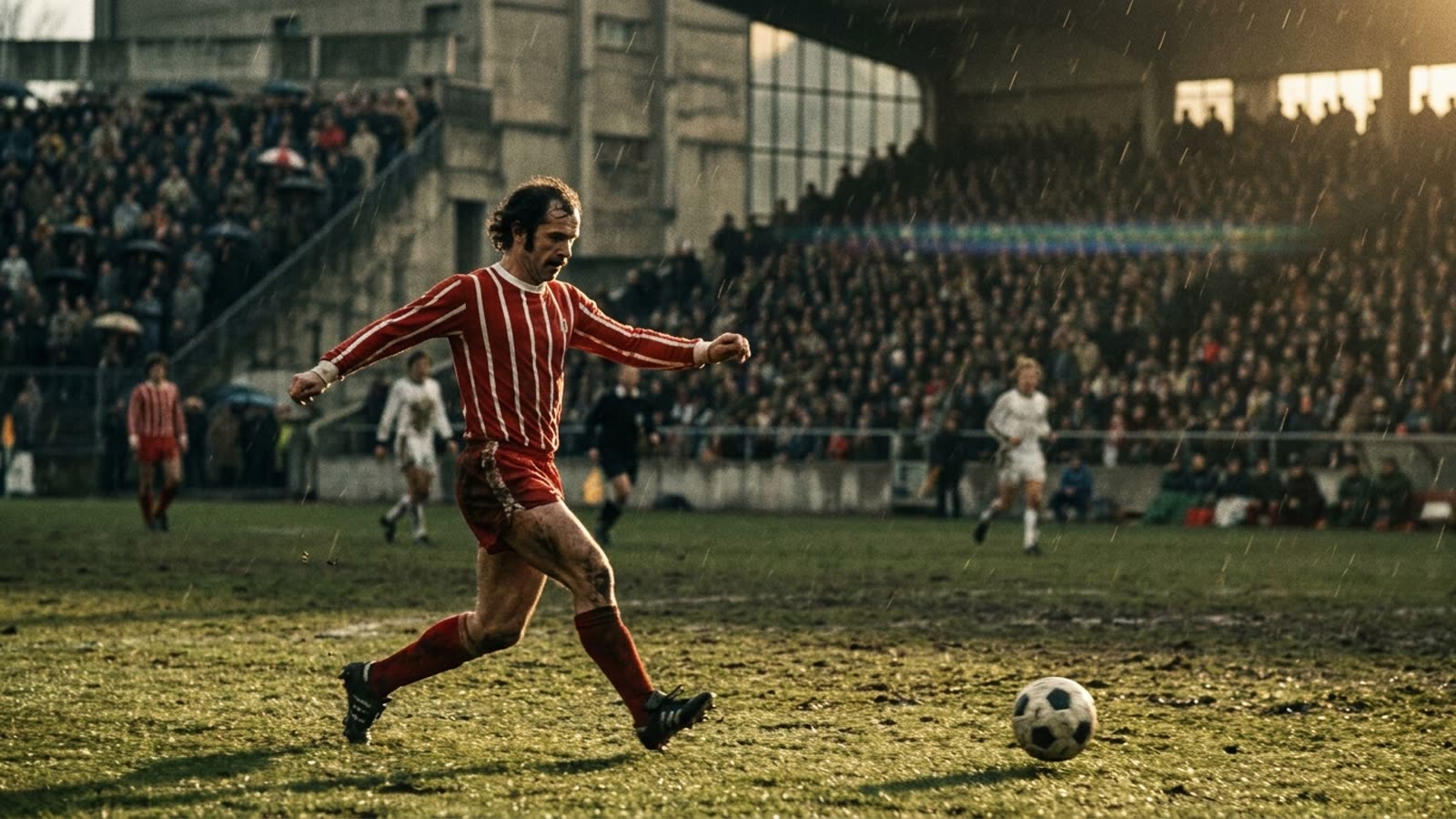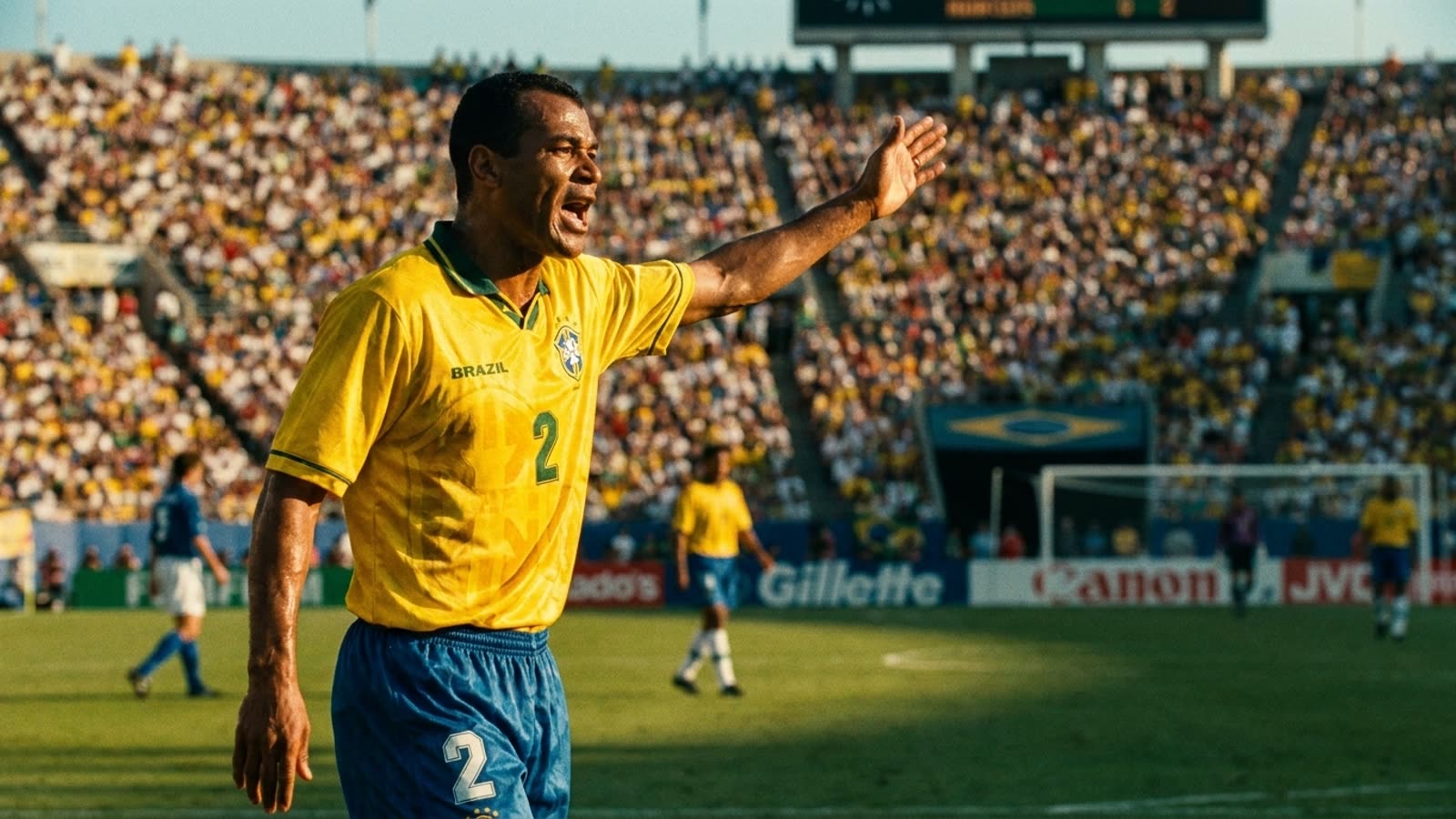
The modern fullback is expected to be a winger who happens to defend. Trent Alexander-Arnold pings diagonal balls like a regista. Achraf Hakimi carries possession into the final third as a matter of routine. João Cancelo inverts into midfield as though the touchline personally offended him. This is now unremarkable. It was once revolutionary, and the revolution had a name: Marcos Evangelista de Moraes, known to the world as Cafu.
The Brazilian right-back won two World Cups—lifting the trophy as captain in 2002—and remains the only player to appear in three consecutive World Cup finals. Those statistics alone would secure his legacy. But Cafu's true contribution was conceptual: he demonstrated that a fullback could be the primary attacking outlet without sacrificing defensive solidity. He didn't cheat at defending to attack; he simply did both, relentlessly, for ninety minutes.
The engine that never idled
Watch footage of Cafu at his peak, whether at São Paulo, Roma, or Milan, and what strikes you first is the sheer volume of ground covered. He played right-back like a box-to-box midfielder who happened to start thirty metres wider. His overlapping runs weren't opportunistic gambits; they were structural features of how his teams attacked. Managers built systems around his lung capacity.
At Roma under Fabio Capello, Cafu formed a devastating right flank with Gabriel Batistuta cutting inside and Francesco Totti drifting wherever he pleased. The width came almost exclusively from Cafu's bombing runs. When he moved to Milan and won the Champions League in 2007, he was thirty-six years old and still covering more lateral distance than players a decade younger. His fitness was not merely professional; it bordered on the absurd.
Defensive credibility as attacking license
The trap for attacking fullbacks has always been defensive vulnerability. Push too high, and you leave acres of space behind. Cafu solved this problem through positioning intelligence and recovery pace. He read the game well enough to know when to stay and when to go, and when he guessed wrong, he had the speed to correct the error before it became a crisis.
This is what separates Cafu from the many fullbacks who followed his template but lacked his balance. He was not a converted winger playing out of position; he was a genuine defender who expanded the position's possibilities. His one-on-one defending was robust, his aerial ability adequate, his tackling clean. The attacking dimension was additive, not compensatory.
The captain's armband and the smile
Cafu captained Brazil in their 2002 World Cup triumph, leading a front-heavy squad that included Ronaldo, Rivaldo, and Ronaldinho. That team is remembered for its attacking firepower, but Cafu's leadership and consistency provided the platform. He played every minute of every match in that tournament, a feat of endurance that reflected his broader career.
He was also, by all accounts, a joyful presence—grinning through matches, celebrating with abandon, embodying the stereotype of Brazilian football as carnival. This cheerfulness was not performance; teammates consistently described him as genuinely positive, a man who loved the game and showed it. In an era when footballers increasingly resembled corporate assets, Cafu looked like he was having fun.
Our take
The fullback revolution is now so complete that we risk forgetting how recently it began. Cafu did not invent the overlapping run, but he proved it could be a team's primary attacking weapon rather than an occasional surprise. Every time a modern fullback receives the ball in the opposition's half and everyone finds this completely normal, they are living in the world Cafu built. He ran the length of the pitch thousands of times so that his successors could be expected to do the same. That is as significant a tactical legacy as any midfielder or forward can claim.