For months, Democrats have watched the Trump administration's Iran policy with a mix of horror and strategic paralysis. The war that began with American strikes on Iranian nuclear facilities has killed thousands, rattled global markets, and left Washington's traditional allies scrambling to distance themselves from the campaign. Yet the opposition party's response has been curiously muted—a few procedural objections here, some hand-wringing about civilian casualties there, but nothing resembling a sustained political offensive.
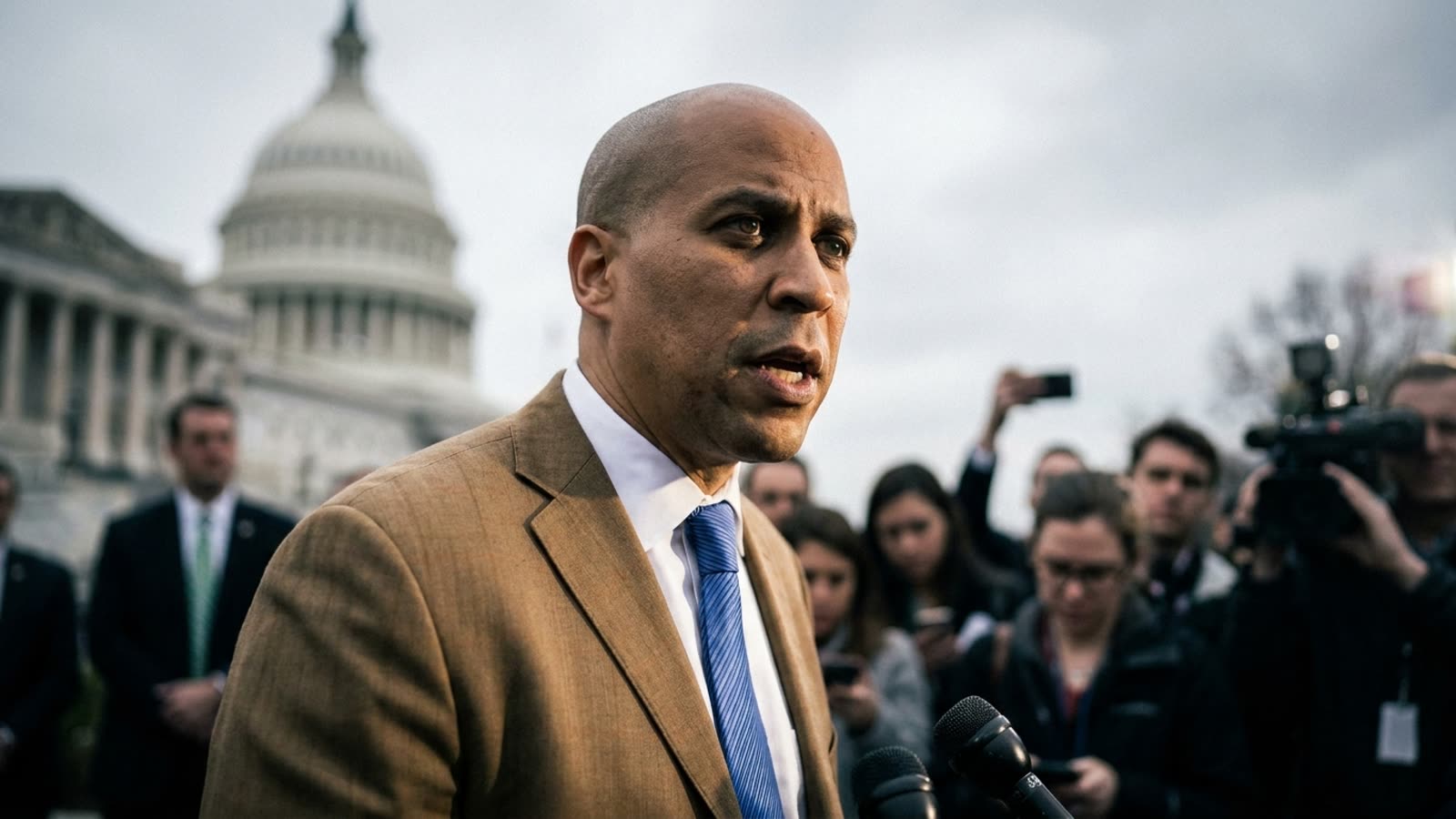
That changed this weekend when Senator Cory Booker of New Jersey declared on national television that "Donald Trump is being played as a fool" by Iranian negotiators. The six-minute broadside was notable less for its substance than for its tone: a senior Democrat finally willing to call the president's judgment into question on the defining foreign policy crisis of his second term.
The Booker gambit
Booker's critique centers on the emerging peace framework that Trump announced with considerable fanfare earlier this week. The senator argues that Tehran is extracting meaningful concessions—sanctions relief, a path back to international legitimacy—while offering only vague commitments on its nuclear program that fall short of the verification mechanisms in the 2015 deal Trump once called "the worst agreement in history."
The accusation carries particular sting because it inverts the Republican attack line that Democrats were naive about Iranian intentions during the Obama years. Booker is essentially arguing that Trump, having started a war to demonstrate toughness, is now so desperate for a headline-ready deal that he's accepting terms weaker than those he inherited and tore up.
The party's Iran problem
Yet Booker's intervention also highlights the Democratic dilemma. The party remains internally divided between its progressive wing, which opposed the war from day one and wants immediate withdrawal regardless of terms, and its hawkish remnant, which worries that any criticism of the peace process will be framed as warmongering. This incoherence has allowed Trump to occupy the political center—simultaneously the tough commander-in-chief who punished Iranian aggression and the dealmaker bringing the boys home.
Republican hawks have their own concerns about the emerging framework, but their criticism has been notably more cautious, delivered through background quotes and think-tank op-eds rather than Sunday-show denunciations. Democrats like Booker are betting that voters will reward directness, but the party has yet to articulate what it would do differently—a vulnerability Trump will surely exploit.
Our take
Booker is probably right that Trump is overselling the deal and underselling the concessions. But calling the president a fool is not a foreign policy. Until Democrats can explain what victory in Iran looks like and how they would achieve it, they're offering voters a critique without a choice. That's better than silence, but only marginally.