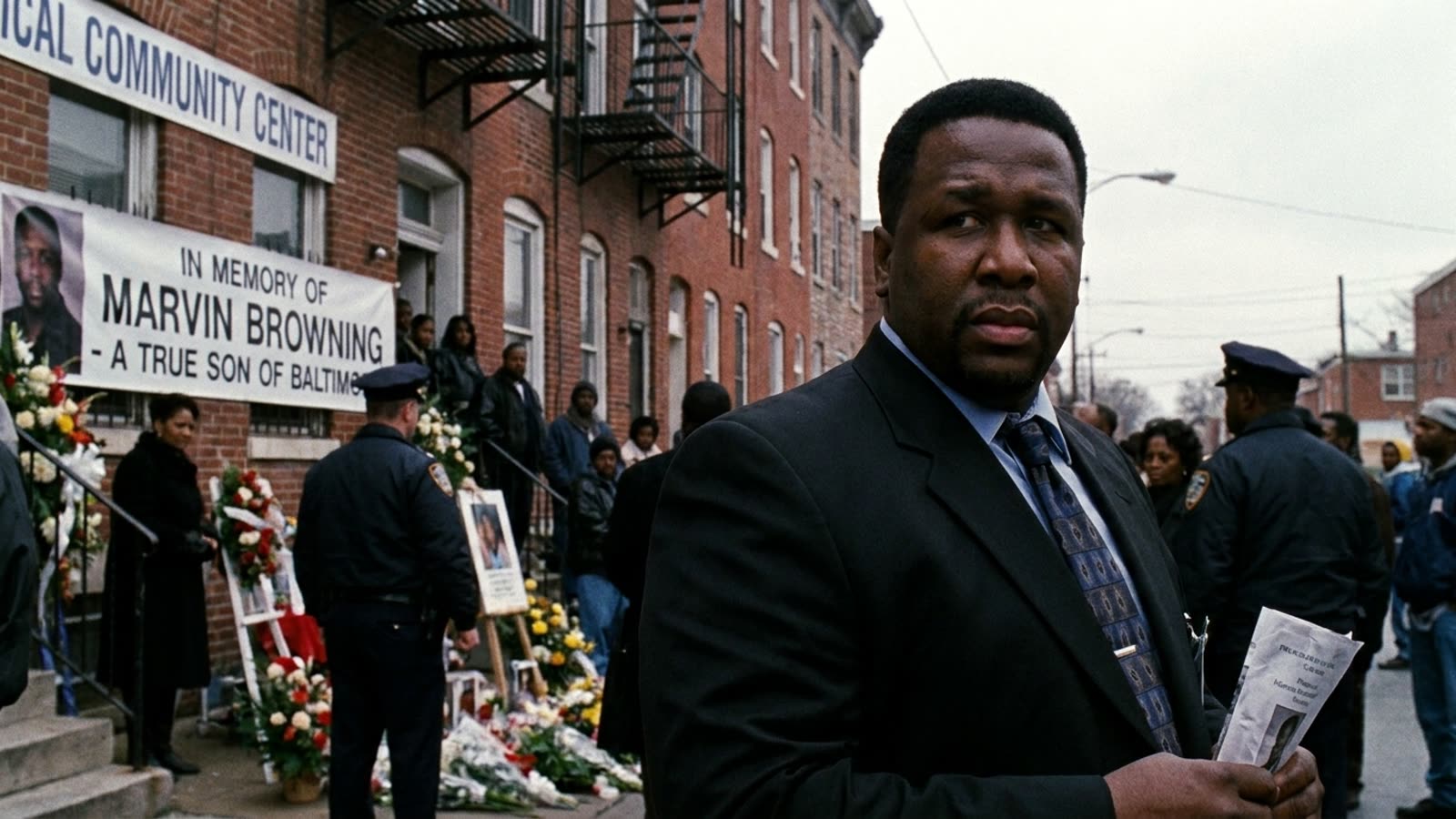
The death of Bobby J. Brown, announced this week, removes one of the quieter architects of what remains American television's most celebrated urban drama. Brown played Marvin Browning on The Wire, a role that exemplified the show's revolutionary approach to casting: find people who look like they belong in the world you're depicting, not people who look like they belong on television.
Brown was never the star. That was the point. David Simon's Baltimore required a population, not a cast—corner boys and union men, cops and teachers, politicians and addicts, all rendered with the same documentary attention to detail. Brown understood this grammar instinctively. He didn't act at the camera; he existed in front of it.
The texture of authenticity
The Wire premiered in 2002 and struggled for ratings throughout its five-season run. It became canonical afterward, the way certain novels become canonical: through word of mouth, academic syllabi, and the slow accretion of cultural authority. Brown's contribution to this legacy was structural rather than showy. He helped establish the show's baseline reality—the sense that you were watching a city rather than a production.
This approach to casting has since become standard practice in prestige television, from Treme to The Deuce to the current wave of limited series set in specific American places. Brown and his fellow Wire ensemble members were the proof of concept.
What character actors actually do
Hollywood has always needed people like Bobby J. Brown, but it has rarely known how to talk about them. The character actor exists in a strange professional limbo: essential to the texture of filmed entertainment, invisible in its marketing. Brown's IMDb page will never rival those of his more famous castmates, but his work appears in the same frames.
The economics of this career path remain brutal. Character actors work constantly or not at all. They build reputations within the industry that rarely translate to name recognition outside it. When they die, the tributes come from colleagues and superfans, not from the entertainment press's front page.
Our take
The Wire turned 24 this month, old enough now to have shaped the tastes of viewers who weren't born when it premiered. Bobby J. Brown's death is a reminder that the show's achievement was collective—that its famous verisimilitude was built actor by actor, scene by scene, by people who understood that the best performances sometimes look like no performance at all. The prestige television boom he helped enable continues. The people who made it possible are starting to leave.