The paradox of modern correspondence is that the easier it becomes to reach someone, the harder it is to be remembered. A text vanishes into the scroll; an email drowns in the inbox; a LinkedIn message feels like spam even when it isn't. The handwritten letter, by contrast, arrives as an artifact—paper with weight, ink with texture, an envelope that must be sliced open with intention. It is inefficient, anachronistic, and increasingly expensive. Which is exactly why a certain stratum of society has rediscovered it.
Bespoke stationery—custom-designed, die-engraved, often hand-bordered letterpress work on cotton rag paper—occupies a peculiar niche in the luxury economy. Unlike a watch or a handbag, it cannot be worn or displayed. It is designed to be given away, one sheet at a time, to people who may or may not appreciate the craftsmanship. The value proposition is almost perversely private: you pay for the knowledge that the recipient is holding something that cost real money and real time to produce, even if they never learn the price.
The economics of engraving
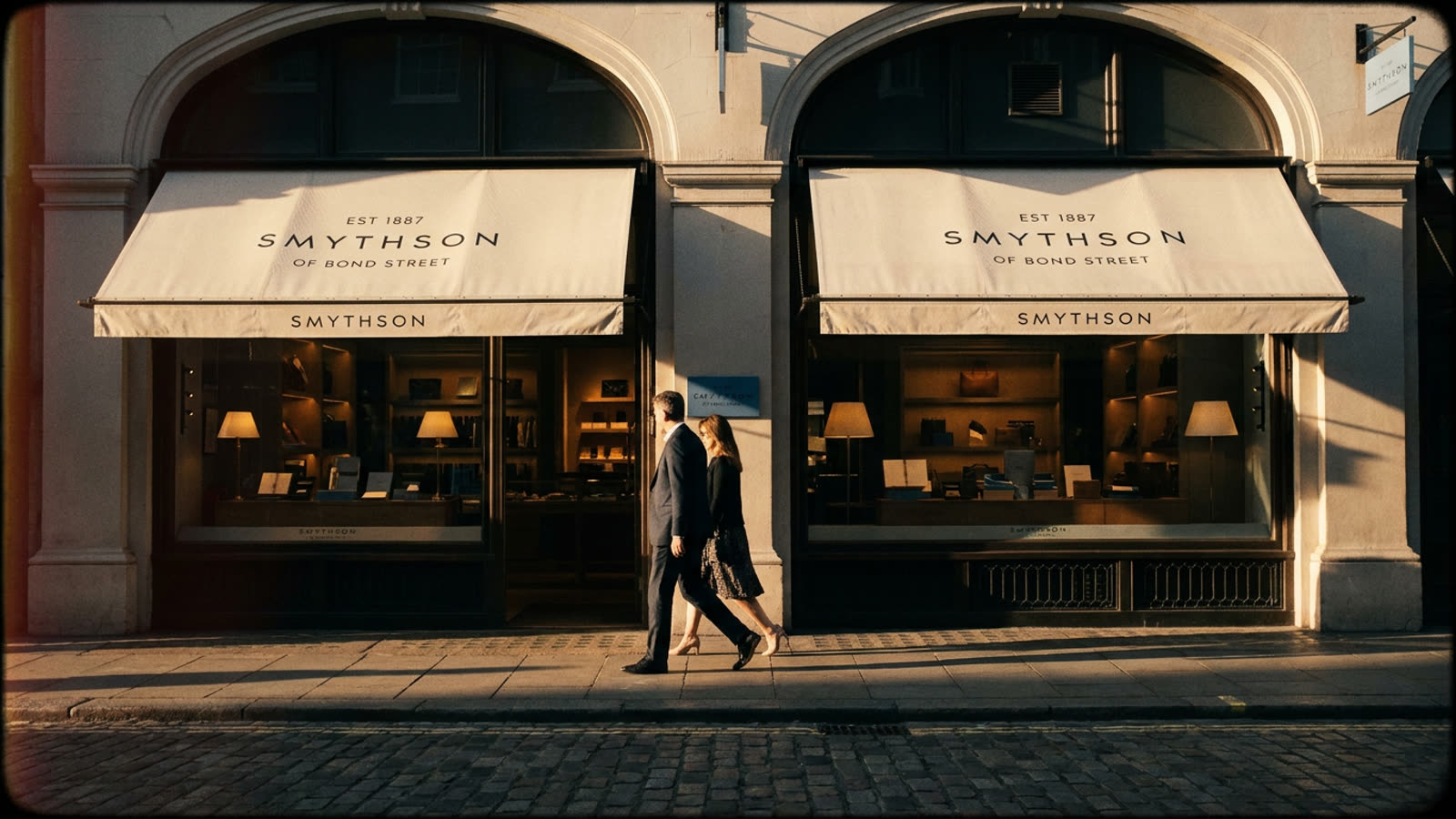
The bespoke stationery market is dominated by a handful of houses, most of them centuries old. Smythson of Bond Street, founded in 1887, still manufactures its signature pale-blue "Nile" paper at its Wiltshire factory. Dempsey & Carroll, the New York firm established in 1878, maintains copper die plates for clients whose families have reordered the same monogram for five generations. Pineider, the Florentine house that once supplied Napoleon, continues to press its watermarked sheets on machines older than most nations.
The process is labor-intensive in ways that modern manufacturing has largely abandoned. Die engraving—the technique that produces the raised lettering prized by connoisseurs—requires a craftsman to hand-cut a design in reverse into a copper plate. The plate is then inked, wiped, and pressed into dampened paper under enormous pressure. A single die can cost several hundred dollars; a full suite of stationery (correspondence cards, folded notes, flat sheets, envelopes with tissue lining) can run into the thousands. Maintenance orders—reprints from an existing die—are cheaper but still substantial, often fifty dollars or more for a box of fifty cards.
Who still writes letters
The clientele has evolved. A generation ago, bespoke stationery was the province of old money and diplomatic protocol: debutantes announcing engagements, ambassadors extending formal invitations. Today's buyers skew toward a different profile. Technology founders, having spent their careers eliminating friction from communication, are drawn to the deliberate friction of the handwritten note. Luxury real estate agents use engraved cards to stand out in a market where every competitor sends the same digital drip campaign. Political fundraisers understand that a personal letter on heavy stock signals access and intimacy in ways that an email blast cannot.
There is also a generational rediscovery at work. Younger clients who grew up without handwriting instruction—cursive was dropped from many school curricula in the early 2010s—approach stationery with the reverence of the newly converted. For them, the act of writing by hand is not nostalgic but novel, a skill acquired in adulthood like wine appreciation or fly-fishing.
Our take
Bespoke stationery is, at bottom, a wager on attention. The bet is that in a world of infinite messages, the scarce resource is not information but presence—the sense that another human being carved out time, chose words carefully, and committed them to a medium that cannot be unsent or edited. Whether that bet is worth four hundred dollars depends on what you are trying to say and to whom. But the houses that have survived wars, depressions, and the invention of email understand something durable about human vanity: we want to be remembered, and we will pay handsomely for tools that help us be remembered well.