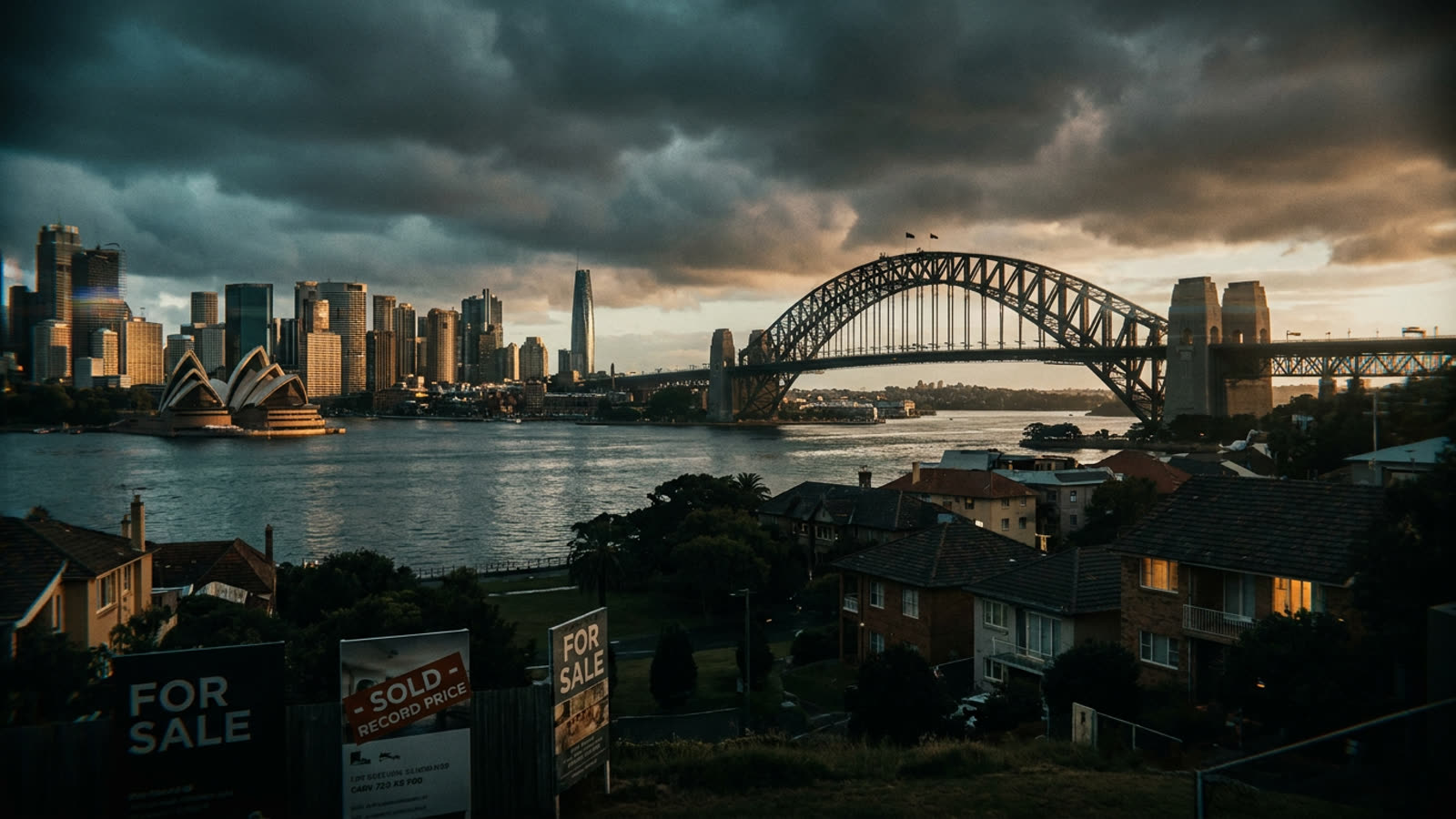
The Lucky Country has run out of luck for anyone born after 1985. Australia's housing market, once the engine of middle-class wealth creation, has transformed into something closer to a hereditary caste system—where your parents' postcode matters more than your paycheck, and the gap between owners and renters has calcified into permanent economic stratification.
The numbers tell a story of slow-motion exclusion. In Sydney, the median dwelling price now sits at roughly fourteen times the median household income, a ratio that would have seemed dystopian a generation ago. Melbourne, Brisbane, and Perth have followed the same trajectory, just a few years behind. The result is a country where homeownership rates among under-35s have collapsed from above 60 percent in the early 1980s to barely a third today—while their parents' generation sits on property portfolios worth more than the GDP of mid-sized European nations.
The policy architecture of scarcity
Australia didn't stumble into this crisis; it engineered it. Decades of tax policy—negative gearing, capital gains discounts, and generous superannuation rules that encourage property investment—have turned housing into the country's preferred asset class. State governments, meanwhile, have treated land release and zoning reform as political third rails, preferring to collect stamp duty windfalls from ever-rising prices rather than risk the wrath of existing homeowners.
The federal government's periodic demand-side interventions—first-home buyer grants, shared equity schemes, superannuation access for deposits—have functioned less as solutions than as accelerants, pumping more purchasing power into a supply-constrained market. Each new program briefly helps a cohort of buyers while pushing prices further out of reach for everyone behind them in the queue.
Immigration meets infrastructure failure
Australia's post-pandemic immigration surge has added fuel to the fire. Net overseas migration has run at record levels, with the population growing faster than at any point since the gold rush era. The newcomers are disproportionately young, skilled, and concentrated in the same capital cities where housing supply was already failing to keep pace with demand.
The infrastructure to support this growth—transport, utilities, schools—has lagged even further behind than housing construction. The result is cities that feel increasingly congested and unlivable even as they become unaffordable, a combination that has begun to curdle the national mood. What was once a bipartisan consensus around high immigration is fracturing, with housing costs providing the wedge.
Our take
Australia's housing crisis is not a bug in the system; it is the system working exactly as designed—for those who got in early. The political economy of housing reform is brutal: existing owners outnumber aspiring ones, they vote more reliably, and they have every incentive to block changes that might dent their paper wealth. Other developed economies watching Australia should take note. Once housing becomes the primary vehicle for retirement savings and intergenerational wealth transfer, the constituency for affordability shrinks with every price increase. The dream of ownership doesn't die; it simply becomes hereditary.