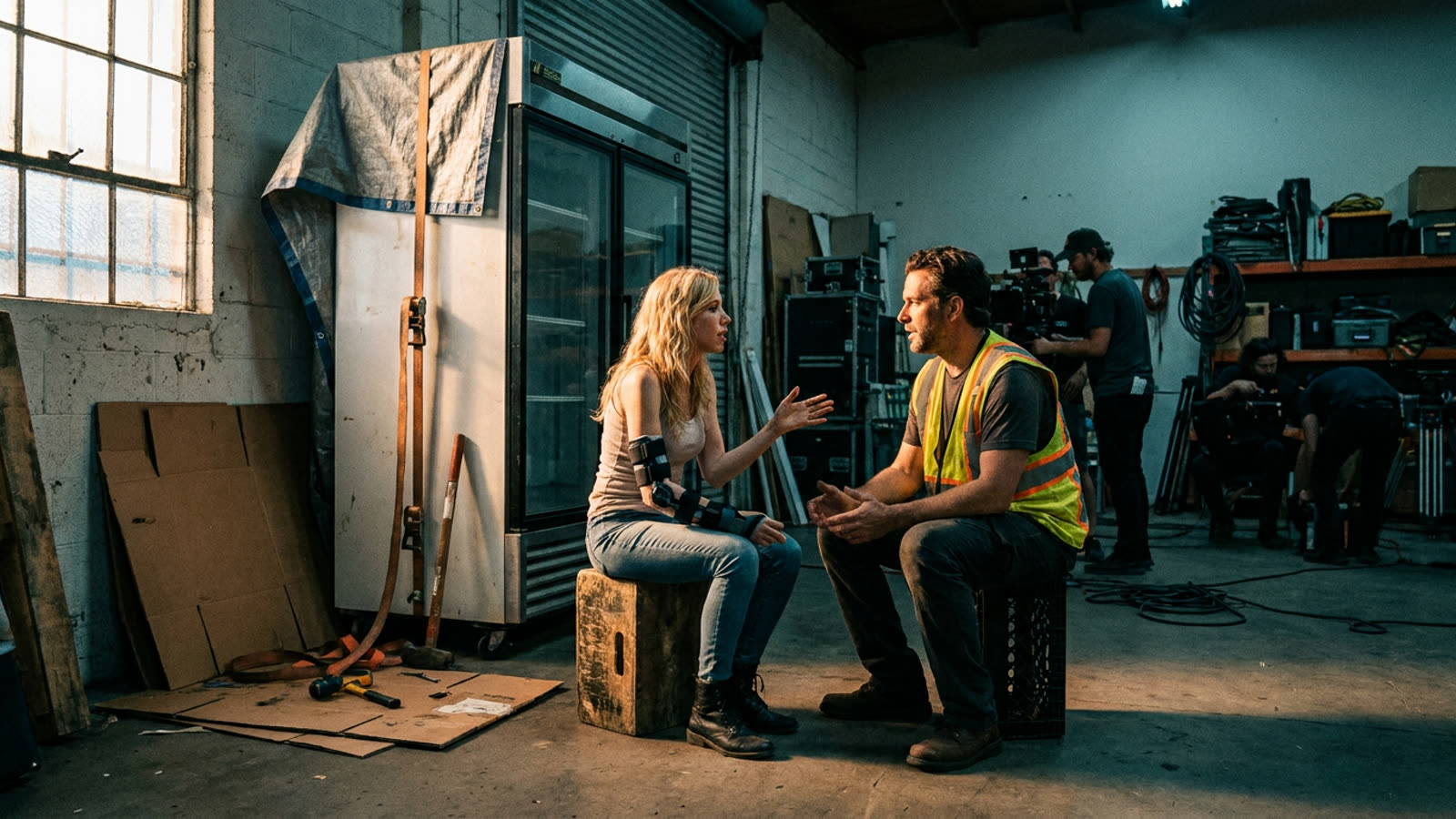
When a commercial refrigerator toppled onto Laura Clery during what was reportedly a content shoot this week, the internet comedian joined an invisible workforce category that economists have struggled to quantify: creators injured on the job with nowhere to file a claim.
Clery, who built a following of tens of millions across platforms with sketch comedy and candid mental health content, sustained serious injuries requiring hospitalization. The details remain sparse, but the structural reality is already clear. She is not an employee. The refrigerator was not in a regulated workplace. Whatever medical bills accumulate will be her problem, offset only by whatever private insurance she carries—if she carries any at all.
The creator class has no OSHA
The Bureau of Labor Statistics does not track injuries sustained during influencer content production. There is no form for "crushed by prop while filming viral video." Yet the creator economy now employs, by various estimates, somewhere between 50 and 200 million people globally, depending on how loosely one defines the term. In the United States alone, Goldman Sachs projected the sector would approach $500 billion in value by the mid-2020s.
What that economy lacks is any of the protective infrastructure that traditional employment provides. No workers' compensation. No employer-funded disability. No OSHA inspector showing up to ask why a 600-pound appliance was unsecured. Creators operate as independent contractors by default, which means they enjoy the tax flexibility of self-employment and absorb the catastrophic risk of self-employment in equal measure.
Insurance markets have not caught up
Private insurers have begun offering products tailored to content creators—equipment coverage, liability policies for brand partnerships, even "cancel culture" protection in some niche offerings. What remains vanishingly rare is affordable short-term disability coverage for solo operators whose income depends entirely on their continued physical capacity to perform.
The math is punishing. A creator earning $300,000 annually might pay $5,000 or more per year for a disability policy that replaces only 60 percent of income after a 90-day waiting period. Many skip it. The ones who do not skip it often discover, after an injury, that their policy excludes "hazardous activities"—a category insurers define with considerable creativity.
Our take
Clery's accident is bizarre enough to trend and serious enough to matter. But the real story is not the refrigerator. It is the millions of people building careers in an economy that treats workplace safety as someone else's problem—specifically, theirs. The creator economy celebrated disruption. It disrupted labor protections too.