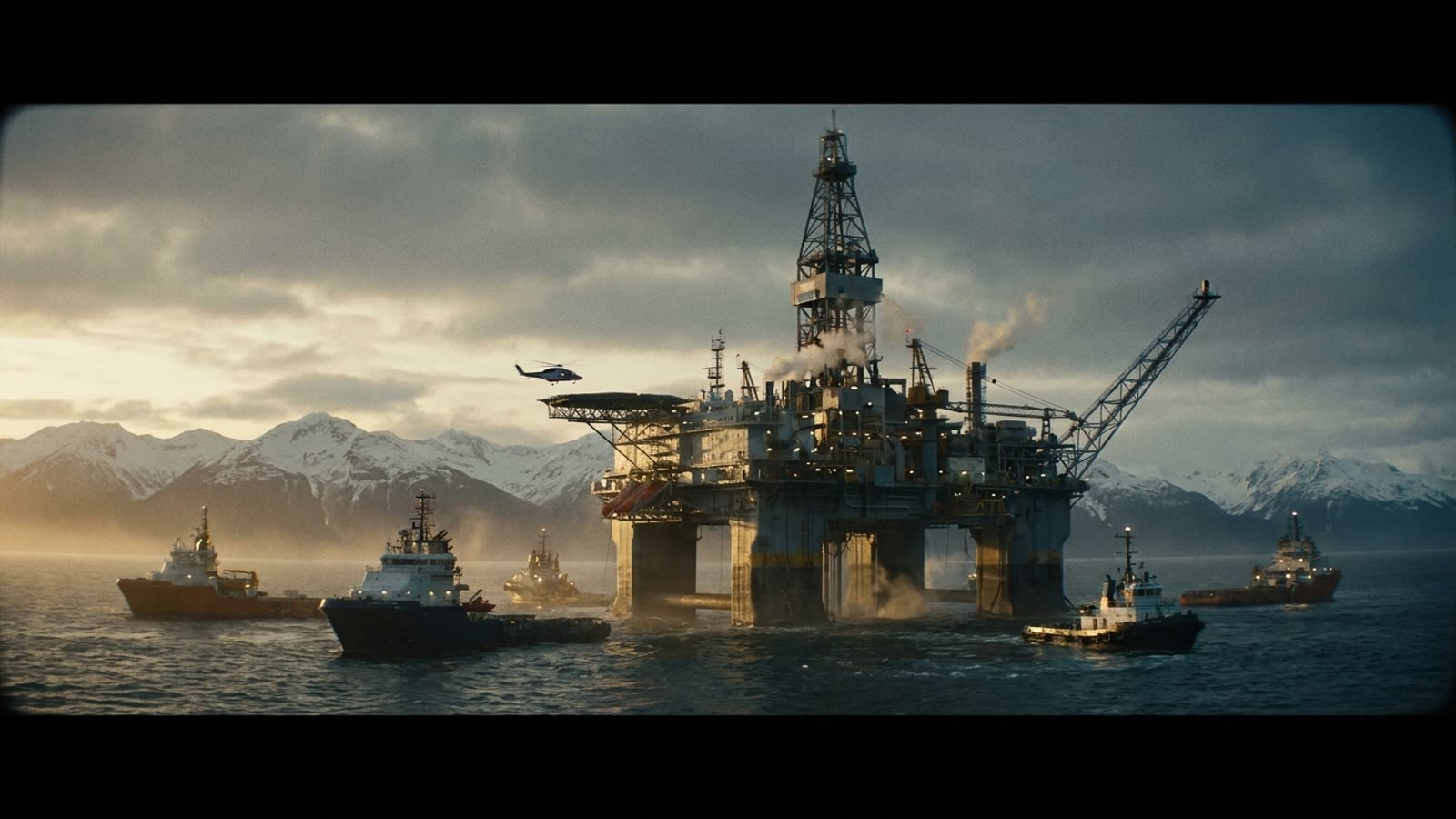
The last time major energy companies scrambled for position in Alaska, the Trans-Alaska Pipeline was still a marvel of engineering ambition and oil traded below $40 a barrel. Now, with Brent hovering comfortably above $80 and Washington treating domestic production as a national-security imperative, the North Slope is experiencing something it hasn't seen since the Reagan administration: genuine corporate enthusiasm.
The revival is not accidental. A string of federal permitting approvals over the past eighteen months—most notably for ConocoPhillips's Willow project and a handful of smaller satellite developments—has cleared regulatory underbrush that had choked investment for years. Add to that Alaska's own aggressive tax incentives for new drilling and a Biden-era infrastructure law that quietly funded Arctic port upgrades, and the economics have shifted decisively.
The numbers behind the rush
Alaska's oil output peaked at more than two million barrels per day in 1988; by 2023 it had slumped below 450,000. The state's fiscal model, which funds roughly 80 percent of its general budget from petroleum revenue, was under existential strain. Now, industry analysts project production could climb back toward 700,000 barrels daily by decade's end if current projects proceed on schedule. That would not restore the glory days, but it would meaningfully extend the life of the Trans-Alaska Pipeline—an ageing artery that requires minimum throughput to operate efficiently.
For the majors, the calculus is straightforward. North Slope crude is light, sweet, and commands a premium in Asian markets reachable from Valdez. Permitting timelines, while still measured in years, are now at least predictable. And the political risk of stranded assets—the nightmare that haunted Arctic investment during the Obama years—has receded as both parties treat energy independence as electoral common ground.
Environmental politics, deferred
None of this means the opposition has disappeared. Conservation groups have vowed to challenge Willow and related projects in court, and climate activists point out that new Arctic drilling is fundamentally incompatible with any credible net-zero pathway. Yet the legal battles have so far produced delays rather than cancellations, and the broader political climate has shifted. Polling consistently shows that voters rank energy costs above climate concerns when forced to choose, and Alaska's congressional delegation—bipartisan on this issue—has proven adept at protecting the state's extractive industries from Washington's mood swings.
The more interesting tension may be internal. Indigenous communities on the North Slope are divided: some village corporations hold lucrative surface-rights agreements and welcome the jobs, while subsistence hunters worry about caribou migration and coastal erosion accelerated by warming permafrost. The industry's social license is secure for now, but it is not unconditional.
Our take
Alaska's oil renaissance is a case study in how quickly energy narratives can flip. A decade ago, the Arctic was a stranded-asset cautionary tale; today it is a growth story. Whether that growth is wise—economically, environmentally, geopolitically—is a separate question, and one the market is not particularly interested in answering. Capital flows where returns beckon and permits allow. For now, both conditions point north.