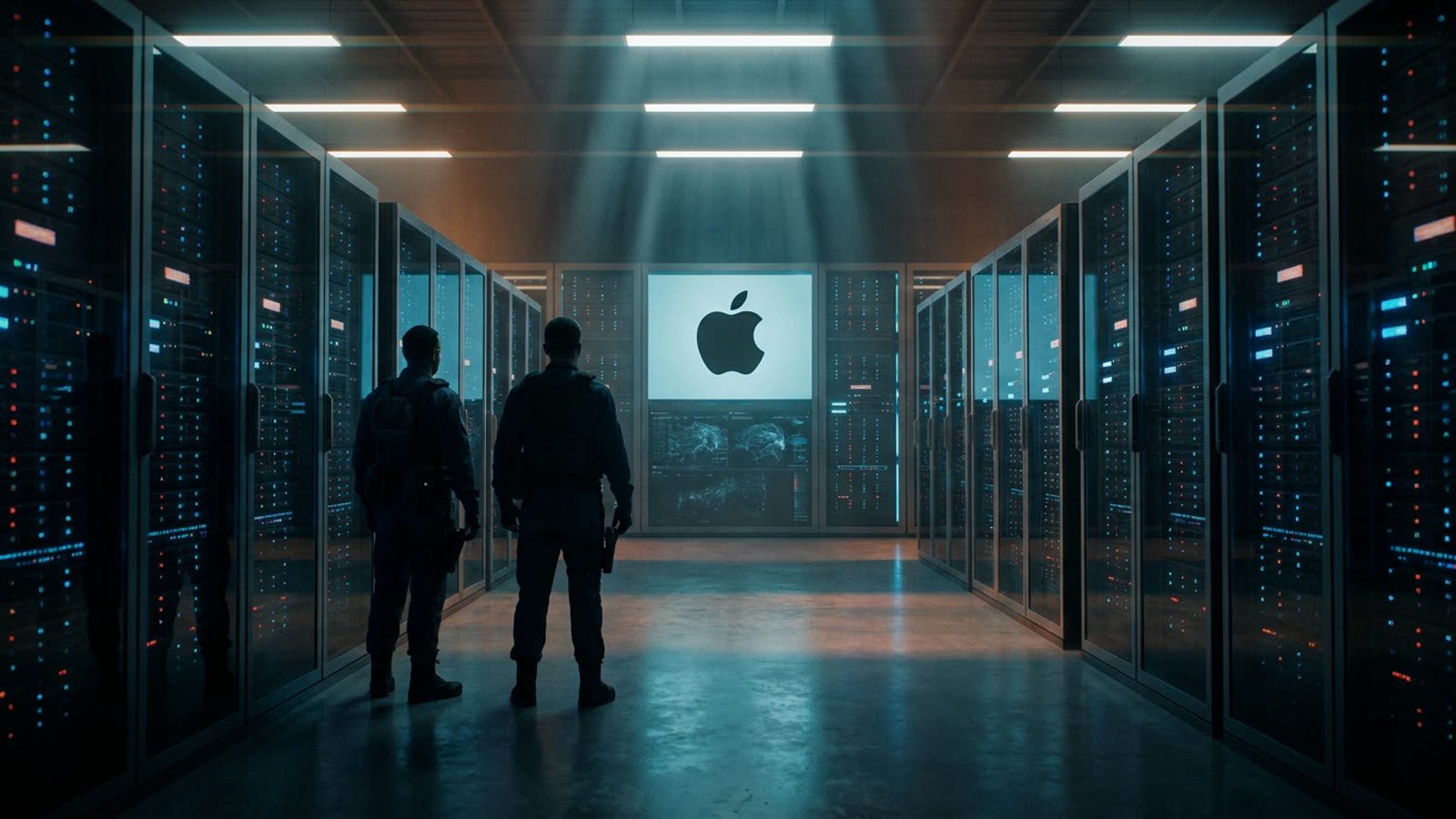
Apple's decision to cram a massive version of Google's Gemini model onto the iPhone represents one of the more remarkable admissions of defeat in recent tech history. The company that pioneered Siri, that built the Neural Engine into its silicon, that once marketed itself as the leader in on-device machine learning, has concluded it cannot build a competitive large language model on its own timeline.
The technical challenge is formidable. Running a model approaching Gemini's scale on a mobile device—with its thermal constraints, battery limitations, and memory ceiling—requires aggressive quantization, speculative decoding, and architectural compromises that will inevitably degrade performance. Apple's engineers are reportedly working to make this function without the phone becoming a hand-warmer, which is no small feat.
The strategic calculus
For Apple, this is fundamentally a time-buying exercise. The company's internal AI efforts have lagged competitors by what industry observers estimate is roughly two years. Its homegrown models have struggled with the reasoning capabilities and conversational fluency that users now expect from ChatGPT and Claude. Rather than ship an embarrassingly inferior Siri while its research teams catch up, Apple has chosen to license its way to competence.
The financial terms remain undisclosed, but Google's leverage here is considerable. Apple needs this partnership far more than Google does—Gemini already reaches hundreds of millions of users through Android and web interfaces. For Google, placing its model at the heart of the iPhone ecosystem offers unprecedented data about how Apple users interact with AI, even if Apple's privacy architecture limits what can be collected.
What on-device actually means
Apple's marketing will inevitably emphasize privacy—your queries processed locally, your data never leaving your device. This framing is technically accurate but strategically convenient. On-device processing means Apple avoids the per-query costs that have made AI assistants ruinously expensive for competitors. It also means Apple maintains control over the user relationship, with Google relegated to an invisible infrastructure provider rather than a brand users consciously choose.
The compression required to run such a model locally will necessarily limit its capabilities compared to cloud-based versions. Complex reasoning tasks, long-context conversations, and computationally intensive operations will likely be degraded or offloaded. Users may find their "on-device" Siri mysteriously improving when connected to Wi-Fi.
Our take
This partnership is a reasonable short-term solution to an embarrassing problem, but it does nothing to address Apple's underlying AI deficit. The company is now dependent on a direct competitor for one of the most strategically important technologies of the decade. Tim Cook has always been a master of supply-chain management and operational excellence; building breakthrough AI capabilities requires a different kind of organizational muscle that Apple has yet to demonstrate it possesses. Licensing Gemini buys time, but the clock is still running.