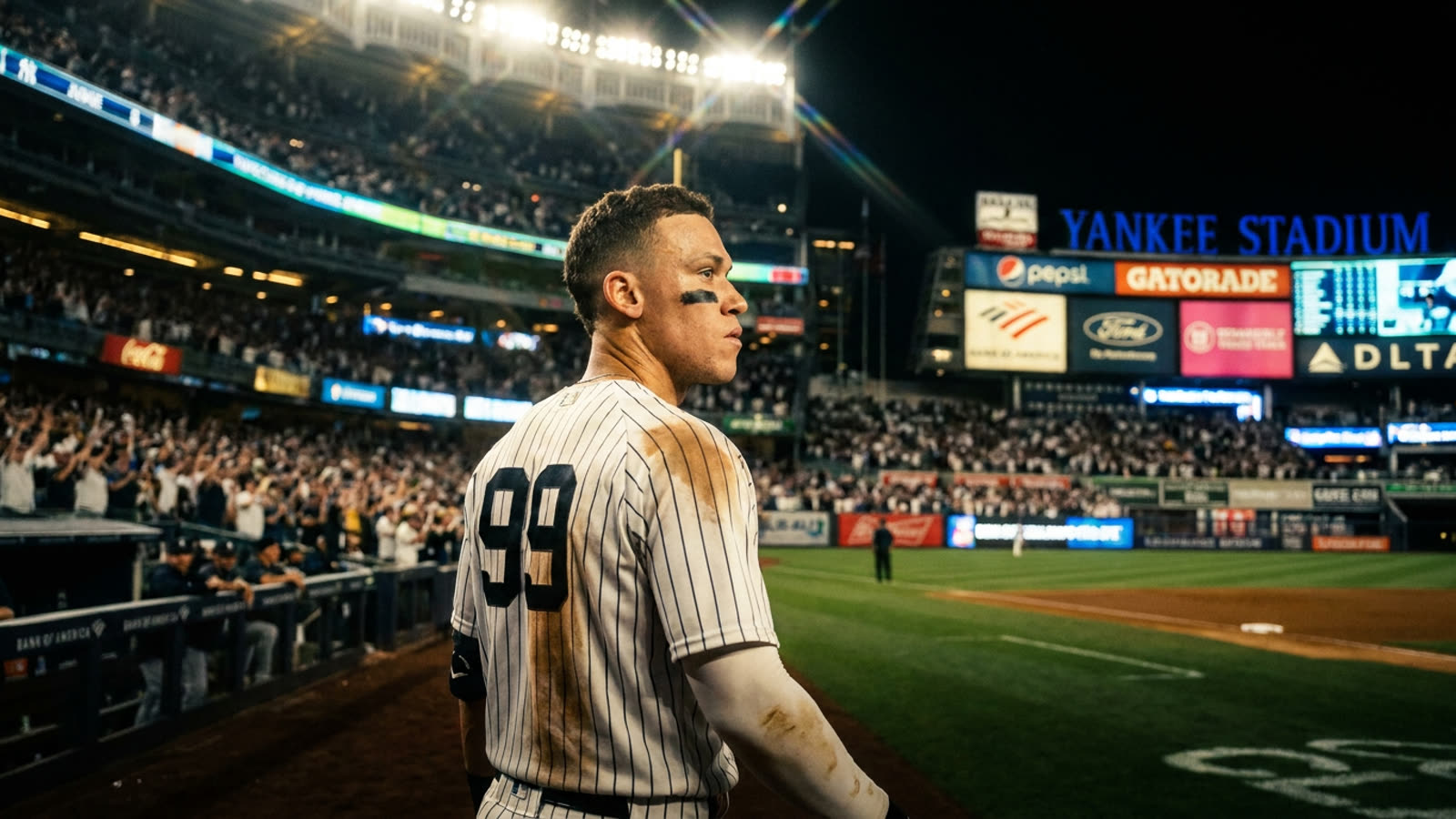
For three weeks, Aaron Judge had been doing something unusual: playing like a mortal. The man who redefined what a baseball swing could look like—6-foot-7, 282 pounds, launching missiles into the upper deck with the casual violence of a construction crane—had gone quiet. Not slumping, exactly, but not Judging either. Then came the Rays, a bottom-of-the-order reliever, and a first-pitch fastball that will live in the highlight reels until October.
The walk-off home run that ended Saturday's game wasn't just a win. It was a statement of identity from a franchise that has spent much of 2026 wondering whether its cornerstone is still load-bearing.
The drought in context
Judge's power outage—roughly two dozen games without a home run before Saturday—doesn't sound catastrophic until you remember who we're discussing. This is the American League's reigning MVP, a player whose contract made him the highest-paid position player in baseball history. When Judge goes cold, the Yankees don't just lose production; they lose their entire offensive philosophy. The lineup is built around his gravity. Pitchers pitch around him. Runners move differently. The whole ecosystem tilts.
The Rays, scrappy and pitching-rich as always, had exploited that tilt all series. Tampa Bay's staff threw Judge a steady diet of sliders away and fastballs up, daring him to chase. He mostly didn't, which is the maddening thing about a Judge slump—the plate discipline remains elite even when the damage disappears. He was walking, working counts, doing everything right except the one thing that makes him irreplaceable.
What a single swing can do
The pitch that ended it was a mistake, a 94-mph fastball that leaked over the inner half. Judge's swing was pure muscle memory: hands inside the ball, barrel through the zone, the follow-through that looks like he's trying to throw the bat into the second deck. The ball left at 114 mph and landed somewhere in the left-field bleachers, where a scrum of fans in pinstripes fought for a souvenir worth approximately one month's rent in Manhattan.
The Yankees mobbed him at home plate with the desperate enthusiasm of men who had been holding their breath. Manager Aaron Boone, whose job security fluctuates with Judge's launch angle, permitted himself a rare public smile. The Bronx exhaled.
Our take
One home run doesn't fix a lineup that has underperformed its payroll, and it doesn't answer the longer-term questions about whether Judge, now on the wrong side of 30, can sustain the superhuman production that justified his contract. But baseball is a game of moments, and this was a good one—a reminder that even when the machine sputters, it can still produce something spectacular. The Yankees are paying for those moments. On Saturday, they finally got one.