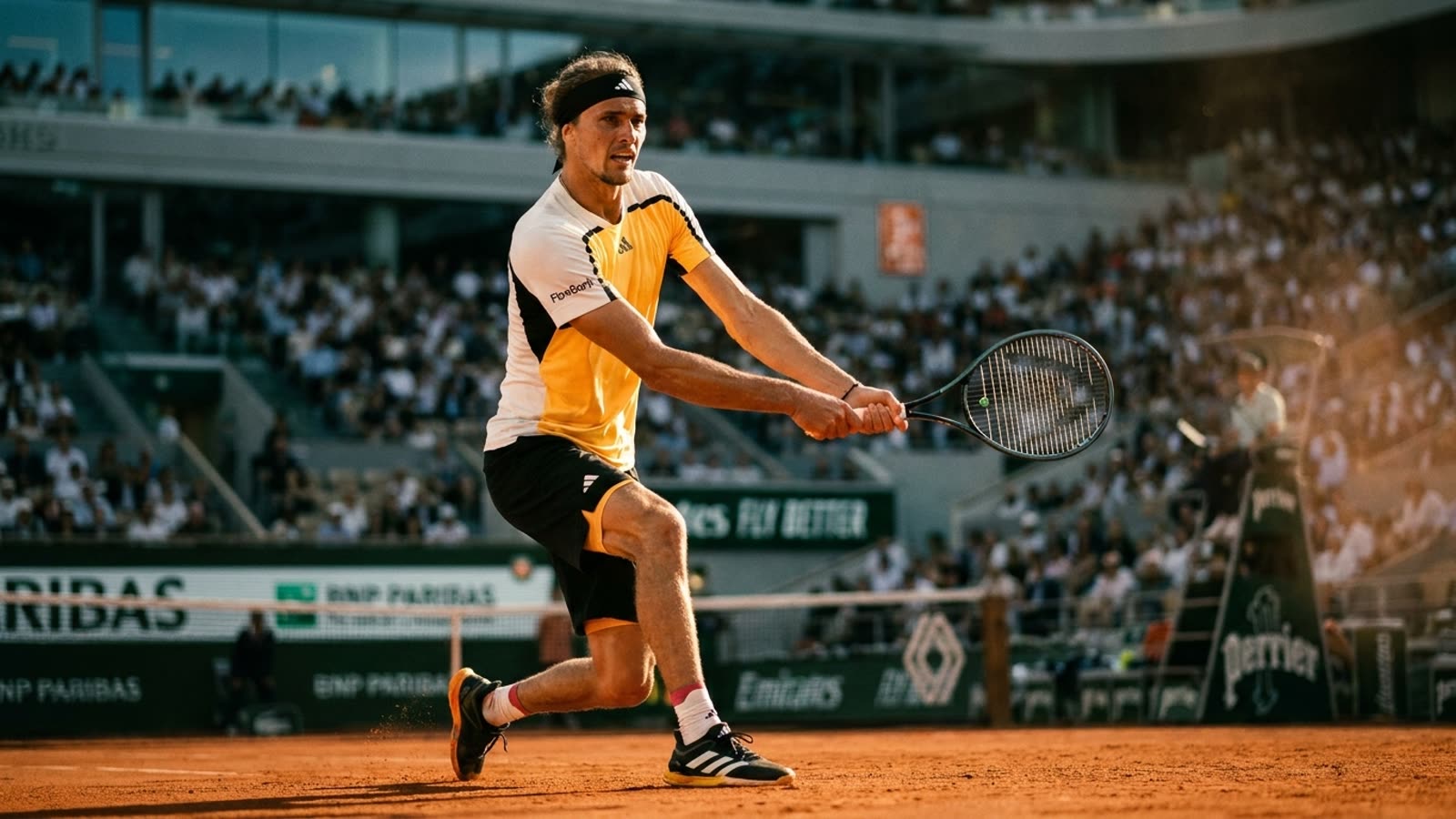
The 2026 French Open men's final will feature Alexander Zverev against Flavio Cobolli, a sentence that would have earned you strange looks a fortnight ago. Zverev, the perennial almost-man of men's tennis, arrives at Roland Garros's final match for the first time in his career. Cobolli, ranked outside the top 30 entering the tournament, arrives having never previously reached a grand slam quarterfinal.
This is not the final the tennis establishment ordered. No Alcaraz. No Sinner. No Djokovic resurrection narrative. Instead, Paris gets a German who has spent a decade being told he possesses all the tools except the mental fortitude to win majors, and an Italian whose game nobody outside the ATP Tour's inner circle could describe with confidence two weeks ago.
Zverev's long wait
The German has been here before — not at Roland Garros specifically, but at the precipice of grand slam glory. The 2020 US Open final collapse against Dominic Thiem, when Zverev held two sets and a break, remains one of the sport's most vivid psychological autopsies. The ankle injury at the 2022 French Open semifinal against Rafael Nadal robbed him of what many believed was his best chance on clay.
Now 29, Zverev has watched Carlos Alcaraz and Jannik Sinner divide the major spoils while he accumulated Masters 1000 titles and wondered aloud whether his moment had passed. His path to Sunday's final has been workmanlike rather than dominant — five-set battles, tiebreaks survived, the occasional service wobble that sends his coaching box into visible distress. But he is here, one match from completing the collection.
The Cobolli question
Flavio Cobolli's fortnight defies easy explanation. The 23-year-old Roman entered Paris with a career-high ranking of 31 and precisely zero wins against top-10 opposition at grand slams. He now has four, including a straight-sets demolition of the third seed in the quarterfinals that suggested either a career-defining breakthrough or the kind of hot streak that evaporates under championship pressure.
Cobolli's game is built around relentless baseline aggression and a forehand that generates uncomfortable pace from unusual angles. His movement on clay has been revelatory, covering court with an efficiency that belies his relatively modest athletic frame. Whether any of this holds up against Zverev's serve and the weight of a first major final is the tournament's final unanswered question.
Our take
Sunday's final is a referendum on narrative versus form. Zverev carries the burden of expectation and the scar tissue of previous failures; Cobolli carries nothing but momentum and the liberating anonymity of having nothing to lose. The smart money favors the German's experience, but tennis has a habit of punishing players who arrive at finals thinking about legacy rather than the next point. Cobolli may not win, but he has already forced the sport to reckon with the possibility that the next generation's hierarchy is less settled than the rankings suggest.