The Canadian men's national team will take the pitch at the 2026 World Cup with a roster that reads like an immigration policy made flesh: players born in Ghana, raised in Brampton; Congolese heritage filtered through Montreal youth academies; Caribbean roots planted in Prairie soil. For a country that has spent decades congratulating itself on multiculturalism, the tournament presents an unexpected test—whether that celebrated diversity translates into genuine national fervor, or merely polite applause.
The early returns suggest something more interesting than either outcome: a country actively renegotiating its relationship with sporting nationalism in real time.
The demographics of devotion
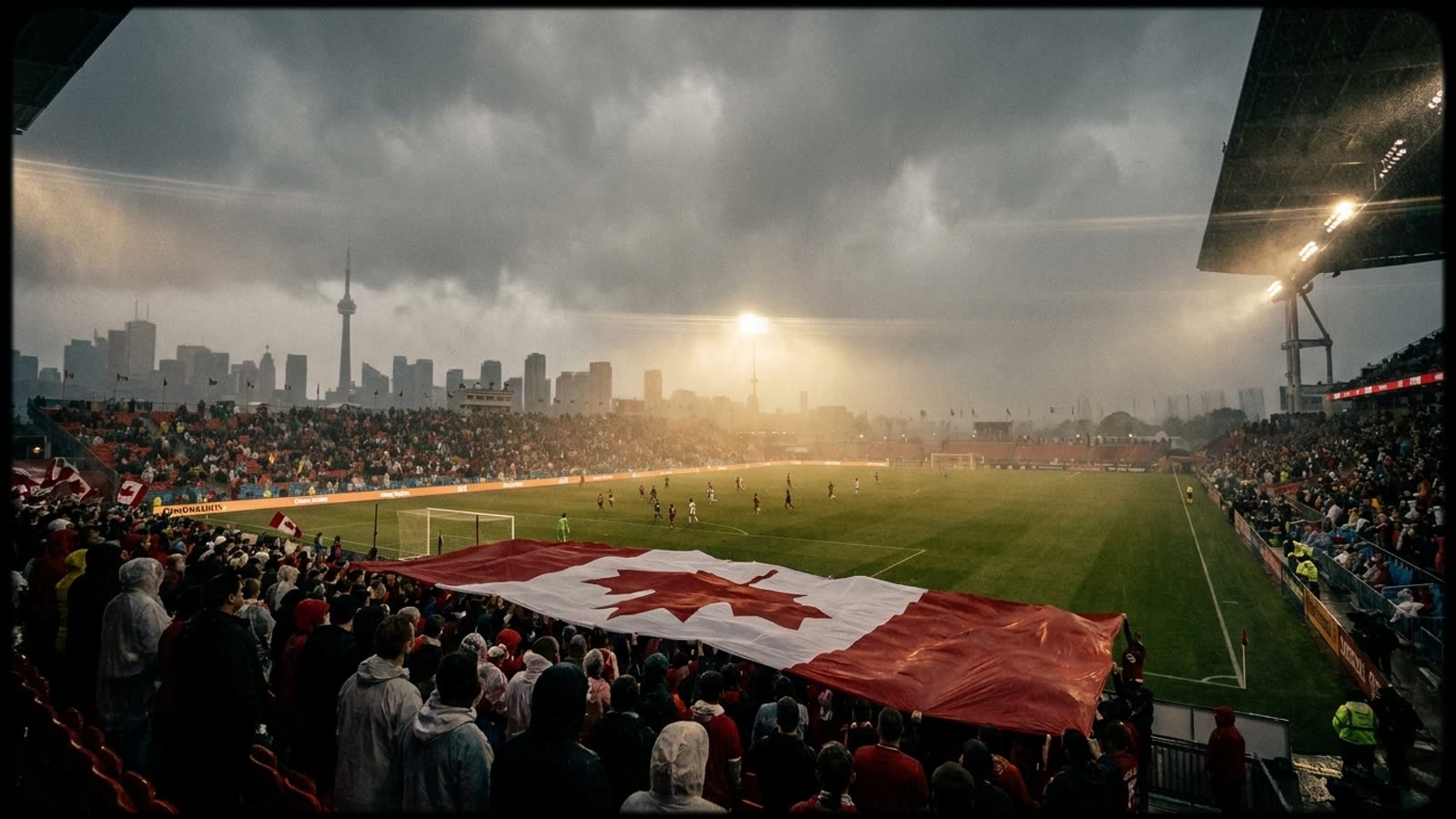
Canada's major cities have long been defined by their immigrant populations cheering for other nations. Walk through Toronto during a World Cup and you'll find Italian flags in Woodbridge, Portuguese banners in Little Portugal, Croatian jerseys scattered across the suburbs. This has been the comfortable Canadian compromise—multiculturalism as parallel loyalties rather than merged identity.
The 2026 tournament disrupts that arrangement. With matches in Vancouver and Toronto, with a roster that reflects the country's actual composition rather than some imagined Anglo-French founding myth, Canadians are being asked to do something unfamiliar: invest emotionally in a team that represents the nation as it actually exists. The response has been surprisingly enthusiastic, particularly among second-generation immigrants who see themselves in Alphonso Davies's Liberian-Canadian story or Jonathan David's Haitian-Québécois journey.
The limits of the mosaic
Yet the surge in national team support has also exposed tensions that polite Canadian discourse typically avoids. Some longtime fans grumble about bandwagon supporters who ignored the team during qualification. Others note the uncomfortable reality that enthusiasm for Les Rouges correlates heavily with urban centers and younger demographics—the same fault lines that define Canadian politics.
The team itself has navigated these waters with notable dexterity. Players have spoken openly about representing communities that rarely see themselves in national symbols, while avoiding the culture-war framing that might alienate older, whiter fan bases. It's a delicate performance, and one that mirrors the broader Canadian project of building shared identity without demanding assimilation.
Our take
Canada's World Cup moment arrives at precisely the right time—when the country's founding mythologies have grown threadbare and something new is required. Whether Les Rouges win or lose, the tournament is forcing a national conversation about who gets to define Canadian identity and what symbols deserve collective investment. That conversation is more valuable than any result on the pitch. The mosaic, it turns out, needed a frame.