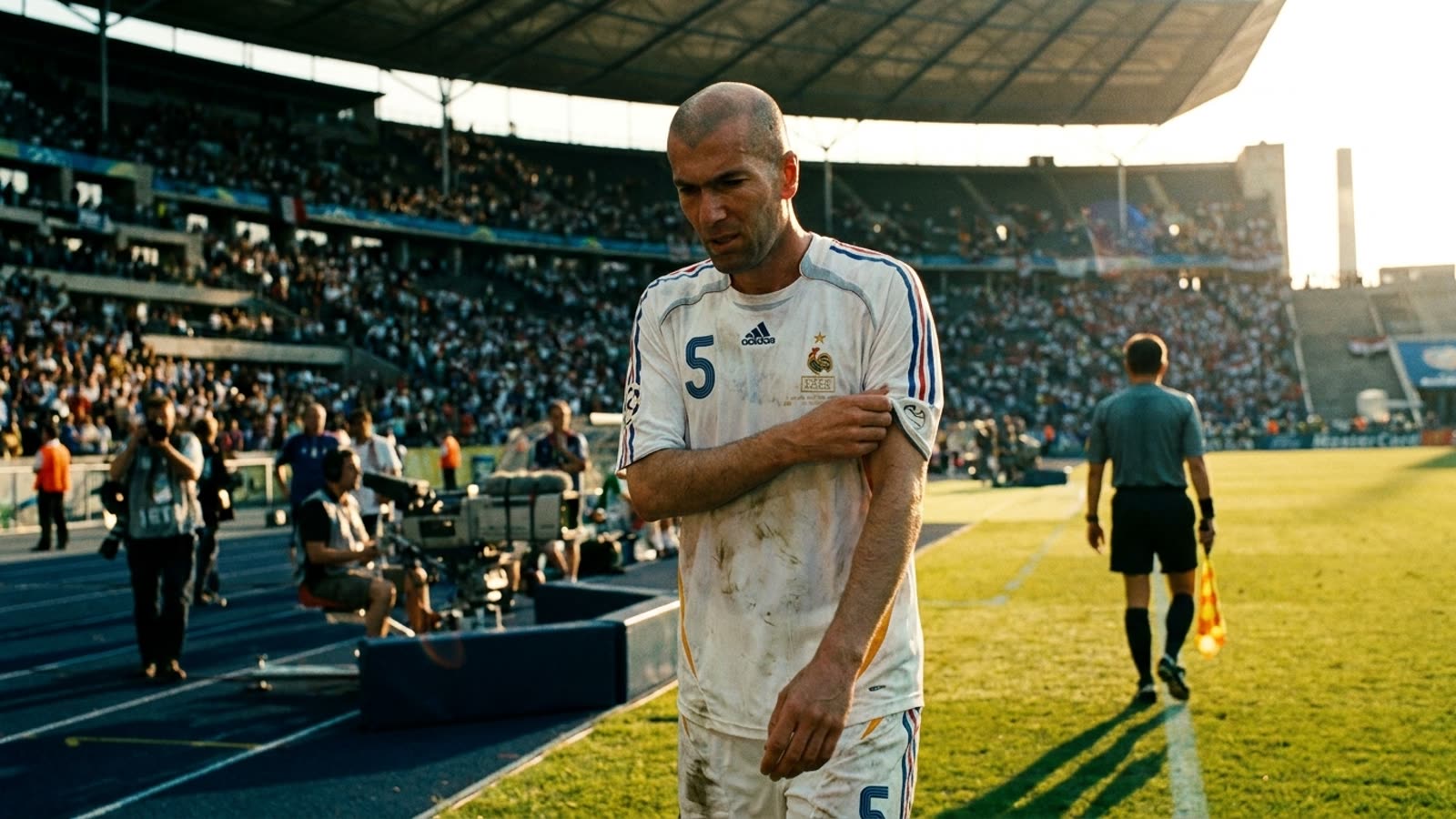
Every athlete retires eventually. Most fade into a soft-focus montage of highlights, their rough edges sanded down by nostalgia until only the glory remains. Zinedine Zidane denied us that comfort. He walked off the pitch in Berlin having committed an act of violence so brazen, so perfectly timed for maximum catastrophe, that it became impossible to remember him as anything other than exactly what he was: a genius who operated by rules the rest of us could never fully understand.
The headbutt has been analyzed, debated, and psychoanalyzed to exhaustion. Marco Materazzi said something about Zidane's sister. Zidane responded by driving his skull into Materazzi's chest with the calm precision of a man parallel parking. France lost the penalty shootout. Italy lifted the trophy. The greatest midfielder of his generation exited the sport in disgrace, or triumph, or both simultaneously—depending entirely on what you believe sport is supposed to be.
The myth of the composed maestro
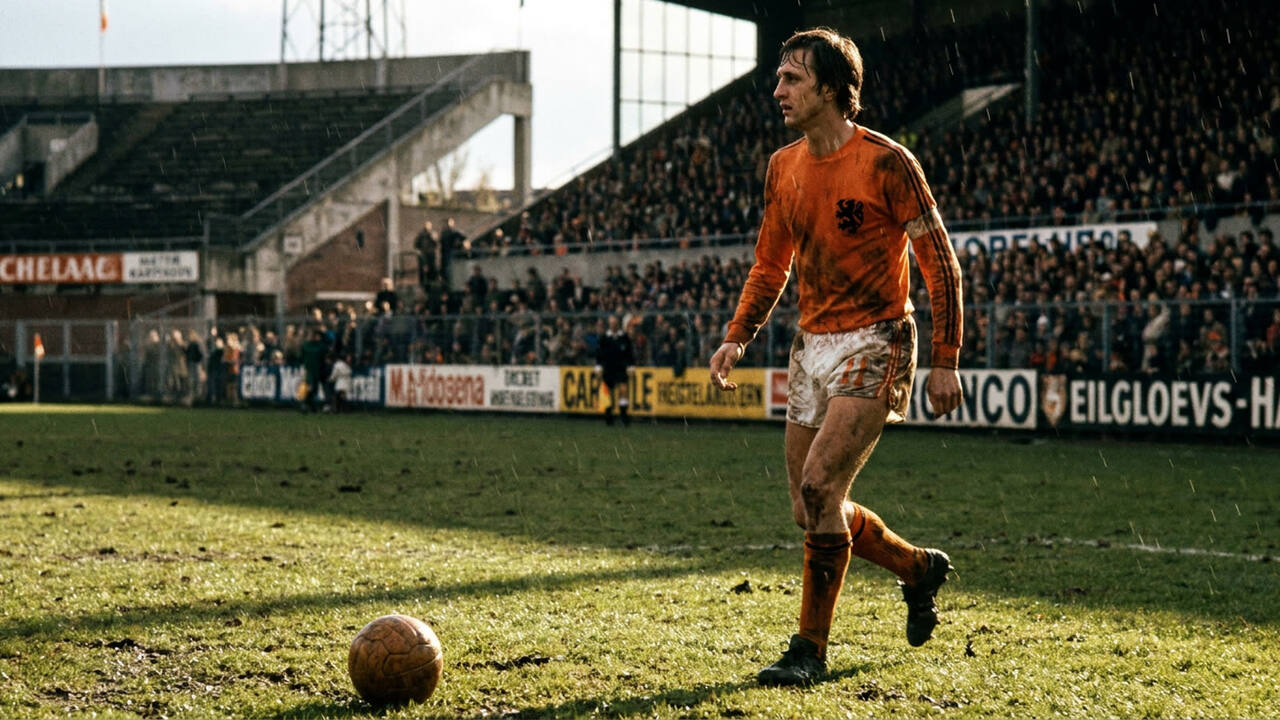
Zidane's reputation rested on an illusion: that his elegance implied serenity. Watch the highlight reels and you see a man who moved through defenders like water through rock, unhurried, almost bored by his own brilliance. The roulette turns, the impossible first touches, the way he could kill a ball dropping from forty yards as though it were a soap bubble landing on velvet—all of it suggested someone operating on a higher plane, unbothered by the chaos around him.
But Zidane was never calm. He was simply better at channeling volatility than anyone else. Before Berlin, he had been sent off fourteen times in his career, including a headbutt on a Hamburg player in a Champions League match. The violence was always there, coiled beneath the artistry. What made him extraordinary was not the absence of rage but his ability to transmute it into something beautiful—until, in the one hundred and tenth minute of his final match, he couldn't.
Why we remember it wrong
The conventional narrative frames the headbutt as a tragic flaw, the great man undone by a single moment of madness. This is comforting because it preserves the idea that excellence and self-destruction are opposites, that the same qualities that made Zidane brilliant should have made him wise. But that misunderstands how genius works.
Zidane's entire career was built on trusting his instincts over convention. When he controlled the ball in the 1998 World Cup final and headed France to their first title, he was acting on impulse. When he volleyed that preposterous goal against Bayer Leverkusen in the 2002 Champions League final, he was not calculating trajectories—he was simply doing what felt right. The headbutt was the same process, aimed at a different target. His instincts told him that Materazzi's words could not go unanswered, and so they weren't.
Our take
Sport desperately wants its heroes to be moral exemplars, and it is forever disappointed. Zidane gave us something more honest: a reminder that the qualities that produce transcendence are not domesticated virtues but wild, ungovernable forces that sometimes create beauty and sometimes create disaster. The headbutt was not an aberration. It was the truest expression of who Zidane had always been—a man who refused, even in his final act, to be anything other than himself. We wanted a fairy tale ending. He gave us the truth instead.