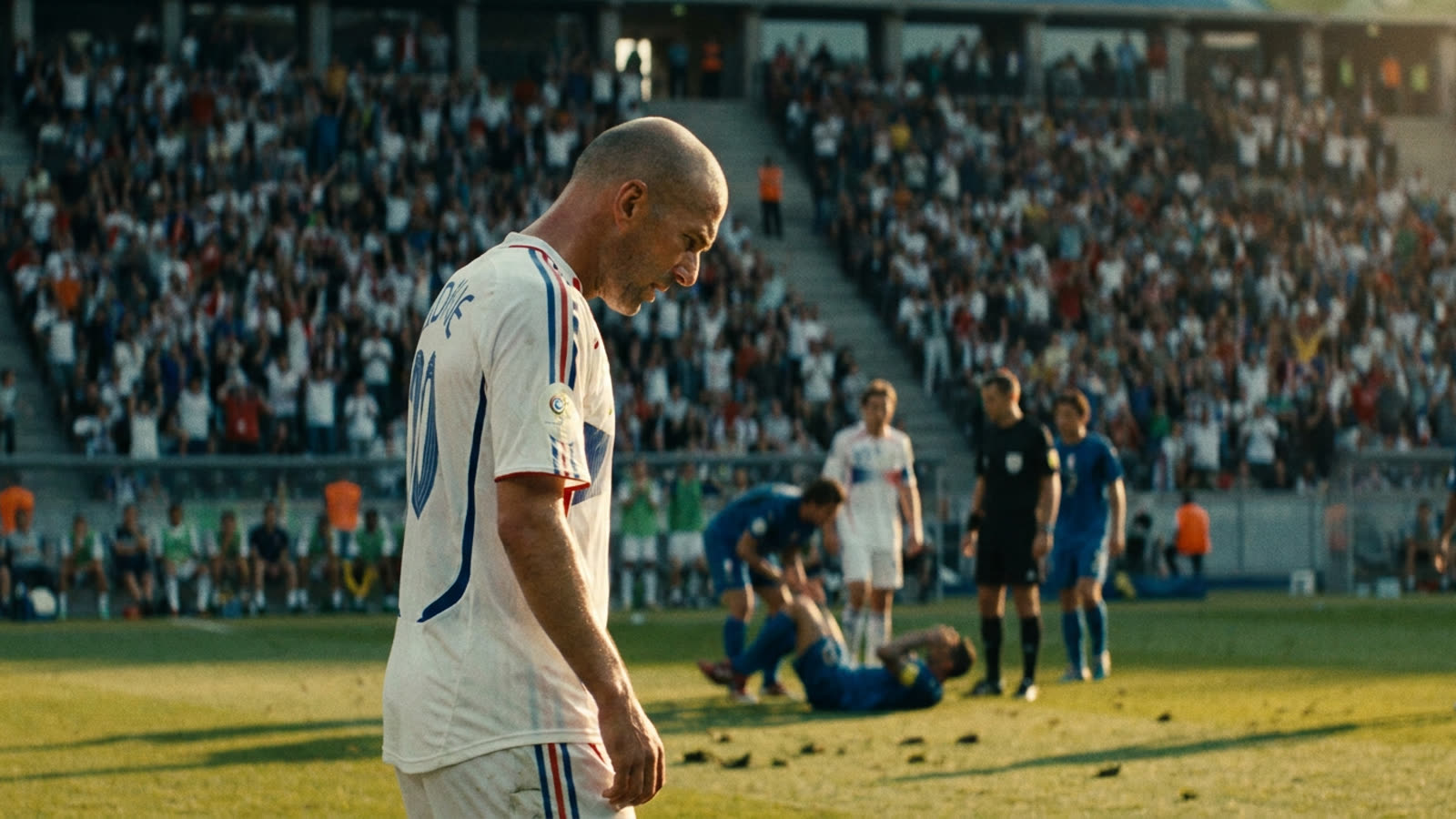
Every sport has its defining image of failure: Bill Buckner's ball rolling through his legs, Jean Van de Velde wading into the Barry Burn, Scott Norwood's kick sailing wide. But none of these captures what Zinedine Zidane did in Berlin on July 9, 2006, because Zidane did not fail. He chose.
With the World Cup final knotted at one goal apiece in extra time, with a penalty shootout looming, with his entire nation watching him play the final match of his career, the greatest midfielder of his generation lowered his head and drove it into the chest of Marco Materazzi. The red card came. France lost the shootout. And football acquired its most troubling parable about genius, provocation, and the limits of self-control.
The context that made it unthinkable
Zidane was not merely playing well in Germany; he was orchestrating one of the great individual tournament performances in World Cup history. At thirty-four, supposedly past his peak, he had dragged an aging French squad through the knockout rounds with a combination of vision and authority that bordered on the imperious. His penalty against Portugal in the semifinal—a nerveless chip down the center—seemed to confirm that he had transcended pressure entirely.
This was the narrative the final was supposed to complete: the maestro's farewell, a second World Cup trophy to bookend his career, vindication for a generation of French football. Instead, Zidane provided something far more interesting than triumph. He provided ambiguity.
What Materazzi said, and why it matters less than we think
The Italian defender later admitted to insulting Zidane's sister, though the precise words remain disputed. Lip-readers and amateur investigators spent years parsing the footage. But the fixation on Materazzi's provocation misses the point. Professional footballers endure verbal abuse constantly. Zidane himself had weathered decades of it. The question was never whether Materazzi was cruel—he almost certainly was—but why Zidane, in that moment, abandoned everything.
The most compelling interpretation is also the simplest: Zidane was human. Not human in the banal sense that excuses all behavior, but human in the specific sense that even extraordinary discipline has a breaking point. The headbutt was not a lapse in character. It was a revelation of it. Zidane had always played with a simmering intensity that occasionally boiled over—he had been sent off multiple times in his career, including for stomping on a Saudi Arabian player in the 1998 World Cup group stage. The difference in Berlin was the stakes, the timing, and the permanence.
The strange afterlife of the moment
What happened next defied every expectation about how sports scandals unfold. Zidane was not diminished. If anything, the headbutt cemented his legend in ways a clean victory never could have. He won the Golden Ball as the tournament's best player despite the red card. France mourned but did not condemn. Within months, the incident had been absorbed into Zidane's mystique rather than held against it.
This tells us something uncomfortable about how we consume athletic greatness. We claim to want sportsmanship, composure, grace under pressure. But we are drawn to the cracks. Zidane walking past the World Cup trophy, refusing to look at it, became an image as iconic as any of his goals. The imperfection made him more interesting than perfection ever could.
Our take
The headbutt endures because it refuses easy lessons. It is not a cautionary tale about losing one's temper—Zidane's career remained glorious, his reputation largely intact. It is not a story about provocation working—Materazzi won the World Cup but will be remembered primarily as a footnote to someone else's drama. What it is, perhaps, is the clearest illustration football has produced of the gap between what we demand from athletes and what they actually are. Zidane gave France everything for ninety minutes. Then he gave them something more valuable than a trophy: proof that even the greatest are not above themselves.