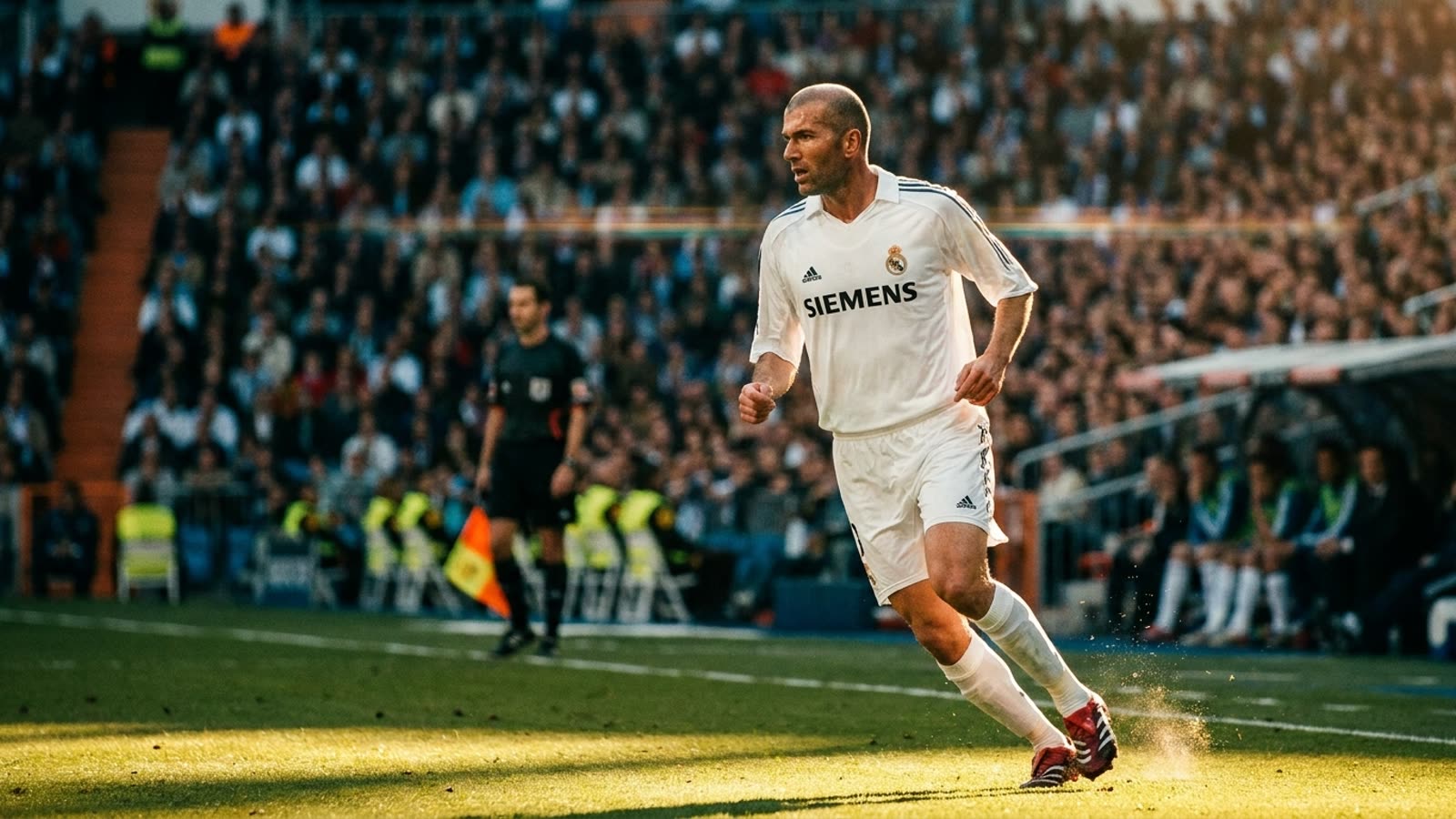
Great careers rarely end cleanly. They fade into diminishing returns, contract disputes, one season too many at a middling club. Zinedine Zidane's ended with a chest-to-chest confrontation in extra time of a World Cup final, followed by a headbutt to Marco Materazzi's sternum that sent the Italian defender crumpling to the Berlin turf. It was ugly, inexplicable, and somehow perfect—the most memorable exit in the history of the sport.
The facts are well established. France and Italy were deadlocked at 1-1 in the 110th minute. Zidane, who had announced his retirement before the tournament, was playing the final match of his career. Words were exchanged. Zidane turned, lowered his bald head, and drove it into Materazzi's chest. The red card followed. France lost on penalties. The golden ball trophy, awarded to the tournament's best player, went to Zidane anyway—a recognition that even in disgrace, he had been untouchable.
The provocation question
Materazzi later admitted to insulting Zidane's sister, though the exact phrasing remains disputed. Some lip-reading analysts claimed it was something about Zidane's mother; others suggested racial undertones. The Italian has always denied the latter. What's certain is that Zidane, a man of Algerian descent who had endured racist abuse throughout his career in France, snapped in a moment when composure might have delivered him a second World Cup.
The temptation is to psychoanalyze: the pressure of finality, the weight of expectation, some deep well of rage that even supreme talent couldn't contain. But this framing diminishes what made Zidane extraordinary in the first place. He was never a serene technician. His game was built on controlled fury—the same intensity that produced balletic turns and devastating volleys could, in the wrong moment, produce something destructive.
Why it refuses to fade
Football produces scandals, controversies, and dramatic conclusions constantly. Most are forgotten within a news cycle. The headbutt persists because it resists resolution. It wasn't a dive or a bad refereeing decision that can be litigated endlessly. It was a choice—a bizarre, self-sabotaging, deeply human choice made by one of the most gifted players ever to touch a ball, at the single moment when the entire world was watching.
There's also the visual poetry of it. Zidane walking past the World Cup trophy on his way to the tunnel, not glancing at it. The slow-motion replays that turned a moment of violence into something almost balletic. The red card held aloft like a period at the end of a sentence. Directors couldn't have staged it better.
Our take
The headbutt wasn't a stain on Zidane's legacy; it completed it. A career of transcendent skill ending in transcendent folly gave him a mythology that a clean penalty shootout victory never could have. He became human in a way that Pelé and Maradona, with their carefully managed departures and comebacks, never quite managed. The moment was indefensible and unforgettable—which is to say, it was Zidane.