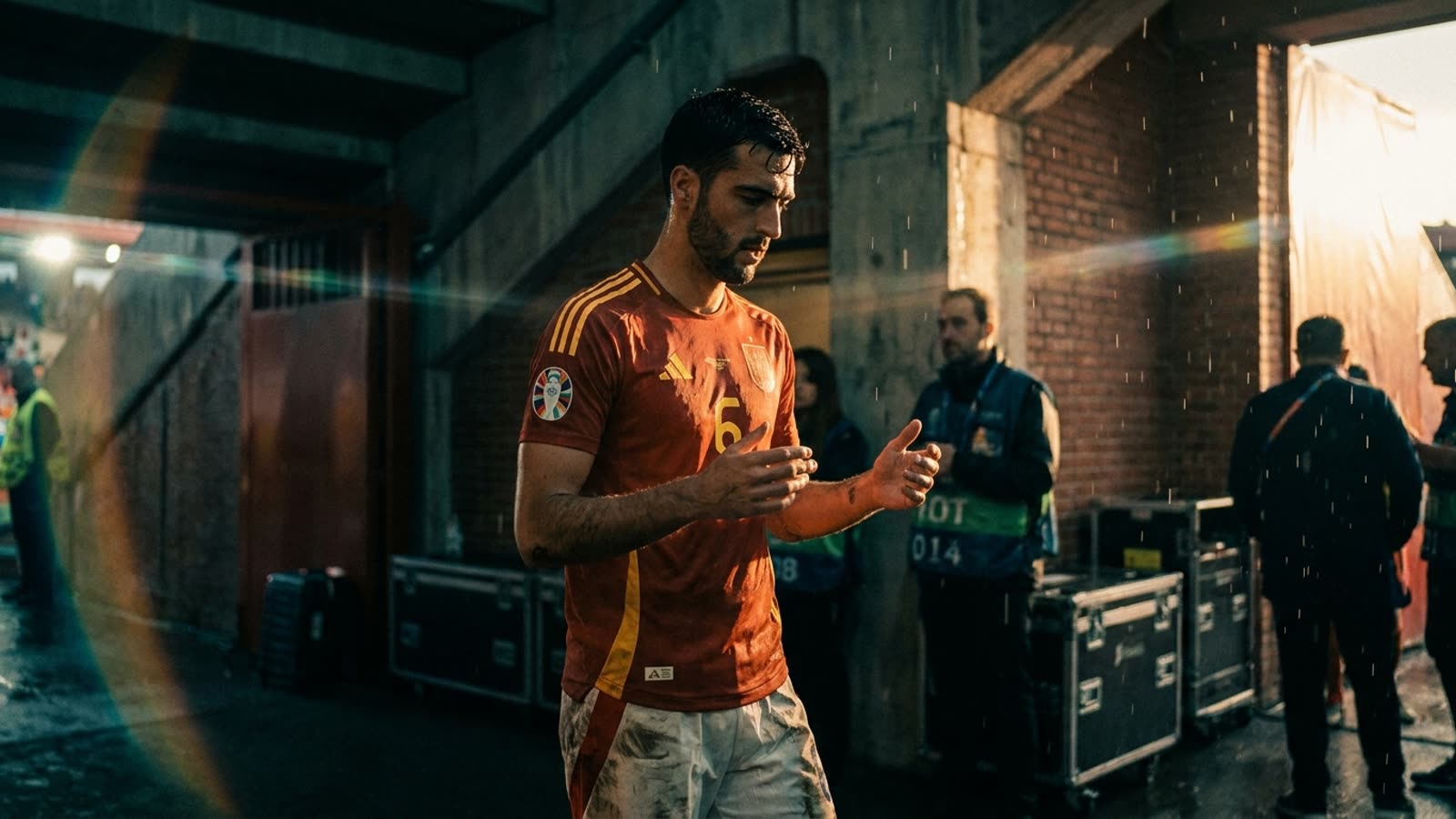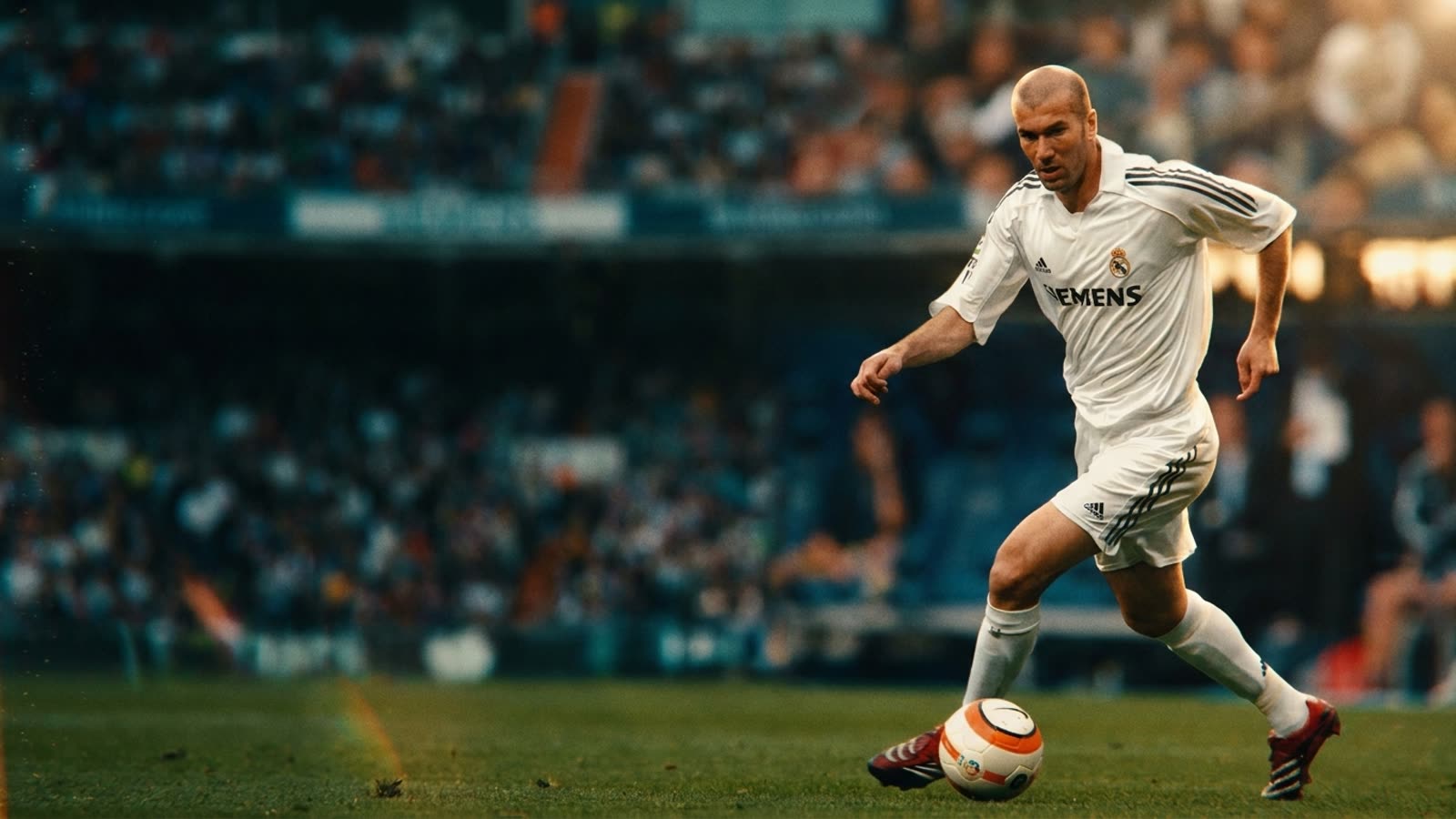
Football has always struggled to reconcile its dual nature: a game of geometric precision that rewards chaos, a team sport decided by individual moments of madness. No player embodied this tension more completely than Zinedine Zidane, whose career reads like a Greek tragedy staged on grass.
The son of Algerian immigrants who grew up in La Castellane, one of Marseille's most notorious housing projects, Zidane possessed a quality that defied the sport's usual vocabulary. Commentators reached for words like "grace" and "elegance," but these felt insufficient. His signature move, the roulette—a pirouette that left defenders grasping at air—seemed to belong to ballet rather than football. When he controlled a ball, it appeared to pause mid-flight, waiting for permission to continue.
The paradox of controlled fury
Yet Zidane was also a player of volcanic temper, accumulating fourteen red cards across his career. He headbutted opponents, stamped on players, and engaged in the kind of petulance that would have defined a lesser talent. The standard narrative treats these eruptions as aberrations, flaws in an otherwise perfect diamond. This misses the point entirely. Zidane's intensity—the same fire that produced his worst moments—was the fuel for his best ones.
Consider his performance in the 2006 Champions League final, where he converted a Panenka penalty so audacious it bordered on contempt. The goalkeeper dove; Zidane's chip floated gently into the center of the goal. It was an act of supreme confidence that required either total serenity or total indifference to consequence. With Zidane, the distinction was never clear.
Two finals, one career
His World Cup finals tell the complete story. In 1998, hosting the tournament on home soil, Zidane delivered two headers against Brazil that remain among the most iconic goals in the competition's history. A midfielder scoring twice with his head in a final—it was improbable, almost absurd, yet somehow inevitable once it happened. France won its first World Cup, and Zidane became a national symbol of integration, proof that the children of immigrants could represent the republic at its finest.
Eight years later in Berlin, facing Italy in what would be his final match, Zidane opened the scoring with another moment of outrageous skill—a chipped penalty that kissed the underside of the crossbar before dropping in. He was thirty-four, playing through injury, and still the best player on the pitch. Then came the 110th minute, Marco Materazzi's provocation, and the headbutt that ended everything. Sent off in a World Cup final, his last act as a professional footballer was walking past the trophy he would never touch again.
Our take
The temptation is to see Zidane's career as a morality tale about squandered potential or the dangers of unchecked emotion. This is too neat. Football at its highest level requires a kind of controlled insanity, a willingness to attempt the impossible while millions watch. Zidane's roulettes and his red cards came from the same source—an absolute refusal to accept limitation. That he could not always direct this force productively does not diminish his genius; it explains it. The sport is poorer for players who calculate every risk. Zidane never did, and we are still talking about him because of it.