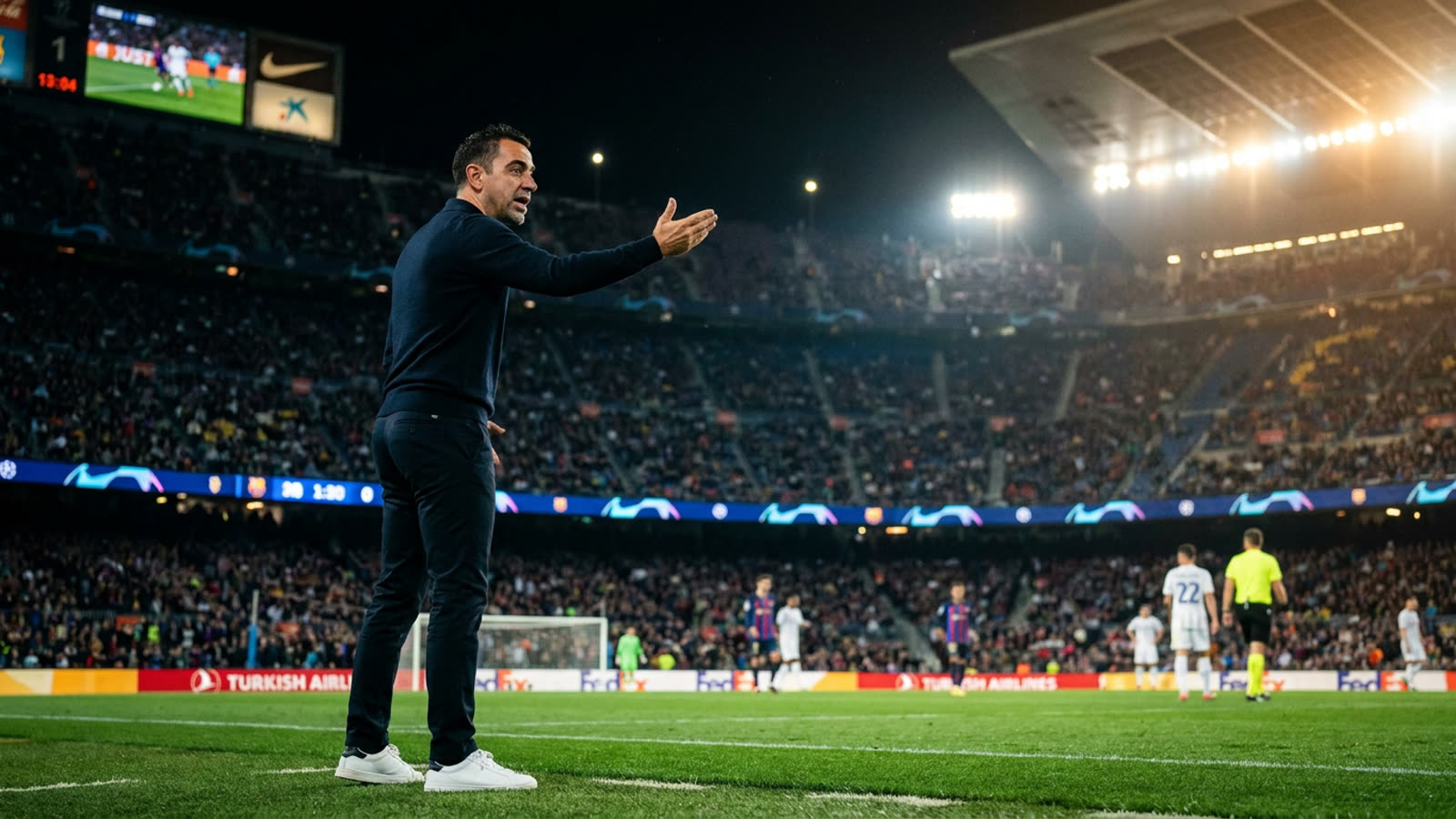
There is a famous statistic about Xavi Hernández that tells you everything and nothing at once: during Spain's triumphant 2010 World Cup campaign, he completed more passes than any other player in the tournament. The number itself is less interesting than what it represents — a philosophical revolution in how football could be played, won, and understood.
Xavi was never the fastest player on the pitch. He was never the strongest, never the most spectacular. In an era that increasingly fetishized athleticism and individual brilliance, he offered something more subversive: he made the ball do the work. His genius lay not in what he did with possession, but in how he seemed to bend time itself, always arriving at conclusions before anyone else had finished reading the question.
The cartography of space
Watch Xavi in his prime and you notice something peculiar. Before receiving the ball, his head swivels constantly — left, right, over the shoulder, back again. He is mapping the pitch in real-time, cataloguing the positions of all twenty-one other players, calculating passing lanes that will exist in two seconds, three seconds, five. By the time the ball arrives at his feet, the decision has already been made. The touch and the pass are merely administrative.
This anticipatory intelligence made him the perfect instrument for Pep Guardiola's Barcelona and Vicente del Bosque's Spain. Tiki-taka, that much-mythologised style of rapid short passing and positional play, required a metronome at its centre. Xavi was less a metronome than a conductor — setting tempo, yes, but also dictating dynamics, knowing when to accelerate and when to let the orchestra breathe.
The partnership that defined an era
Xavi's relationship with Andrés Iniesta remains one of football's great creative marriages. Where Xavi was the architect, Iniesta was the artist — capable of the unexpected dribble, the impossible through ball, the moment of pure improvisation. Together, they formed a midfield that opponents found genuinely bewildering. You could not press them because they passed too quickly. You could not sit deep because they would probe until something opened. The only solution was to be better, and for several years, nobody was.
Their understanding was almost telepathic, developed through years in Barcelona's La Masia academy and refined through hundreds of matches. They knew each other's movements so intimately that passes arrived not where the recipient was, but where he was about to be. It was football as conversation, each exchange building on the last.
Our take
Xavi Hernández proved that football's most valuable currency is not speed or strength but information — processed faster and acted upon more decisively than anyone else can manage. In an age when clubs spend fortunes on athletes who can sprint past defenders, his legacy is a reminder that the game's deepest pleasures come from players who make you see the pitch differently. He did not beat opponents; he solved them.