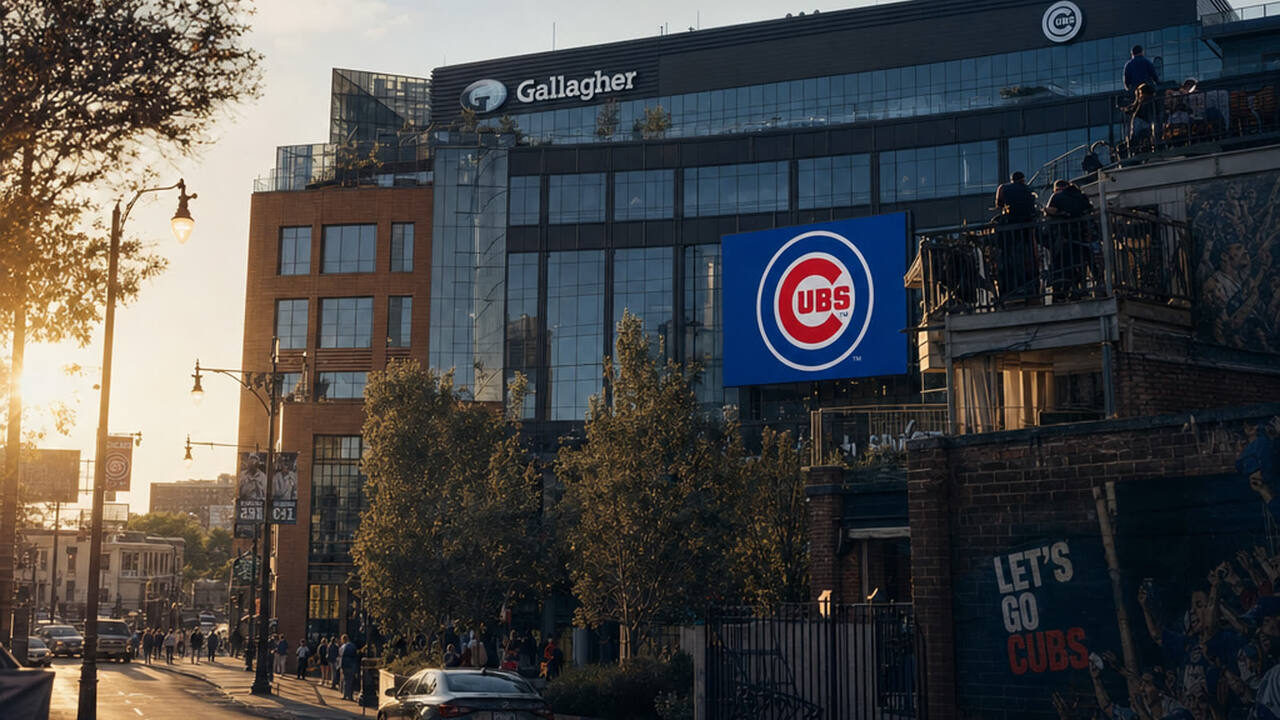
The rooftops along Waveland and Sheffield Avenues were never supposed to be a business. They were porches, then parties, then—sometime in the 1980s—an accidental industry. Neighbors who had watched Cubs games for free since the Deadball Era started charging admission, and for a glorious few decades, everyone pretended this was normal.
It was never going to last. The Cubs tolerated the rooftop clubs when the team was bad and Wrigley Field sat half-empty. Now that the franchise is worth north of $4 billion and every seat is a commodity, the view from Sheffield has become a liability to be eliminated, not a quirk to be celebrated.
The squeeze play
The Ricketts family, which purchased the Cubs in 2009, has executed a methodical campaign to render the rooftops irrelevant. The 2014 renovation of Wrigley Field added a massive video board in left field and a new upper deck in right—structures that happen to block sightlines from most of the rooftop venues. The remaining clubs with partial views have seen their customer base crater.
The rooftop owners who signed revenue-sharing agreements with the team in 2004 believed they had secured their future. They agreed to pay the Cubs 17 percent of their gross revenue in exchange for the right to continue operating. What they got instead was a front-row seat to their own obsolescence. The team argues the agreements never guaranteed an unobstructed view. The rooftop owners argue that blocking the view renders the agreements meaningless. Both sides are technically correct, which is another way of saying the owners with the deeper pockets will win.
Real estate as destiny
The rooftops that remain operational are selling an experience rather than a baseball game—all-you-can-eat catering, open bars, and the novelty of watching from a building that isn't the stadium. It is a business model that works for bachelor parties and corporate outings but struggles to compete with the Cubs' own premium hospitality offerings.
The Ricketts family has purchased several rooftop buildings outright, converting them into team-controlled venues or simply shuttering them. The holdouts face a grim calculus: sell now at a depressed price, or watch their businesses wither as the team continues to expand Wrigley's footprint.
The view from nowhere
What makes the Wrigleyville situation unusual is that the rooftops existed first. The neighborhood grew up around the ballpark, and the rooftops were watching games before the Cubs were even called the Cubs. The legal and moral questions—does a sports team own the view of its product? Can you charge for something you can see from public property?—have never been definitively answered because the Cubs chose to co-opt the rooftops rather than sue them out of existence.
The 2004 revenue-sharing deal was a truce, not a peace treaty. The Cubs got a cut of rooftop revenue and, more importantly, bought time to plan their renovation. The rooftop owners got legitimacy and, they thought, security. Twenty-two years later, the legitimacy remains but the security has evaporated.
Our take
The rooftop clubs were always an anomaly—a reminder that baseball stadiums used to be porous, embedded in neighborhoods rather than fortified against them. Their slow extinction is not a tragedy so much as an inevitability. Professional sports is a jealous industry, and the Cubs were never going to tolerate competitors selling their product from across the street forever. The only surprise is that it took this long.