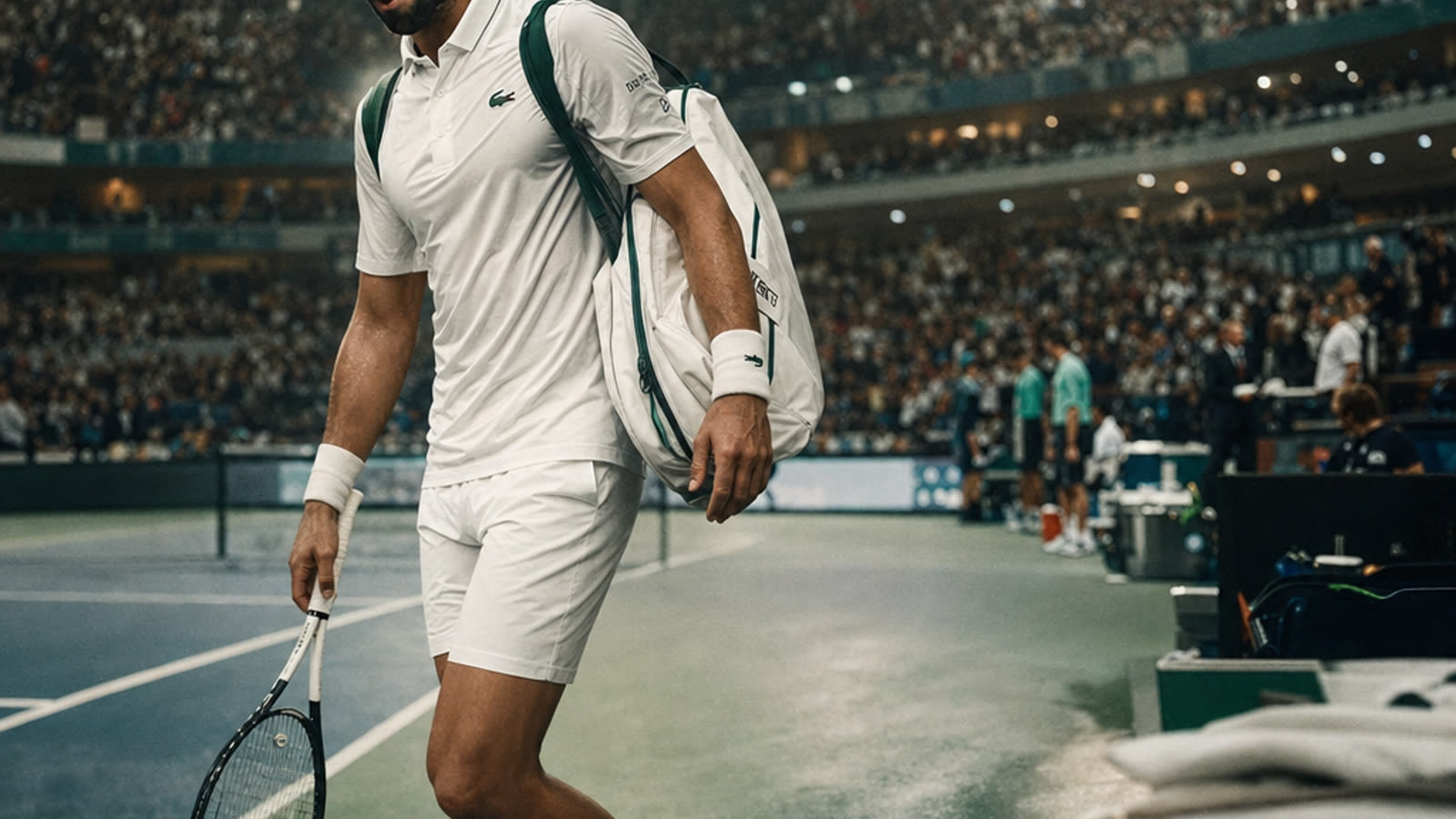
The numbers still say Novak Djokovic is the most decorated men's tennis player in history. The scoreboard in Shanghai said something else entirely: 7-6, 6-3 to Hubert Hurkacz, and an exit so early it barely registered on the tournament's highlight reel.
This was not a five-set epic where the aging champion ran out of gas in the final frames. It was a methodical, almost clinical dismissal by a player Djokovic would have dispatched routinely three years ago. The Serb, now deep into his campaign as a forty-something professional athlete, looked every bit his age—a half-step slow on court coverage, a fraction late on the returns that once defined his game.
The Shanghai context
The Shanghai Masters has historically been kind to Djokovic. He has won the tournament multiple times and rarely exits before the quarterfinals. A second-round loss here represents his earliest departure at a Masters 1000 event since the early 2010s, when he was still ascending toward his first extended period of dominance.
Hurkacz, the tall Polish serve-and-volley specialist, executed a straightforward game plan: hit big, move Djokovic side to side, and trust that the legs would eventually fail. They did. The first set went to a tiebreak that Djokovic might have stolen in his prime; instead, Hurkacz closed it out with a confident forehand winner. The second set was never particularly close.
The twilight question
Athletes in individual sports face a particular cruelty that team-sport stars avoid: there is no supporting cast to mask the decline. Roger Federer retired gracefully before the losses became routine embarrassments. Rafael Nadal's body made the decision for him. Djokovic, whose physical durability was always his greatest weapon, now confronts the same arithmetic.
He has spoken publicly about wanting to play into his mid-forties, citing Tom Brady as inspiration. But tennis is not American football; there is no offensive line to protect an aging quarterback. Every point requires the same explosive movement, the same split-second reactions. The margins are unforgiving.
Our take
Djokovic has earned the right to exit on his own terms, and if he wants to grind through early-round losses at minor tournaments until his knees give out, that is his prerogative. But the Shanghai result should clarify the situation for anyone still expecting deep runs at majors. The greatest of all time is now a nostalgia act—occasionally capable of a vintage performance, but no longer a serious threat to win anything significant. The question is not whether the decline is real. It is whether Djokovic can accept it before the losses become genuinely painful to watch.