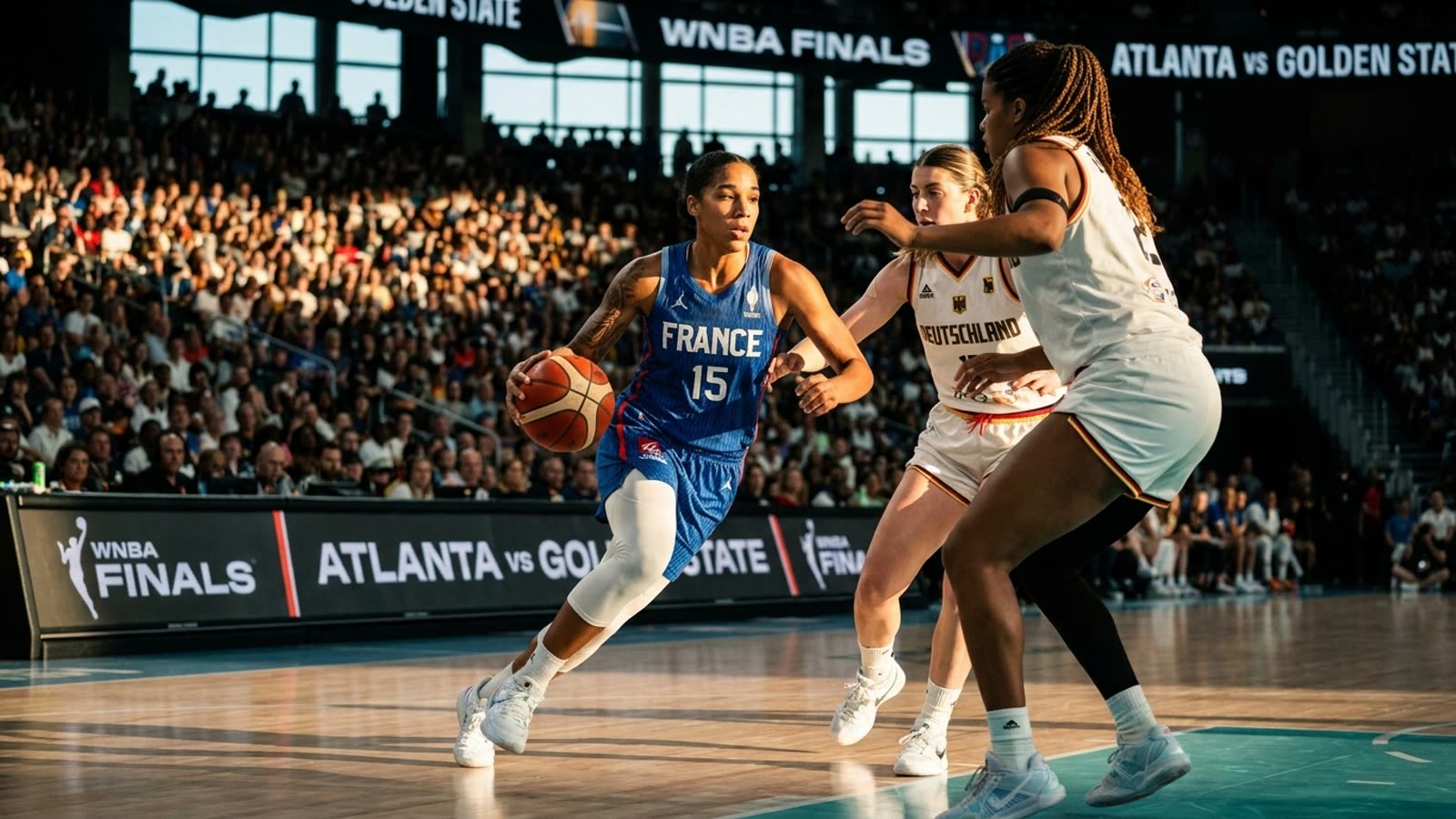
The WNBA Finals beginning this weekend offer something rarer than a championship: a genuine ideological clash. The Atlanta Dream, built around Angel Reese's relentless interior presence, will face the Golden State Valkyries, whose defensive architecture under Gabby Williams has suffocated every opponent this postseason. Both teams believe they have discovered the formula for modern women's basketball. Only one can be right.
Reese arrives at her first Finals having silenced every remaining skeptic. The forward who once divided opinion with her confidence has transformed that energy into production — her rebounding numbers this postseason rank among the best in league history, and her willingness to embrace the biggest moments has become her defining trait. "I'm not about to shy away from the moment," she said this week, and there is no reason to doubt her.
The Valkyries' defensive machine
Golden State's path to the Finals has been less about individual brilliance and more about collective discipline. Williams orchestrates a switching scheme that has held opponents to historically low shooting percentages, and the Valkyries' help rotations arrive with the precision of a Swiss watch. They do not beat you with star power; they beat you by making every possession feel like a tax audit.
The expansion franchise reaching the Finals in just their second season speaks to both smart roster construction and the league's competitive balance. Unlike the NBA, where superteams can be assembled through free agency, the WNBA's structure rewards organizations that develop coherent systems. Golden State has done exactly that.
Atlanta's counterargument
The Dream present the opposite theory: that individual dominance still matters, that a player who refuses to be moved from the block can anchor a championship run. Reese's supporting cast has exceeded expectations, but make no mistake — this is her team, and her willingness to carry the offensive burden in crucial moments has defined Atlanta's postseason.
The stylistic contrast extends to pace. Atlanta wants to grind possessions into dust, forcing opponents into half-court battles where Reese's positioning advantages compound. Golden State prefers controlled chaos, using their defensive stops to generate transition opportunities before defenses can set.
Our take
This series represents the WNBA at its best: two well-constructed rosters with clear identities, competing for a championship that feels genuinely uncertain. The league's growth over the past decade has been remarkable, but nothing accelerates that trajectory like compelling Finals matchups. Reese versus Williams is not just a basketball series — it is a referendum on what winning looks like in women's basketball. Our money is on defense, but Reese has made fools of doubters before.