Every few years, a lifestyle publication announces that the dinner party is back. The framing suggests it had departed somewhere—perhaps to the same purgatory that houses vinyl records, cocktail culture, and whatever else millennials are accused of killing or reviving. But the dinner party never left. It simply shape-shifted, as it has for centuries, adapting to economic constraints, architectural trends, and the eternal human need to perform hospitality while extracting social capital from a well-seared protein.
The persistence of the dinner party is worth examining precisely because it seems so inefficient. Restaurants exist. Delivery apps exist. The effort-to-impression ratio of cooking for eight people in a home kitchen is brutal. And yet the form endures, from the salons of eighteenth-century Paris to the potlucks of graduate students to the influencer-documented tablescapes that now populate social media with their linen napkins and hand-thrown ceramics.
The economics of intimacy
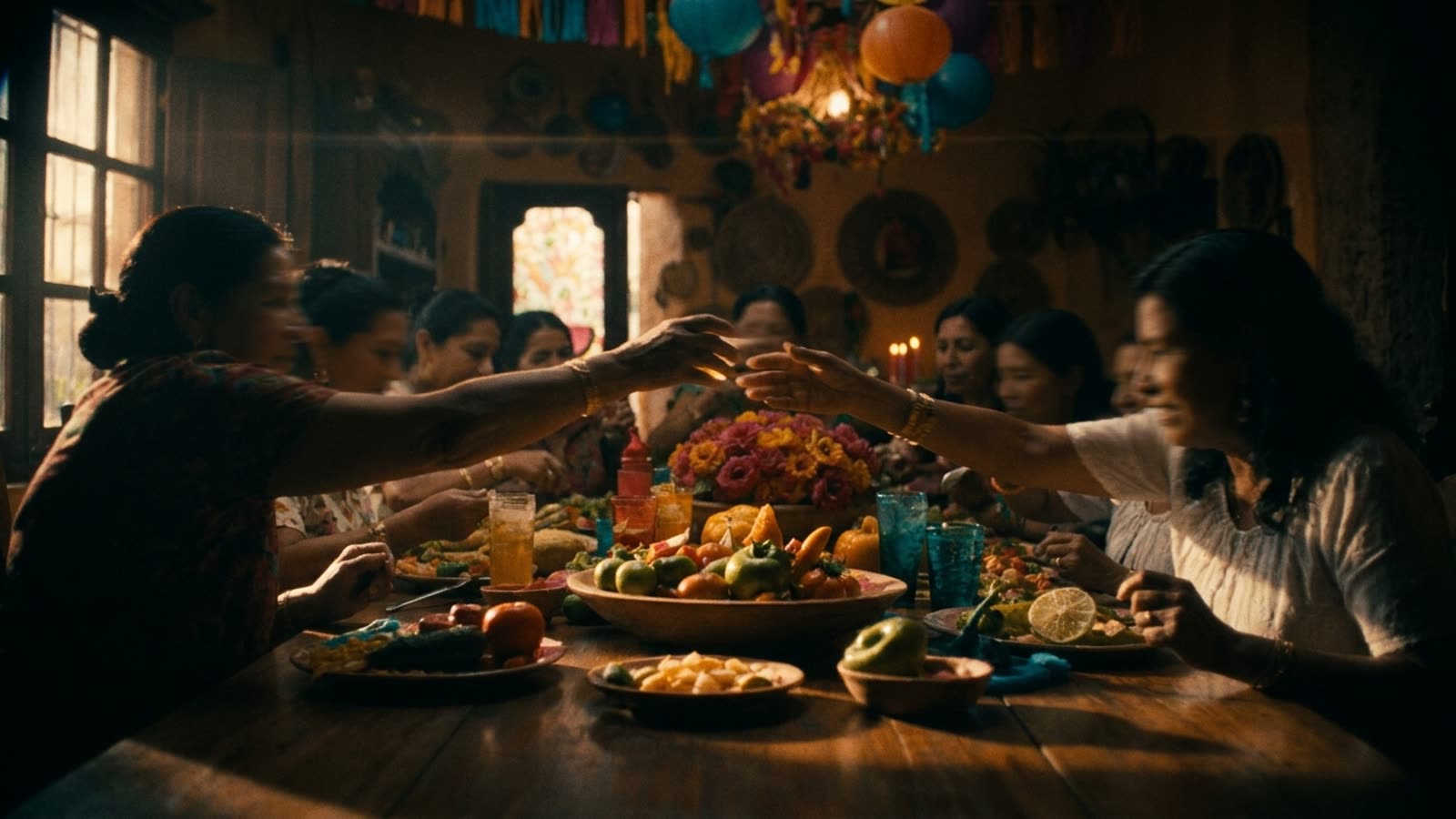
What a dinner party sells is not food but access. The restaurant meal is a transaction; the home meal is an invitation into someone's private architecture. This is why the form has always been a tool of social mobility and consolidation. In Victorian England, the rules governing dinner-party seating were so elaborate that hostesses consulted printed guides to avoid placing a baronet's wife below her station. The food was secondary to the choreography of status.
Today's version is less formal but no less strategic. The tech-industry dinner party, with its casual dress code and serious wine, functions as a networking event disguised as friendship. The creative-class dinner party, heavy on natural wine and light on matching chairs, signals cultural fluency. Even the deliberately anti-aspirational dinner party—paper plates, takeout containers repurposed as serving dishes—is a performance of authenticity that requires its own careful staging.
Why cooking matters
The dinner party's resilience also owes something to the peculiar intimacy of eating food someone has made with their hands. Outsourcing the cooking (catering, private chefs, elaborate delivery) is common enough among those who can afford it, but it changes the social contract. The host who cooks is offering labor as a gift. The guest who eats is accepting a small obligation. This exchange predates money and will likely outlast it.
There is also the matter of control. A restaurant imposes its own rhythm, its own aesthetic, its own noise level. The home dinner allows the host to curate every variable: the lighting, the music, the guest list, the conversational terrain. For people who spend their professional lives subject to institutional constraints, this sovereignty over a single evening can feel like a minor revolution.
The digital afterlife
Social media has not killed the dinner party; it has given it a second act. The documented dinner party—photographed, posted, hashtagged—extends the social returns of the evening well beyond the guests who attended. This is not necessarily cynical. Humans have always wanted witnesses to their hospitality. The difference now is that the witnesses number in the hundreds or thousands, and they can be summoned without the inconvenience of feeding them.
The risk, of course, is that the documentation becomes the point. A dinner party optimized for photography is a different beast from one optimized for conversation. The former prioritizes visual coherence; the latter tolerates the mess of genuine connection. The best hosts understand this tension and navigate it, treating the camera as a guest rather than the guest of honor.
Our take
The dinner party endures because it solves a problem no app can touch: the need to be known by others in a setting where the stakes are low but the signals are high. It is inefficient, expensive, and exhausting. It requires skills that cannot be delegated and risks that cannot be hedged. And it remains, after several thousand years of human civilization, one of the few reliable ways to turn strangers into friends and acquaintances into allies. The form will continue to be declared dead and revived, but the obituaries will always be premature. People will keep gathering around tables because the alternative—eating alone, forever—is no alternative at all.