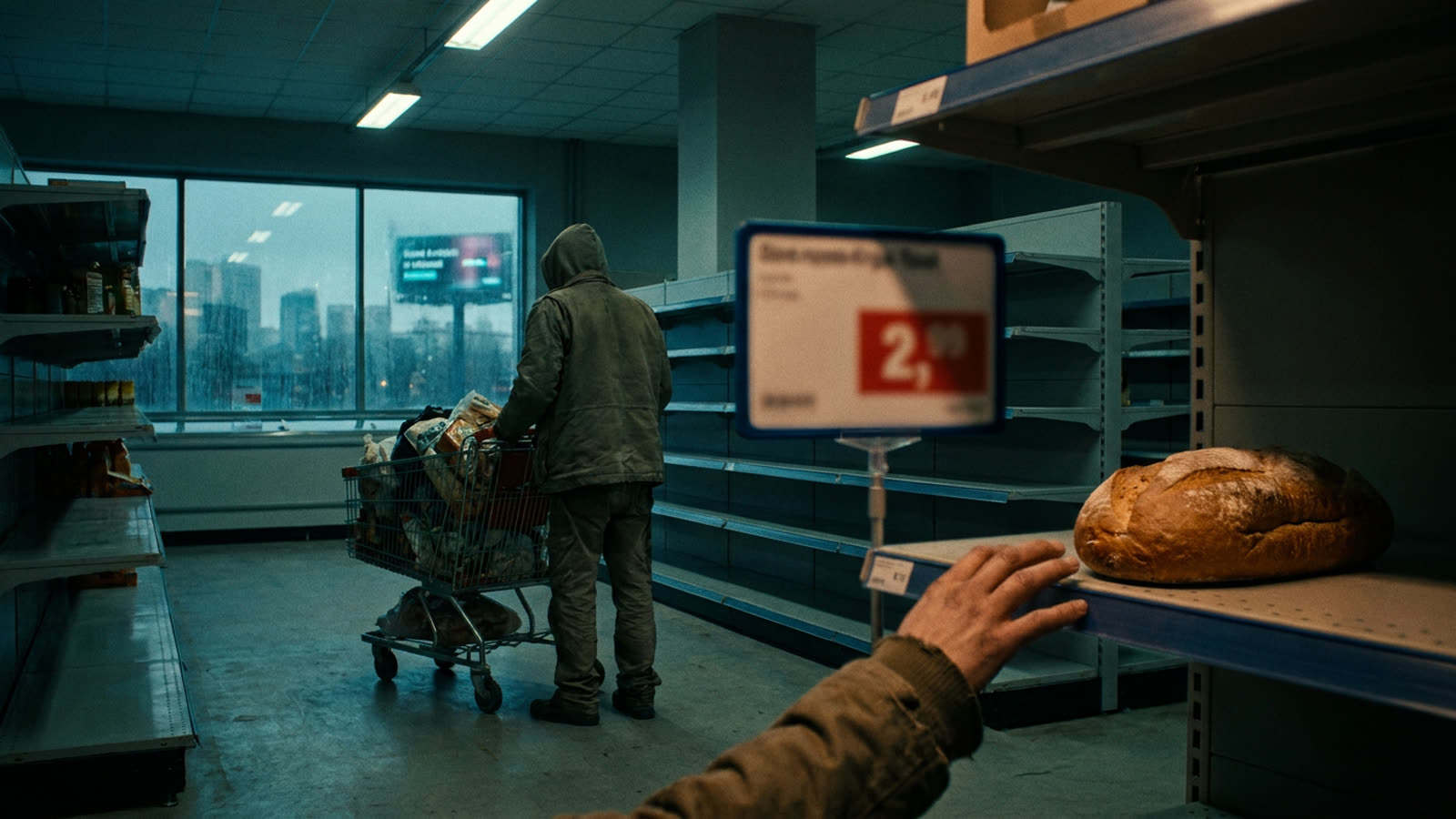
There is a particular kind of gaslighting that occurs when someone tells you the economy is doing fine while you're standing in a supermarket, watching the total climb past what used to buy a week's worth of food. The official inflation rate might read three percent, but your bank account insists the number is lying. Here's the uncomfortable truth: you're both right.
The disconnect between measured inflation and felt inflation isn't new, but it has become a defining feature of modern economic discourse. Governments report one reality; kitchen tables experience another. Understanding why requires examining not just how inflation is calculated, but how human beings actually process economic pain.
The basket problem
Statistical agencies construct inflation indices by tracking price changes across a representative basket of goods and services. The methodology is rigorous, transparent, and—for the purposes of capturing individual experience—almost comically inadequate. The basket reflects average spending patterns across an entire population, which means it reflects nobody's actual spending in particular.
A retired couple in a small apartment experiences a different inflation rate than a young family with a mortgage and two cars. Healthcare costs, which rise faster than general inflation in most developed economies, hit older households harder. Housing costs, calculated through arcane methods involving "owner's equivalent rent," often fail to capture what people actually pay each month. The official number is an abstraction; your budget is concrete.
Frequency bias and loss aversion
Even if the basket perfectly matched your spending, you would still perceive inflation as worse than the statistics suggest. This is not a failure of perception but a feature of human psychology. We notice price increases on items we buy frequently—milk, petrol, coffee—far more than we notice stable or falling prices on items we purchase rarely. A television that costs half what it did a decade ago registers as a vague background fact; eggs that cost twice what they did last year register as an outrage.
Loss aversion compounds the effect. Behavioural economists have consistently found that losses loom larger than equivalent gains. A five percent increase in grocery prices causes more psychological distress than a five percent decrease would cause satisfaction. The ledger of felt inflation is asymmetric by design.
Quality adjustments and hedonic regression
Statisticians make adjustments for quality improvements. If a car costs more but includes safety features that didn't exist previously, some portion of that price increase is attributed to "more car" rather than "more expensive car." This hedonic adjustment is intellectually defensible—you are getting something different—but it creates a persistent gap between sticker prices and official inflation. Your wallet doesn't care that your phone has a better camera than last year's model. It cares that you paid more.
Our take
The inflation statistics aren't wrong, exactly. They're answering a different question than the one most people are asking. Economists want to know how the general price level is changing across an economy. Households want to know why they feel poorer despite working just as hard. These are not the same inquiry, and no methodological refinement will make them converge. The next time someone cites an inflation number to explain your financial situation, remember: the map is not the territory, and the index is not your life.