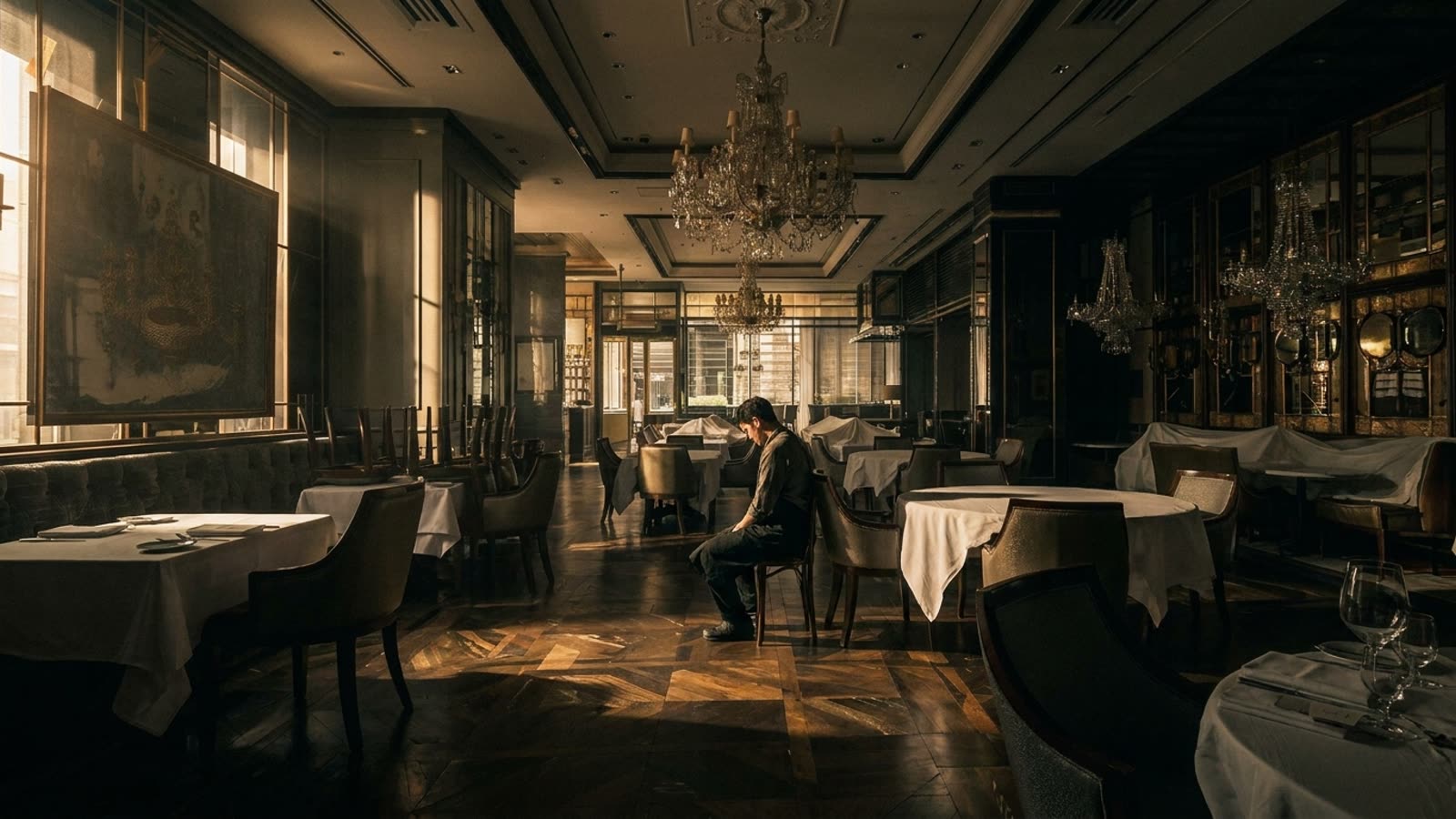
The restaurant that changed your life is probably closed now. This is not a tragedy but a structural inevitability, the natural conclusion of an enterprise model that demands artistic innovation on industrial margins while burning through human beings like kindling.
ElBulli, the Catalan laboratory that rewired global gastronomy, served its final meal in 2011 after two decades. Noma, which displaced it atop every ranking that matters, announced in 2022 it would close its dining room. The French Laundry endures, but Thomas Keller opened it thirty years ago and has long since become an institution rather than a provocation. The restaurants that define eras almost never outlast them.
The mathematics of impossibility
A serious restaurant is perhaps the worst business a rational person could start. Labor costs consume forty percent of revenue before anyone touches a stove. Ingredients—the good ones, the ones that justify the prices—eat another thirty-five percent. Rent in the neighborhoods where wealthy diners venture takes its cut. What remains is a margin so thin that a single bad review, one sous chef's departure, or three consecutive rainy weekends can erase a year's profit.
The Michelin system compounds the pressure. Stars attract customers but also expectations: more staff, better ingredients, tablecloths that require professional laundering. The economics of two stars rarely justify the expense of pursuing three. Many chefs who achieve the summit discover they have won the right to work harder for less money while performing their creativity on command, nightly, for strangers.
Creative exhaustion as feature, not bug
The deeper problem is that restaurants sell novelty while operating on repetition. A great dish must be executed identically hundreds of times, yet the kitchen that merely repeats itself becomes stale. Ferran Adrià closed elBulli not because it failed but because he had emptied himself. René Redzepi's Noma announcement cited the unsustainability of the model itself—the relentless pressure to innovate while maintaining impossible standards.
This is the cruel paradox: the restaurants we remember most vividly are those that burned brightest and briefest. They existed in a state of creative emergency that could not be sustained. The ones that endure often do so by becoming something else—a brand, a training ground, a museum of their former selves.
The dignity of the finite
Something has shifted in how the industry's most celebrated figures discuss longevity. Where previous generations treated closure as failure, today's chefs increasingly frame impermanence as integrity. To close while still vital, before the repetition curdles into cynicism, has become its own form of success.
This reframing may be cope, or it may be wisdom. The restaurant industry has always consumed its workers—the hours are inhuman, the physical toll severe, the mental health statistics grim. Acknowledging that a restaurant might have a natural lifespan, like a theatrical run or a love affair, permits an exit that is not defeat.
Our take
We have been taught to measure restaurants like other businesses, by longevity and scale. But the greatest ones function more like art projects with table service—intensive, personal, and necessarily finite. The tragedy is not that they close but that we expect them to last forever, projecting corporate immortality onto enterprises that run on human passion and human bodies. The restaurants that shaped how we eat did so precisely because they operated at an intensity that could not be maintained. Their closures are not failures but conclusions.