Every summer, the same ritual: travelers complain that flights are overbooked, fares spike, and airlines post record profits while claiming they're doing everything they can to meet demand. The natural question—why not just run more flights?—has a deceptively simple answer that reveals one of the most elegant constraints in modern economics. The problem isn't planes, pilots, or even fuel. It's slots.
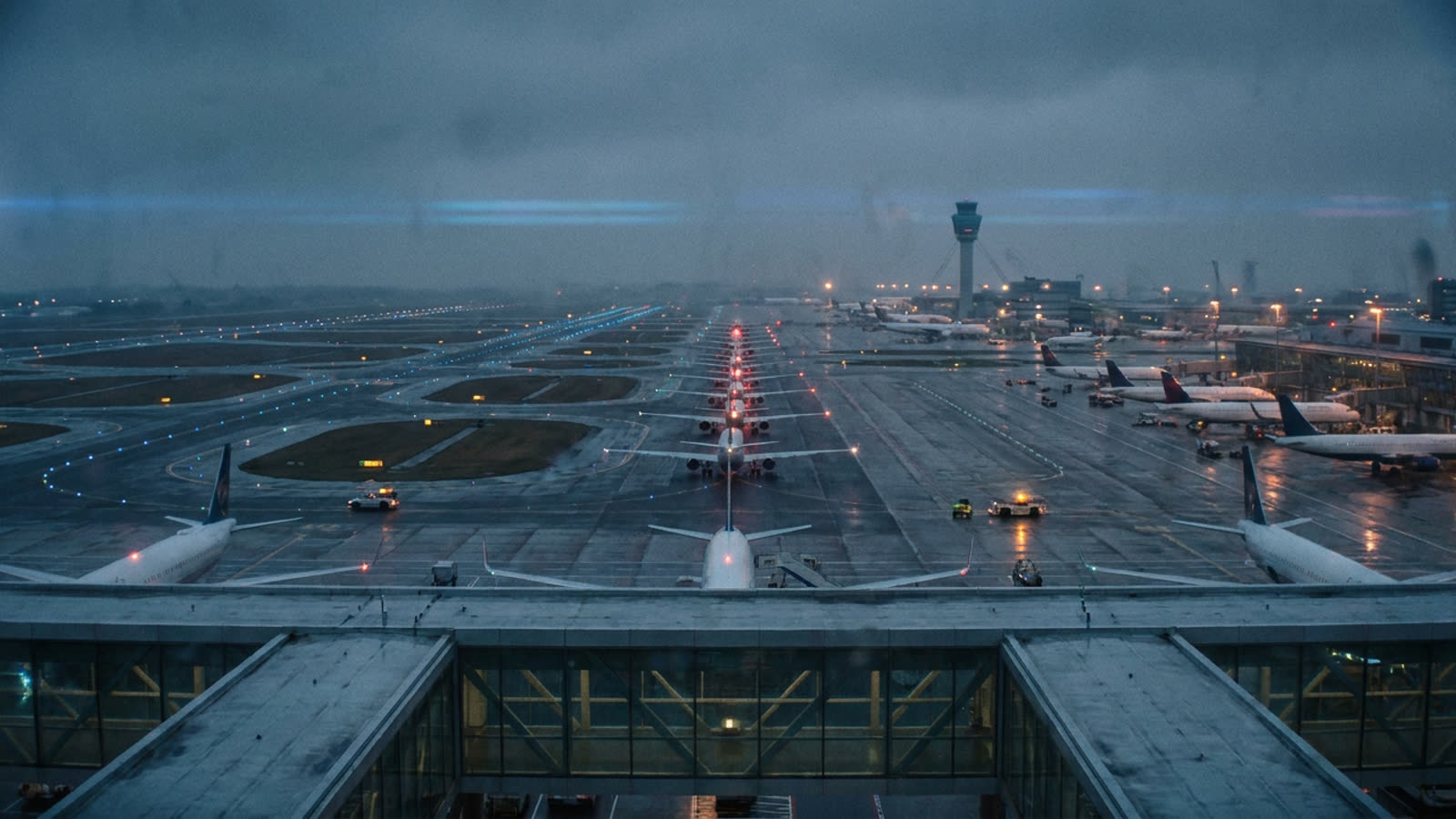
A slot is a scheduled time window to take off or land at a specific airport, typically measured in five-minute increments. At the world's busiest hubs—Heathrow, JFK, Tokyo Haneda, Singapore Changi—slots are rationed by international treaty and domestic regulation because runways, unlike factory floors, cannot be expanded at will. You can build another Boeing assembly line in six months. You cannot build another runway at Heathrow without a decade of litigation, billions in capital, and the political will to relocate entire neighborhoods. So slots become the choke point, and airlines treat them like medieval land grants: inherited, hoarded, and traded in backroom deals that would make a commodities trader blush.
The invisible auction
In the United States, slots at congested airports are allocated by a mix of historical precedent—the "grandfather rights" system that rewards incumbents—and occasional auctions that treat takeoff windows like spectrum licenses. An airline that holds a 7:00 a.m. departure slot at LaGuardia on a Monday has an asset that can be worth millions, because that slot guarantees access to one of the most lucrative travel corridors in the country during peak business hours. The airline didn't necessarily earn it through superior service; it might have inherited the slot from a merger two decades ago, or bought it from a competitor that went bankrupt. The result is a secondary market where slots change hands for sums that never appear on a passenger's ticket but shape every fare they see.
Europe's system is even more rigid. The International Air Transport Association oversees a twice-yearly "slot conference" where airlines gather to swap and negotiate access like diplomats carving up territory. The rule is simple: use it or lose it. An airline must operate at least eighty percent of its allocated slots or forfeit them in the next season. This creates perverse incentives. During the early pandemic, European carriers ran empty "ghost flights" just to preserve their slots, burning jet fuel to protect a regulatory asset. The policy has since been relaxed in crises, but the underlying scarcity remains. Heathrow has been effectively full since the late 1970s. No amount of demand can conjure a new runway out of the Thames estuary, though governments have tried.
Why scarcity persists
The deeper question is why airports don't simply build more runways, the way cities build more highways when traffic worsens. The answer is a mix of physics, politics, and economics. Runways require enormous tracts of flat land, ideally far from dense population centers to minimize noise complaints, but close enough to those same centers to be useful. They cost billions and take years to approve. London spent nearly two decades debating a third runway at Heathrow before approving it in 2018; construction has yet to begin in earnest as of 2026, delayed by environmental reviews and legal challenges. Meanwhile, demand has only grown. The result is a textbook example of the tragedy of the commons applied to a finite resource: every airline wants more access, but no single airline can unilaterally create it, and collective action is slow and politically fraught.
Slot scarcity also protects incumbents in ways that would be illegal in other industries. A new low-cost carrier cannot simply undercut legacy airlines on price if it cannot secure the slots to operate competitive schedules. This is why you see the same handful of carriers dominating the same routes year after year, even as new entrants promise cheaper fares. The barrier to entry isn't the cost of a plane—used aircraft are plentiful and relatively cheap—but the cost of access. A startup airline can lease a fleet tomorrow. It cannot lease a 6:00 p.m. Friday slot at JFK without paying a premium that wipes out any cost advantage.
Our take
The slot system is a quiet scandal hiding in plain sight, a market failure dressed up as orderly regulation. It rewards historical accident over efficiency, protects incumbents over consumers, and ensures that air travel remains expensive and constrained even as technology makes flying cheaper. The fix is obvious but politically impossible: dynamic pricing for slots, auctioned in real time to the highest bidder, with revenues used to fund new infrastructure. Until then, every summer surge in demand will be met with the same shrug from airlines—we'd love to add more flights, but the sky is full.