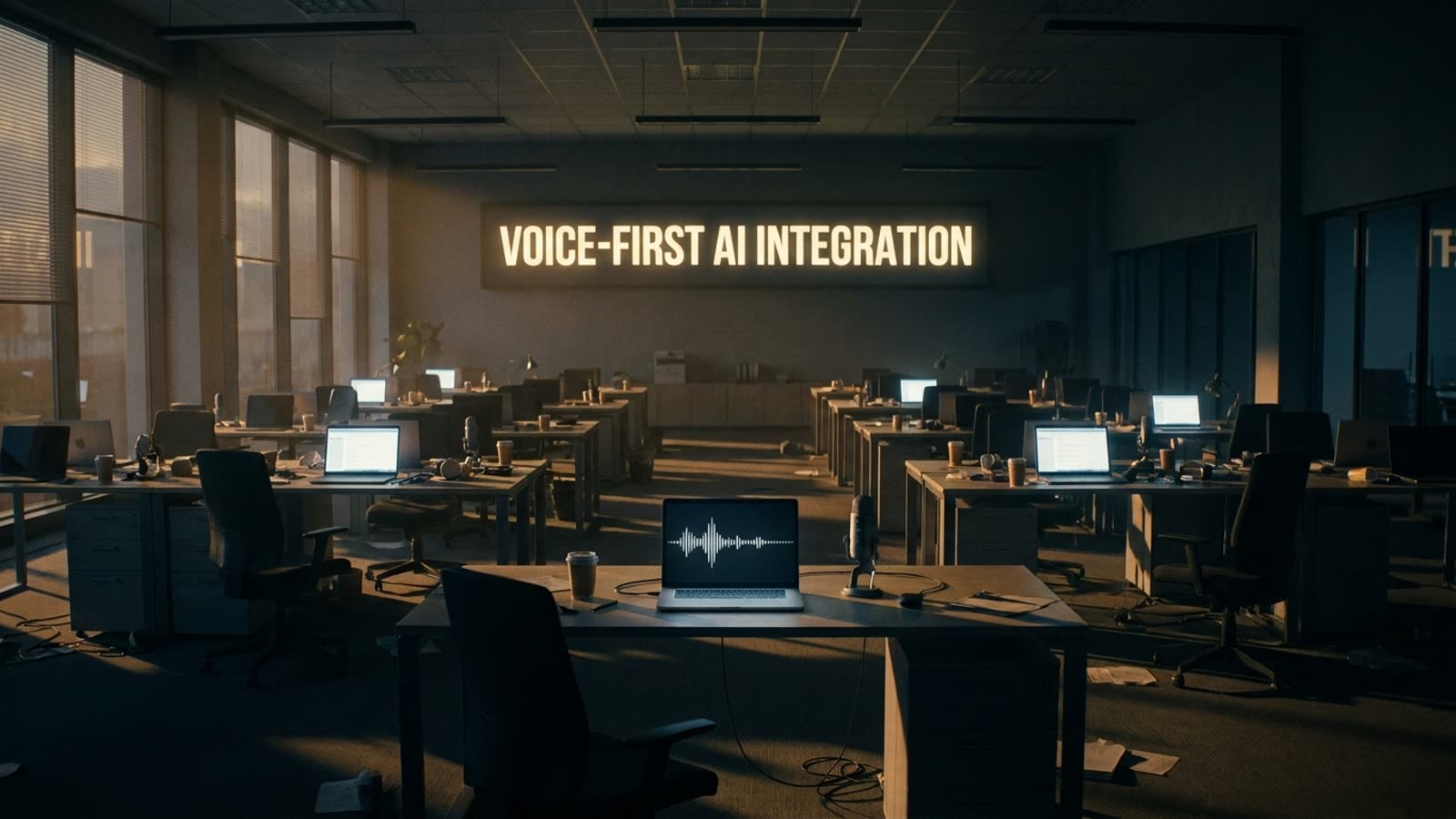
The open-plan office was already a social experiment with mixed results. Now add a chorus of employees whispering instructions to their AI assistants, and you have the makings of an acoustic nightmare—or, depending on your tolerance for ambient human murmuring, a fundamental rethinking of how physical workspaces function.
The shift is already underway. Microsoft's Copilot, Google's Gemini, and a growing ecosystem of specialized AI tools are pushing voice as the primary interface, not a fallback. Typing a prompt feels increasingly quaint when you can simply speak your request. The efficiency gains are real: voice input is roughly three times faster than typing for most people, and the cognitive load of translating thoughts into written commands disappears entirely. But nobody designing these systems seems to have asked what happens when fifty people in a bullpen simultaneously dictate emails, brainstorm product names, and ask their AI to summarize yesterday's meeting notes.
The architecture problem
Workplace designers are beginning to grapple with implications that go far beyond noise-canceling headphones. Phone booths and quiet rooms, already standard in many tech offices, may need to proliferate dramatically. Some firms are experimenting with "voice zones" where AI conversation is encouraged and "focus zones" where it's prohibited. The irony is thick: we spent two decades tearing down office walls in the name of collaboration, only to realize we may need to rebuild them for a different kind of productivity.
Acoustic engineering, long an afterthought in commercial real estate, is suddenly a selling point. Sound-masking systems that generate subtle background noise to obscure speech are seeing renewed interest. One facilities management firm reports a 40 percent increase in inquiries about retrofitting existing offices for voice-AI compatibility since January.
The social contract question
Beyond logistics, there's a cultural negotiation happening in real time. Is it acceptable to voice-command your AI while a colleague is on a video call? What about in a shared conference room? The etiquette hasn't been written yet, and companies are discovering that policies around phone calls and speakerphone don't quite translate. Voice-AI interaction is more intimate, more continuous, and—crucially—often involves sensitive information. The employee murmuring about quarterly projections three desks over might be inadvertently broadcasting strategy to anyone within earshot.
Some organizations are responding by encouraging employees to use subvocal input devices or bone-conduction microphones that pick up speech without requiring audible sound. The technology exists, but it's clunky, expensive, and carries a faint dystopian whiff that makes adoption slow. Others are simply betting that remote work will absorb most of the problem—if everyone's home office becomes their AI conversation space, the corporate headquarters can remain blissfully silent.
Our take
The whisper-filled office isn't a design failure waiting to happen; it's a stress test for how seriously companies take the environments where people actually work. The firms that figure this out—through smart architecture, clear norms, or hybrid flexibility—will attract talent that increasingly expects technology to fit their workflow, not the other way around. The rest will learn the hard way that productivity tools only produce results when people can actually use them without driving their colleagues to distraction.