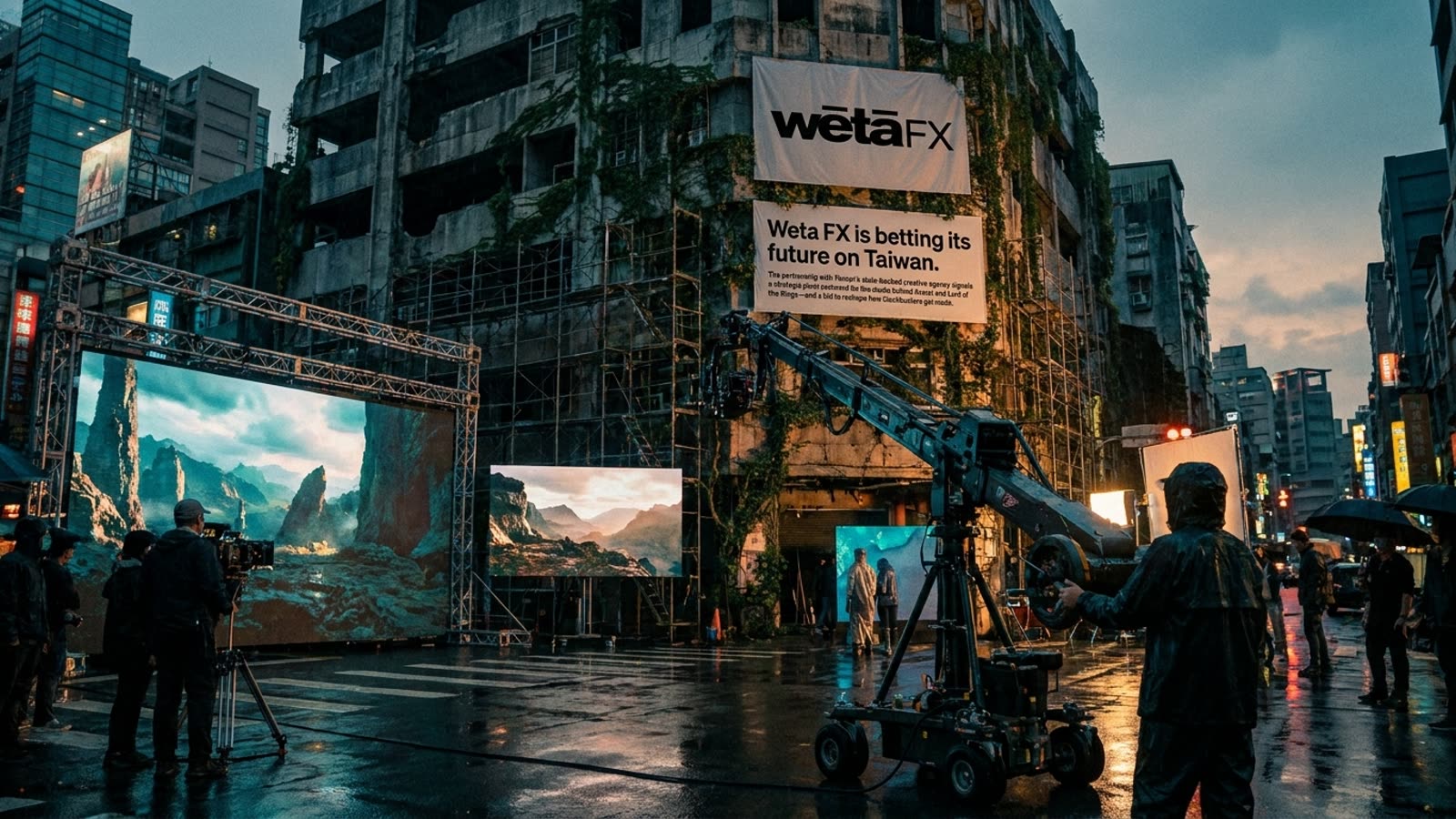
Peter Jackson's visual effects house has spent two decades turning New Zealand into Hollywood's preferred destination for digital wizardry. Now Weta FX is looking to replicate that alchemy twelve time zones away, in a semiconductor powerhouse better known for chips than chase sequences.
The partnership announced this week between Weta and the Taiwan Creative Content Agency (TAICCA) is nominally about training and infrastructure—building AI-driven production pipelines, nurturing local talent, establishing Taiwan as a regional hub for screen content. But read between the lines and the deal reveals something more ambitious: a wager that the future of visual effects will be written in machine learning, and that the nation with the world's most advanced chip fabrication might have a natural advantage in rendering dragons.
Why Taiwan, why now
The logic is seductive. Taiwan already manufactures the GPUs that power AI training runs at every major effects house. Its government, through TAICCA, has been aggressively courting creative industries as part of a soft-power strategy that doubles as economic diversification. And unlike mainland China—where Hollywood's relationship has curdled amid censorship disputes and geopolitical friction—Taiwan offers Western studios a politically palatable Asian footprint.
For Weta, the timing aligns with an industry-wide reckoning. Visual effects work has become brutally commoditized, with studios squeezing vendors on price while demanding ever-more-impossible turnarounds. AI tools promise to change the economics, automating rote tasks and potentially shifting leverage back toward the artists. But deploying those tools at scale requires infrastructure, talent, and capital that even a company of Weta's stature cannot conjure alone.
The AI production gamble
Weta is not the first effects house to chase AI efficiencies, but it may be the first to build an entire regional strategy around them. The Taiwan hub will reportedly focus on generative tools for pre-visualization, real-time rendering, and asset creation—the grunt work that currently consumes thousands of artist-hours per blockbuster. If the bet pays off, films could move from concept to screen faster and cheaper, with Taiwan-trained technicians commanding a premium in a transformed labor market.
The risks are equally legible. AI-generated content remains legally murky, with unresolved questions about copyright, likeness rights, and union jurisdiction. Taiwan's creative sector, while growing, lacks the depth of talent pools in Los Angeles, London, or even Seoul. And the island's geopolitical exposure—a fact no amount of soft-power branding can obscure—introduces a category of risk that most production insurance policies do not cover.
Our take
This is a hedge dressed as a vision. Weta gets a foothold in Asia without the mainland's complications, access to hardware supply chains, and a government willing to co-invest in speculative technology. Taiwan gets prestige and a potential new export industry. Whether it produces the next Avatar or merely a few forgettable streaming titles will depend on execution, timing, and forces neither party controls. But in an industry where standing still means falling behind, the partnership at least constitutes forward motion.