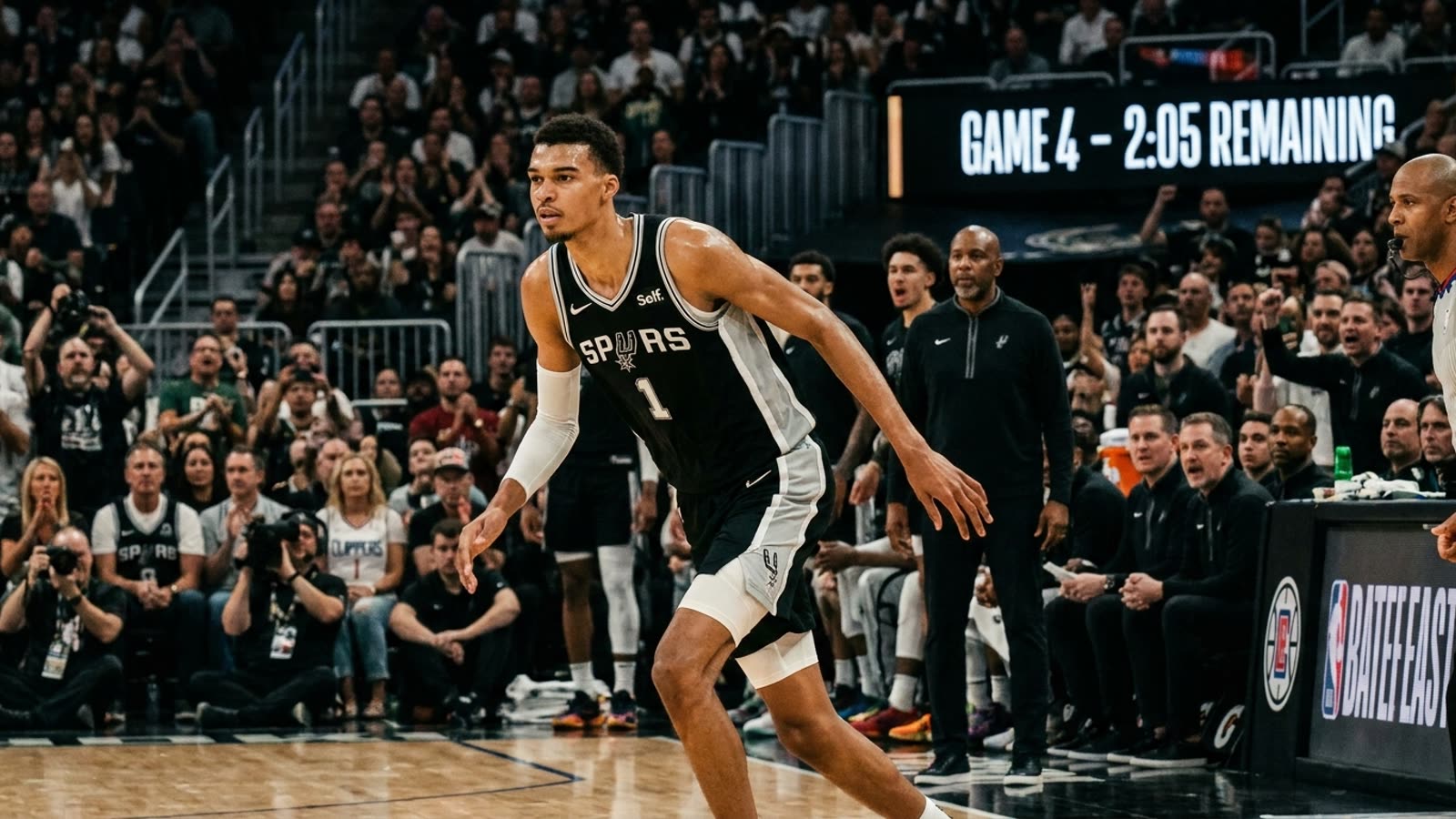
The NBA's flagrant-foul point system exists precisely for moments like this one: to force superstars to choose between aggression and availability. Victor Wembanyama, the 22-year-old phenomenon who has single-handedly transformed this Finals into a competitive series, now carries three flagrant points into Game 5 — one point shy of the automatic suspension threshold that would sideline him for the most important game of his young career.
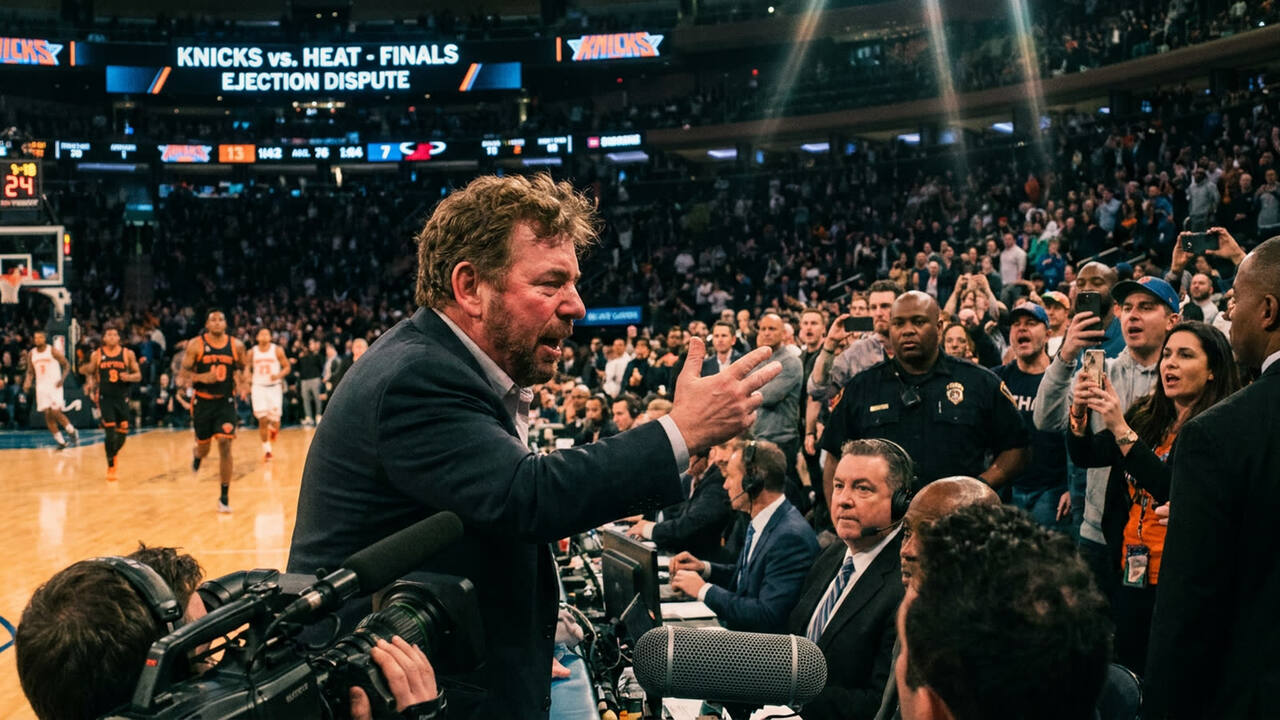
The foul itself, committed late in San Antonio's Game 4 loss to the Knicks, was the kind of play that exists in the grey zone between hard basketball and reckless contact. Wembanyama, contesting a drive to the rim with his characteristic verticality, caught a Knicks player with an elbow on the follow-through. The referees upgraded it to a flagrant-1 after review. The crowd at Madison Square Garden roared. Wembanyama, typically stoic, looked genuinely shaken — not by the call itself, but by its implications.
The arithmetic of intimidation
The NBA's flagrant-foul accumulation system awards one point for a flagrant-1 and two points for a flagrant-2. Four points triggers a one-game suspension. Wembanyama entered the Finals with one point already on his ledger from the Western Conference Finals; a flagrant-1 in Game 2 brought him to two. Now he sits at three, meaning any flagrant foul in Game 5 — even the mildest flagrant-1 — would force him to watch Game 6 from the bench.
For the Knicks, this is an unexpected strategic gift. New York's coaching staff can now design plays specifically intended to draw contact from Wembanyama, betting that his instinct to protect the rim will override his awareness of the suspension math. Every drive to the basket becomes a referendum on his self-control. Every loose ball is a trap.
San Antonio head coach Gregg Popovich faces an impossible calibration problem. Wembanyama's defensive presence — his 7-foot-4 frame, his 8-foot wingspan, his preternatural timing — is the primary reason the Spurs have stolen two games in this series. Ask him to play passively, and you neutralize the very quality that makes him irreplaceable. Ask him to play his natural game, and you risk losing him entirely for a potential elimination game.
The Wembanyama paradox
What makes this situation so fascinating is that Wembanyama's flagrant fouls have not been the product of malice or poor sportsmanship. They have been the inevitable byproduct of his greatest asset: his willingness to contest every shot, to make opponents feel his presence on every possession. The league's discipline system does not distinguish between intent and outcome. It simply counts.
This is, in a sense, the system working as intended. The flagrant-foul accumulation rule was designed to prevent playoff series from devolving into physical warfare, to give players an incentive to moderate their aggression as the stakes increase. That it now threatens to remove the most exciting player in the Finals from a pivotal game is not a bug — it is the feature operating at full capacity.
Our take
Wembanyama will play Game 5 with the caution of a man walking through a room full of mousetraps, and that is precisely what the Knicks want. The real question is whether a disciplined, careful Wembanyama is still good enough to beat New York — or whether the league's rulebook has accomplished what the Knicks' defense could not. Either way, we are watching a generational talent learn, in real time, that the NBA Finals punishes recklessness with something worse than a foul call: absence.