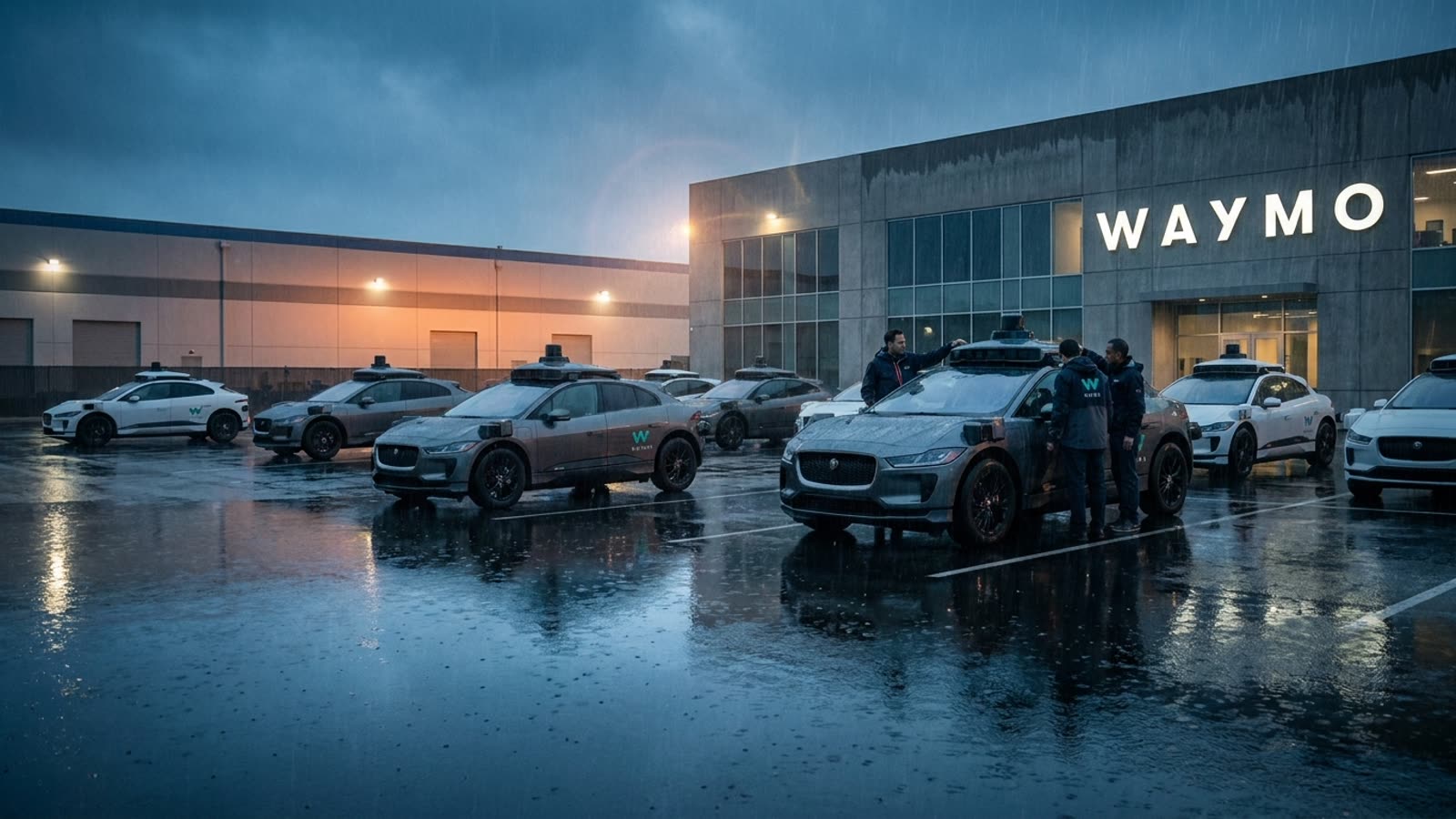
Autonomous vehicles are supposed to be better drivers than humans—more cautious, more consistent, immune to the hubris that sends a pickup truck barreling through standing water because the driver figures it'll probably be fine. Yet Waymo just admitted that its robotaxis did exactly that: drove into flooded roadways when they shouldn't have, prompting a recall of 3,791 vehicles running the company's fifth and sixth generation systems.
The recall, disclosed in filings with the National Highway Traffic Safety Administration, is narrow in scope. A software patch will recalibrate how Waymo's vehicles assess water depth and road passability. No injuries have been reported. By the industry's own safety metrics, this is a minor incident—a bug, not a catastrophe.
But the episode illuminates something more fundamental about where autonomous driving actually stands in 2026.
The judgment gap
Humans are terrible at many driving tasks. We text, we daydream, we overestimate our reaction times. But we're reasonably good at one thing: recognizing novel danger and deciding to simply not engage. A flooded intersection triggers an immediate, visceral response in most drivers—turn around, find another route, don't risk it.
Waymo's vehicles, by contrast, apparently lacked the contextual framework to treat flooding as a hard stop. The cars could perceive water; they just didn't weigh the risk appropriately. This is the judgment gap that separates current autonomous systems from the human drivers they aim to replace. Machine perception has advanced dramatically. Machine wisdom remains elusive.
Recalls as a feature, not a bug
To Waymo's credit, the company reported the issue proactively and is addressing it through an over-the-air update—no trips to the shop required. This is how software-defined vehicles are supposed to work: identify a flaw, push a fix, move on. Tesla has normalized this model; Waymo is following suit.
The recall also signals that regulators are paying attention. NHTSA's willingness to treat software logic errors as recall-worthy defects—not just hardware failures—establishes an important precedent. Autonomous vehicles will be held to account not only for what they do, but for how they decide.
The scaling question
Waymo currently operates in a handful of geofenced urban markets where conditions are relatively predictable. Flooding in Phoenix is rare; flooding in Miami is not. As the company expands—and as competitors like Cruise, Zoox, and a resurgent Tesla robotaxi program push into new territories—edge cases will multiply. Snow, wildfires, construction zones, protest crowds, downed power lines: each scenario demands judgment calls that humans make imperfectly but instinctively.
The industry's implicit promise has always been that scale will solve these problems. More miles driven means more data, which means better models. But some judgment calls may resist datafication. Knowing when to simply stop—when the situation is too ambiguous, too dangerous, too weird—may require something closer to humility than to processing power.
Our take
This recall won't slow Waymo's expansion or dent consumer confidence in any meaningful way. It shouldn't. But it's a useful corrective to the narrative that autonomy is a solved problem awaiting only regulatory permission and manufacturing scale. The hard part was never teaching cars to drive. It was teaching them when not to.