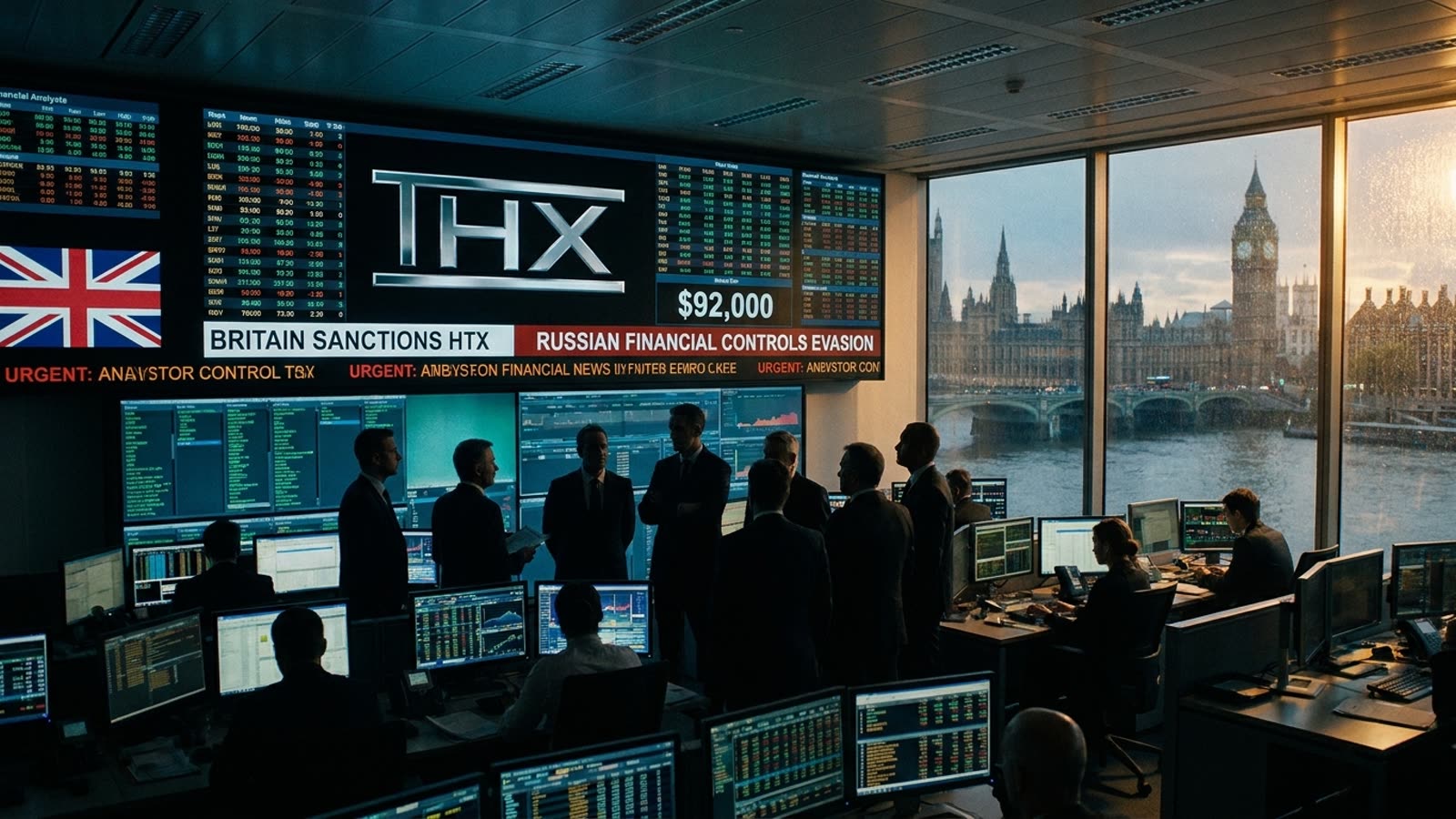
For years, cryptocurrency exchanges have cultivated a studied agnosticism about geopolitics, positioning themselves as neutral pipes through which value flows without regard to borders or politics. That posture became untenable the moment Russian tanks crossed into Ukraine, and on Monday, Britain made the consequences explicit: HTX, the Seychelles-registered exchange formerly known as Huobi, now faces UK sanctions for allegedly facilitating Russian evasion of Western financial controls.
The designation, part of a broader sweep targeting crypto infrastructure suspected of aiding Moscow, marks the first time a major jurisdiction has sanctioned a top-tier exchange specifically for wartime sanctions circumvention. It will not be the last.
The mechanics of evasion
HTX has long occupied an ambiguous position in the exchange hierarchy—large enough to matter, offshore enough to avoid the compliance burdens shouldered by Coinbase or Kraken, and sufficiently opaque that regulators struggled to trace its beneficial ownership after founder Justin Sun distanced himself from the brand. British authorities allege the platform processed substantial volumes for Russian entities after February 2022, converting rubles and routing stablecoins in ways that rendered traditional banking sanctions moot.
The UK's Office of Financial Sanctions Implementation did not disclose specific transaction figures, but the action follows months of intelligence-sharing between London, Washington, and Kyiv about crypto-enabled procurement networks supplying dual-use goods to Russian defense contractors. HTX denied wrongdoing and called the sanctions "politically motivated," a framing that rather proves the regulators' point: in wartime, there is no such thing as a non-political financial intermediary.
Ripple effects for the industry
The immediate practical impact is limited—HTX had already withdrawn from most Western markets, and its UK exposure was negligible. But the symbolic weight is considerable. Exchanges that once argued they merely provided technology, not banking services, now face the same extraterritorial enforcement risk as SWIFT-connected institutions. Compliance officers at Binance, OKX, and Bybit are presumably updating their Russia-exposure audits this evening.
More broadly, the action accelerates a bifurcation already underway: a regulated, KYC-compliant tier of platforms serving Western retail and institutional clients, and a shadow tier serving everyone else. The shadow tier will not disappear, but it will find fewer fiat on-ramps, fewer correspondent banking relationships, and fewer jurisdictions willing to host its legal entities.
Our take
Crypto's libertarian founding myth—money beyond the reach of states—was always a fantasy destined to collide with great-power conflict. HTX is merely the first exchange to absorb the full impact. The industry's choice now is not whether to comply with geopolitical reality but how quickly. Those who adapt will survive as regulated utilities; those who don't will find themselves on sanctions lists, their founders' travel options narrowing with each new designation. The era of plausible deniability is over.