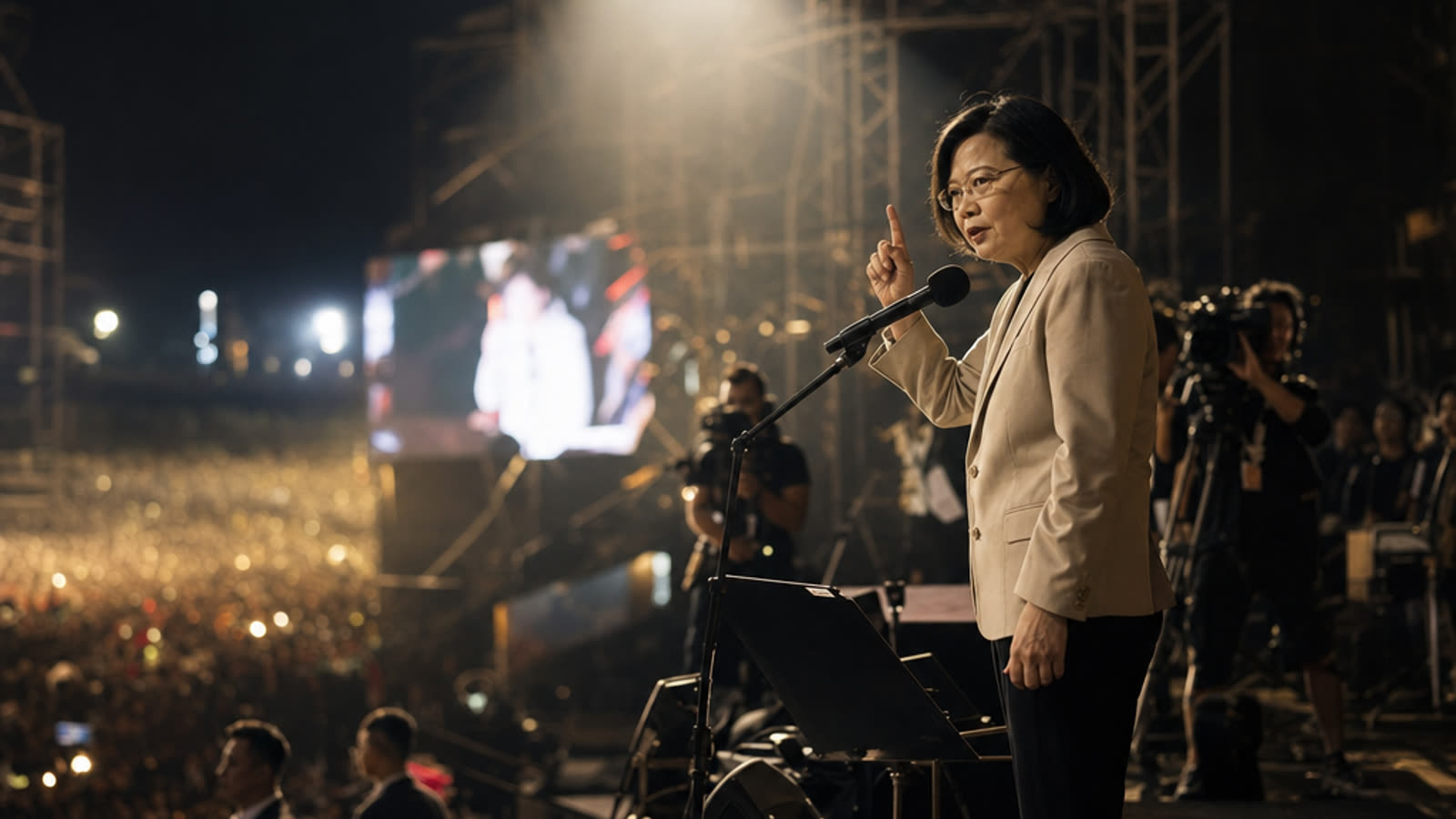
Tsai Ing-wen is no longer constrained by the diplomatic euphemisms that bind sitting leaders, and she is using that freedom with surgical precision. Speaking to American audiences this week, the former Taiwan president described Chinese pressure on the island as "sustained" — a word that carries more weight than the usual crisis vocabulary because it implies permanence rather than episodic flare-ups. Her message is clear: the threat is not a storm to be weathered but a climate to be endured.
The timing is deliberate. With Washington consumed by its own electoral chaos, a grinding proxy war in Ukraine, and the expanding Iran conflict that has turned the Strait of Hormuz into a shooting gallery, Taiwan risks slipping down the priority list. Tsai's tour is a reminder that the most consequential geopolitical question of the century — whether the United States will defend a democracy of twenty-four million against the world's largest authoritarian power — cannot be deferred indefinitely.
The messenger matters
Tsai governed Taiwan from 2016 to 2024, presiding over the most significant deterioration in cross-strait relations since the 1990s missile crisis. She refused to endorse the "one China" framework that Beijing demands, and China responded with military exercises that effectively rehearsed blockade and invasion scenarios. Now, freed from office, she can say publicly what sitting officials must whisper: that Chinese pressure is not cyclical posturing but a long-term campaign of coercion designed to exhaust Taiwan's will and America's attention.
Her credibility with American policymakers is substantial. She earned a law degree from Cornell and a doctorate from the London School of Economics, speaks fluent English, and navigated eight years of escalating Chinese hostility without triggering a war. When she warns of "sustained" pressure, the Pentagon listens.
The strategic context
China's approach to Taiwan has shifted from the theatrical to the attritional. Daily incursions into Taiwan's air defense identification zone, gray-zone harassment of fishing vessels, and economic pressure on nations that maintain unofficial ties with Taipei have become routine. The goal is not necessarily invasion — at least not yet — but the gradual normalization of Chinese dominance over the island's periphery.
American policy remains deliberately ambiguous, committed to Taiwan's defense in spirit but not in treaty. The Biden and now second Trump administrations have both approved significant arms sales, yet the backlog of deliveries stretches years into the future. Taiwan's military is modernizing, but not fast enough to outpace Chinese capabilities. Tsai's tour is, in part, an effort to accelerate that timeline by putting a human face on abstract strategy documents.
Our take
Tsai Ing-wen is doing what former leaders rarely do well: remaining relevant without undermining her successor. Her American tour is not a vanity lap but a strategic intervention at a moment when Taiwan's friends are distracted and its adversary is patient. The word "sustained" is not diplomatic boilerplate — it is a thesis about the nature of the threat. Washington would do well to treat it as such.