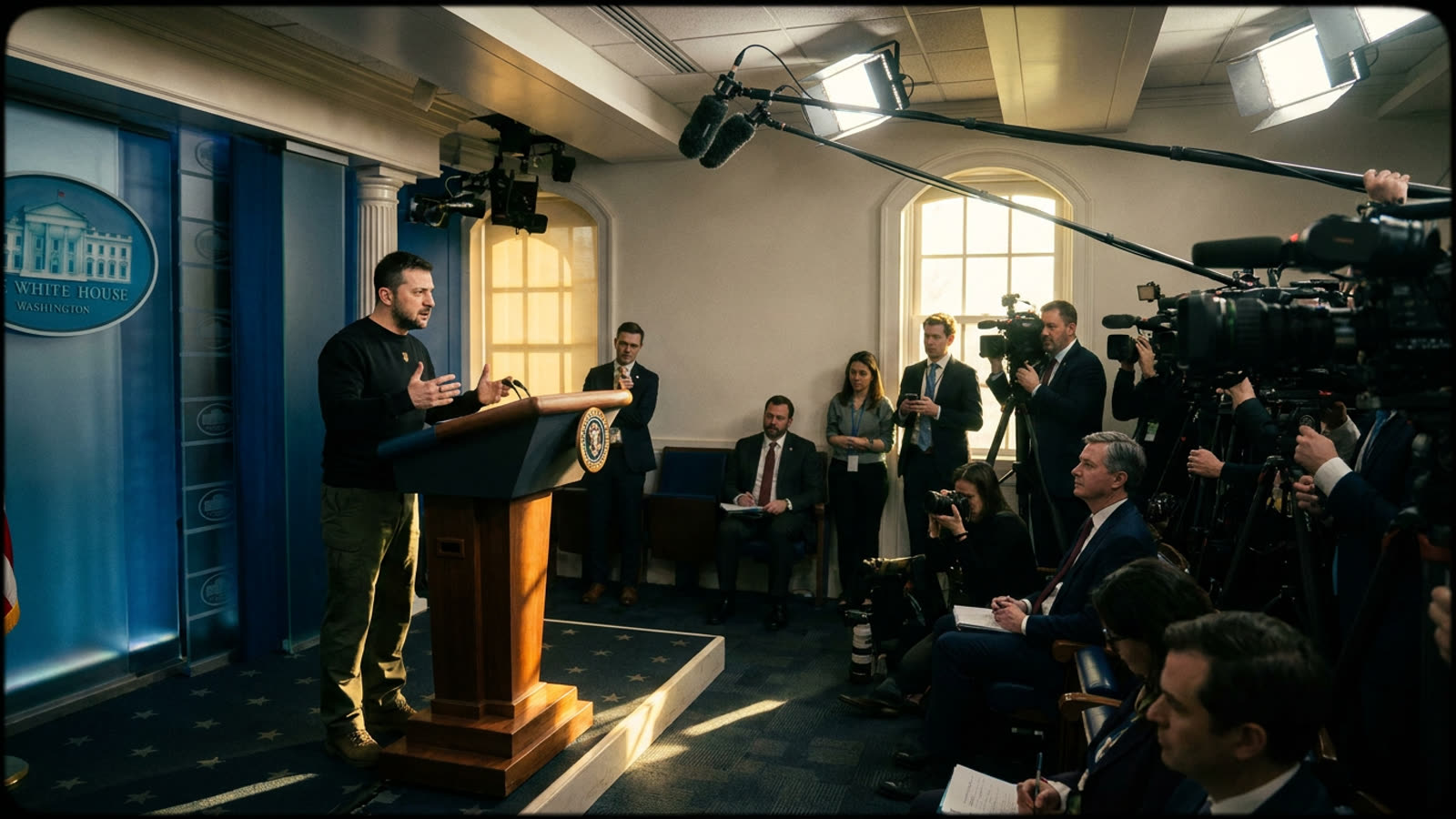
The Trump administration spent the better part of a year telling anyone who would listen that Ukraine was negotiating from weakness. The frozen aid, the implied threats of abandonment, the public dressing-downs of President Zelensky—all were meant to communicate a simple message: Kyiv should take whatever deal Moscow offered and be grateful for it. Ukraine, it seems, did not receive the memo.
Kyiv's recent declaration that it holds meaningful leverage in any peace talks represents a direct challenge to the White House's carefully constructed narrative. More importantly, it exposes the fundamental tension at the heart of Trump's Ukraine policy: you cannot simultaneously claim to be brokering a deal and telegraph to one party that they have already lost.
The leverage question
What cards does Ukraine actually hold? The military situation remains grinding and costly for both sides. European support, while occasionally wobbly, has not collapsed. And crucially, any peace agreement that lacks Ukrainian buy-in is simply a ceasefire waiting to expire. The administration's assumption that Kyiv could be pressured into accepting unfavorable terms rested on the belief that American support was the only variable that mattered. Ukraine's diplomatic posture suggests they have been cultivating other options.
The European Union's continued military assistance, while modest compared to American contributions, provides Kyiv with enough runway to avoid capitulation. More significantly, Ukraine's integration into European security architecture has accelerated precisely because of American unreliability. The administration's coercive approach may have inadvertently strengthened Ukraine's hand by forcing diversification.
The credibility problem
Trump's public statements about Ukraine's weak position created a peculiar diplomatic trap. If Ukraine was as desperate as the administration claimed, why hasn't a deal materialized? Either Kyiv has more leverage than advertised, or the administration's dealmaking prowess has been oversold. Neither interpretation flatters the White House.
The timing compounds the awkwardness. With the Iran situation demanding attention and midterm positioning already underway, the administration needs foreign policy wins that can be packaged for domestic consumption. A Ukraine deal that looks like Ukrainian surrender would satisfy the base; a deal that acknowledges Ukrainian agency might actually hold. The president appears to want the former while reality increasingly demands the latter.
Our take
The administration's Ukraine policy has been characterized by a category error: treating a sovereign nation's existential conflict as a real estate negotiation where the bigger buyer always wins. Ukraine's refusal to accept this framing is not stubbornness—it is rational behavior from a country that has watched American commitments prove conditional. If the White House wants a deal, it will need to acknowledge that Kyiv has interests worth accommodating, not just positions to be steamrolled. That would require admitting the original leverage assessment was wrong, which may be the heaviest lift of all.