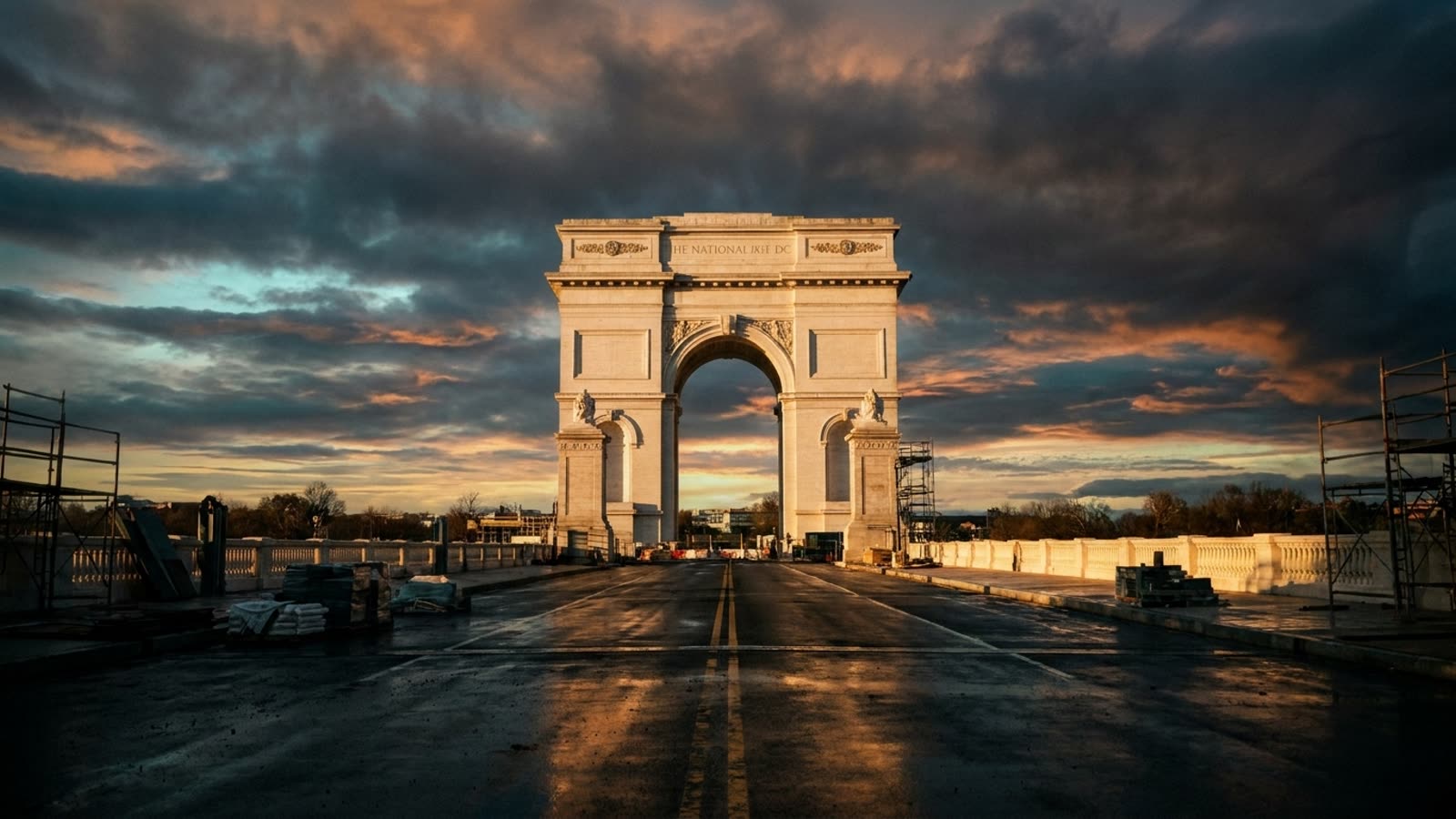
A federal judge in Washington has temporarily blocked construction on Donald Trump's proposed triumphal arch, issuing a 14-day injunction in the early hours of Friday morning after the monument received controversial approval from the District's planning commission. The ruling does not kill the project, but it does something arguably more important: it forces a legal reckoning with the question of whether a sitting president can erect a permanent monument to himself on federal land.
The arch, which Trump announced in the final months of his term, would stand over 60 feet tall and feature bronze reliefs depicting what the administration described as "historic achievements" — a phrase that has drawn withering criticism from historians, urban planners, and Democratic lawmakers who see the structure as an authoritarian vanity project unprecedented in American history.
The Planning Commission's Curious Approval
The National Capital Planning Commission voted to approve the arch in a session that critics have called procedurally irregular. Several commissioners appointed during the Trump administration cast deciding votes, and the public comment period was truncated to a matter of weeks rather than the months typically afforded to major additions to the capital's monumental core. Opponents argue the approval was rushed to ensure construction could begin before the new Democratic Congress and potentially a new executive branch could intervene.
The injunction, issued by a federal judge in the D.C. district court, responds to a lawsuit filed by a coalition of preservation groups and Democratic attorneys general. The plaintiffs argue that the approval process violated the National Environmental Policy Act and the Commemorative Works Act, which governs monuments on federal land and typically requires congressional authorization for works honoring living individuals.
A Monument to What, Exactly?
The deeper question the litigation surfaces is not procedural but philosophical. American presidents have historically resisted personal monuments during their lifetimes — the tradition of naming airports, libraries, and highways after commanders-in-chief is largely posthumous. Trump's arch would break that norm spectacularly, inserting a permanent tribute to a living, deeply polarizing figure into a landscape designed to honor foundational principles rather than individual egos.
Defenders of the project, including several Republican state officials, argue that Trump's base of support entitles him to such recognition and that the monument would honor not the man but the movement he represents. This framing has done little to mollify critics, who note that the proposed reliefs include depictions of Trump himself rather than abstract symbols.
Our take
The injunction is a speed bump, not a roadblock. With Trump's term ending and a Democratic wave reshaping Congress, the arch's fate will likely be decided by legislation rather than litigation. But the fact that it got this far — that a planning commission approved a self-tribute for a sitting president — is the real story. The guardrails that once made such a project unthinkable have been tested and found wanting. Whether they can be rebuilt is now a question for the next Congress, and for a country still reckoning with what its monuments are supposed to mean.